
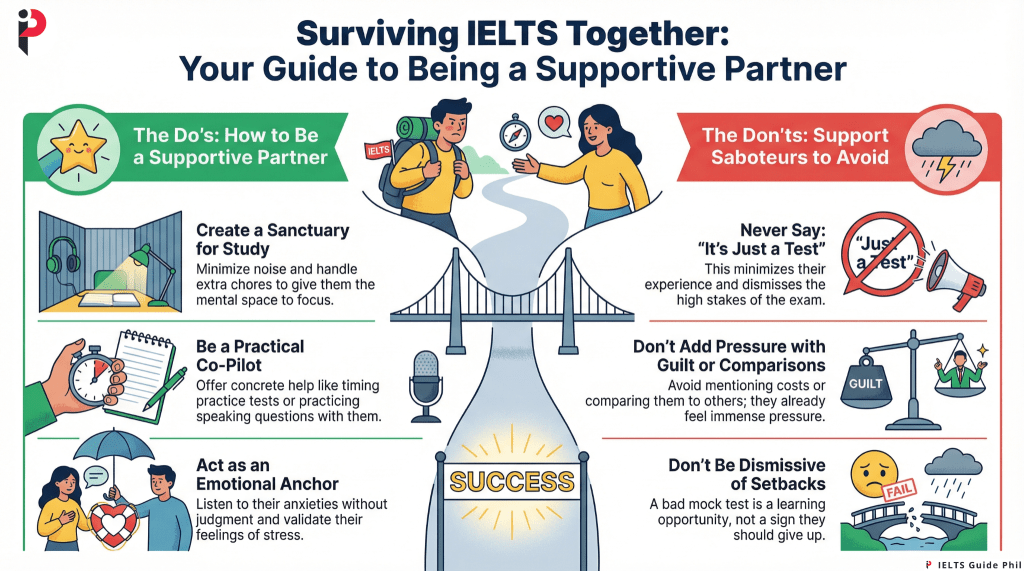
When your partner, spouse, or significant other announces they’re taking the IELTS exam, you might nod supportively while secretly wondering what you’ve just signed up for. The truth is, preparing for IELTS isn’t just an individual journey—it affects everyone in the household. Understanding what your loved one is going through can make the difference between added stress and genuine, effective support. You can watch this YouTube video explainer by IELTS Guide Phil.
Understanding IELTS: The Basics You Need to Know
IELTS (International English Language Testing System) is a high-stakes English proficiency test required for immigration, university admission, or professional registration in English-speaking countries. It’s not like a typical school exam—it’s a comprehensive assessment that tests four skills: Listening, Reading, Writing, and Speaking.
Why it matters: Your partner’s future plans—whether moving abroad, studying at their dream university, or advancing their career—often hinge on achieving a specific band score. The pressure is real and intense.
The time commitment: Most candidates need 2-6 months of dedicated preparation, studying 2-4 hours daily. This isn’t a weekend project; it’s a marathon that will temporarily reshape your household routines.
The Four Sections: What Your Partner Is Actually Dealing With
1. Listening (30 minutes)
They’ll hear recordings once only—no rewind button. Imagine watching a movie in a foreign language with no subtitles and having to answer detailed questions afterward.
2. Reading (60 minutes)
Three long, complex passages with 40 questions. Think academic journal articles on topics ranging from Australian Aboriginal art to climate change mitigation strategies—all to be read and answered in an hour.
3. Writing (60 minutes)
Two tasks: interpreting data from graphs or charts, then writing a 250-word argumentative essay. All while being judged on grammar, vocabulary, coherence, and task achievement.
4. Speaking (11-14 minutes)
A face-to-face interview with an examiner covering personal topics, then speaking for 2 minutes on a random topic card (like “Describe a time you taught someone something”), followed by abstract discussion questions.
Why you should care: Each section requires different skills and preparation strategies. When your partner says “I’m terrible at Speaking,” they’re not being dramatic—they’re genuinely struggling with a specific, high-pressure skill.
The Emotional Rollercoaster: What to Expect
Week 1-2: Optimism and Energy
“This won’t be so hard! I speak English pretty well already.”
Week 3-6: Reality Check and Frustration
Practice test scores reveal gaps. Your partner might become irritable, withdrawn, or tearful after poor mock test results.
Week 7-10: Intense Focus and Anxiety
Everything revolves around IELTS. Social plans get cancelled. Conversations drift toward band scores and task achievement criteria.
Final Week: Peak Stress
Sleep disturbances, loss of appetite, and heightened emotions are common. Some candidates experience panic attacks or overwhelming self-doubt.
Example: Maria, preparing for Canadian immigration, scored 6.5 on her first Writing mock test but needed 7.0. Her partner noticed she stopped eating dinner with the family and stayed up until 2 AM practicing essays. Understanding this was temporary helped him stay patient and supportive rather than taking her distance personally.
Dos: How to Actually Help
DO create a conducive study environment
- Minimize noise during study hours
- Keep shared spaces tidy so they can focus
- Handle household chores they normally do without being asked
- Take children or pets out during practice speaking sessions
Example: “I noticed you have a mock test on Saturday. I’ll take the kids to the park from 9 AM to 1 PM so you can concentrate.”
DO show interest without pressuring
- Ask “How’s your preparation going?” not “What score did you get today?”
- Learn basic IELTS terminology so you understand their struggles
- Celebrate small victories: “You improved your Reading score by 0.5? That’s amazing progress!”
DO offer practical support
- Be their speaking practice partner (even if you don’t speak perfect English)
- Help time their practice tests
- Proofread their essays for basic errors if asked
- Drive them to the test center so they can relax
DO maintain normalcy where possible
- Schedule regular non-IELTS activities: weekly date nights, Sunday morning walks
- Cook their favorite meals
- Watch a show together before bed
- Remind them life exists beyond this exam
DO be their emotional anchor
- Listen without trying to fix everything
- Validate their feelings: “This test is really stressful, and you’re handling it well”
- Remind them of their strengths when self-doubt creeps in
- Offer physical comfort: hugs, back rubs, holding hands
Example: When Raj scored poorly on a mock test, his wife didn’t say “Just study harder.” She said, “You’ve been working so hard. One bad test doesn’t define you. Let’s take a walk and clear your head, then we’ll look at what went wrong together.”
DO educate yourself about the test
- Watch YouTube videos explaining IELTS format
- Read blog posts about common challenges
- Understand the band score system (1-9, with 0.5 increments)
- Know what score they need and why
Don’ts: Avoid These Support Saboteurs
DON’T minimize their experience
❌ “It’s just a test. Why are you so stressed?”
❌ “You already speak English fine. You’ll pass easily.”
❌ “My cousin took it and didn’t study at all.”
Why it’s harmful: IELTS is a gatekeeper to their dreams. Dismissing their anxiety invalidates their legitimate concerns and creates emotional distance.
DON’T add pressure
❌ “You better pass because we’ve spent so much on preparation courses.”
❌ “What if you fail? What will we tell our families?”
❌ “My friend’s husband got an 8.0. Why are you struggling with 7.0?”
Why it’s harmful: They’re already under enormous pressure. Additional stress from loved ones can trigger test anxiety and actually harm performance.
DON’T interrupt study time unnecessarily
❌ Calling them multiple times during designated study hours
❌ Starting arguments before practice tests
❌ Planning family visits during their final preparation week
❌ Asking them to run errands when they’ve scheduled practice
DON’T be dismissive of setbacks
❌ “You did badly? Maybe IELTS isn’t for you.”
❌ “Stop complaining and just study more.”
❌ “I told you that you should have started earlier.”
Better approach: “That must be disappointing. What do you think went wrong? How can we tackle this together?”
DON’T compare them to others
Every candidate has different strengths, weaknesses, and language backgrounds. Comparison creates shame, not motivation.
DON’T neglect your own needs completely
Burning yourself out trying to be perfect support isn’t sustainable. It’s okay to say, “I need some time for myself today too.”
Common Mistakes Partners Make (and How to Fix Them)
Mistake #1: Taking Their Mood Swings Personally
The problem: Your partner snaps at you about something trivial. You get hurt and defensive, starting an argument.
The fix: Recognize that stress is talking, not their true feelings. Respond with, “I can see you’re really stressed. Is there anything I can do to help?” If necessary, create a code word they can use when they’re overwhelmed and need space.
Example: Chen and his wife agreed on “IELTS mode” as their code phrase. When she said it, he knew to give her space without taking it personally, and she committed to apologizing later when calm.
Mistake #2: Offering Unsolicited Advice
The problem: You constantly suggest study strategies you read online, even though you’ve never taken IELTS yourself.
The fix: Ask “Do you want suggestions or just someone to listen?” before diving into advice. Trust that they and their teachers know the best approach.
Mistake #3: Creating a Prison-Like Atmosphere
The problem: You enforce rigid study schedules and get upset when they take breaks, treating them like a child.
The fix: They’re an adult managing their own preparation. Your role is support, not supervision. Trust their process even if it looks different from what you’d do.
Mistake #4: Ignoring Warning Signs of Burnout
The problem: Your partner is studying 8 hours daily, has stopped exercising, isn’t sleeping, and seems depressed. You say nothing because “they need to study.”
The fix: Burnout destroys performance. Intervene gently: “I’m worried about you. Let’s talk about creating a more sustainable study schedule. Your health matters more than any test.”
Mistake #5: Planning Life Changes During Prep
The problem: You decide now is the perfect time to move houses, renovate the kitchen, or have serious relationship discussions.
The fix: Unless it’s truly urgent, postpone major life decisions until after the test. They simply don’t have the emotional bandwidth.
Special Considerations for Different Relationships
For Spouses/Long-term Partners
You’re a team. Their success impacts your shared future. Frame support as investment in “our” goals, not just “their” test. Be prepared for temporary intimacy changes—exhaustion and stress affect physical and emotional connection.
For Dating Couples
This is a test of your relationship too. Can you be patient through tough times? Respect their priorities even when it means less time together? Use this as an opportunity to demonstrate your reliability and support.
For Parents Supporting Adult Children
Resist the urge to hover or criticize. Offer help without strings attached: “I’m here if you need anything” is better than “You should be studying more.” Remember, they’re managing this as adults.
For Friends Supporting Friends
Your role might be lighter but is still valuable. Be the fun distraction when they need a break. Don’t take it personally if they’re less available. Check in regularly with low-pressure messages.
The Week Before the Test: Your Critical Support Period
This is when your support matters most. Here’s your game plan:
5-7 days before:
- Ensure quiet study space for final review
- Stock the fridge with healthy, easy-to-prepare meals
- Take over all household responsibilities they normally handle
- Arrange childcare or pet care if needed
2-3 days before:
- Help them organize test day materials: ID, printed confirmation, pencils, eraser, water bottle
- Plan the route to the test center and travel time
- Encourage lighter studying—cramming now doesn’t help
- Promote relaxation: gentle exercise, early bedtimes, calming activities
The night before:
- No studying after 7 PM
- Serve a nutritious, familiar dinner
- Help them pack their test day bag
- Ensure they’re in bed by 10 PM
- Be extra patient with nervousness
Test day morning:
- Wake them up with plenty of time (no rushing)
- Prepare a light, energy-sustaining breakfast
- Offer words of encouragement: “You’ve prepared well. Trust yourself.”
- If you’re driving them, play calming music and avoid stressful conversation
- Hug them and say, “Whatever happens, I’m proud of you.”
Example: On Lina’s test day, her husband woke her with breakfast in bed, played her favorite playlist during the drive, and texted her between sections (she checked during breaks): “You’re doing great. Believe in yourself.” She later said this support helped her stay calm and focused.
After the Test: The Waiting Game
Results typically arrive 3-13 days after the test. This waiting period can be agonizing.
How to support during this time:
- Encourage them to resume normal activities
- Don’t constantly ask “Have results come yet?”
- Plan enjoyable distractions
- Prepare for any outcome emotionally
When results arrive:
If they achieved their score: Celebrate! This is a huge accomplishment worthy of genuine celebration. Take them out, make their favorite meal, acknowledge their hard work.
If they didn’t achieve their score: This is NOT the time for “I told you so” or disappointment. They’re already devastated. Your response:
- Acknowledge the disappointment: “I know you worked so hard. This is really disappointing.”
- Perspective: “Many people need multiple attempts. This doesn’t define your worth or intelligence.”
- Support next steps: “What do you need from me? Are you going to retake it?”
- Unconditional love: “I love you regardless of this score. We’ll figure this out together.”
Example: When Ahmed got 6.5 in Writing instead of the 7.0 he needed, his wife didn’t focus on the shortfall. She said, “You got 8.0 in Listening and 7.5 in Reading—those are incredible! Writing is the hardest section. You’re so close. One more try and you’ll get there.” This reframing helped him see progress, not just failure.
Frequently Asked Questions
Q: How much does IELTS cost, and should I be worried about the financial investment?
A: IELTS costs $215-$310 USD depending on location. Add preparation materials ($50-$500) and possibly courses ($300-$2,000). It’s expensive, but it’s an investment in your shared future. If finances are tight, discuss budget together and find affordable resources.
Q: Can I help if I’m not a native English speaker or don’t speak English well?
A: Absolutely! You can time their practice tests, ensure quiet study time, handle household tasks, provide emotional support, and celebrate progress. You don’t need perfect English to be an excellent support system.
Q: My partner failed twice already. Should I tell them to give up?
A: No. Many successful candidates needed 3-4 attempts. However, if they’re showing signs of serious mental health decline, suggest taking a longer break, reassessing strategies, or consulting a professional IELTS tutor before the next attempt.
Q: They’re neglecting our relationship because of IELTS prep. Is this normal?
A: Temporary relationship strain is common during intense prep periods. Have a calm conversation about balance. Set aside protected relationship time, even if brief. If neglect continues after the test, that’s a relationship issue, not an IELTS issue.
Q: Should I learn about IELTS even if they haven’t asked me to?
A: Yes. Understanding what they’re dealing with makes you a better support system. You don’t need to become an expert, but knowing the basics shows you care and helps you offer relevant support.
Q: Can I quiz them or test their English to help them prepare?
A: Only if they specifically ask. Unsolicited testing can feel like judgment and create tension. Better approach: “Would it help if I practiced speaking questions with you?”
Q: What if I think their study method isn’t effective?
A: Unless you’re an IELTS expert, trust that they and their teachers know best. If you genuinely have helpful resources, offer them gently: “I came across this article. Would you like me to send it?” Never insist.
Q: How do I handle our social circle asking about their IELTS prep?
A: Protect their privacy. Before sharing updates with family or friends, ask what they’re comfortable with you disclosing. Some candidates prefer keeping it private to avoid external pressure.
Q: Is it normal for them to cry or get really upset during preparation?
A: Yes, quite normal. IELTS preparation is emotionally demanding. Occasional tears or frustration are stress releases. However, if you notice persistent depression, severe anxiety, or complete hopelessness, encourage them to speak with a counselor.
Q: What score do they actually need?
A: This varies by purpose:
- University: Usually 6.0-7.5 overall
- Immigration: Often 6.0-8.0 depending on program and country
- Professional registration: Sometimes as high as 7.0-7.5 in all sections
Ask them specifically what they need so you understand their target.
Red Flags: When to Encourage Professional Help
While stress is normal, watch for these warning signs:
- Panic attacks or severe anxiety affecting daily life
- Depression lasting more than two weeks
- Complete sleep disruption (insomnia or sleeping excessively)
- Loss of appetite affecting health
- Social isolation beyond normal study focus
- Self-harm thoughts or expressions of hopelessness
- Physical symptoms: severe headaches, stomach issues, chest pain
Your response: “I’m really worried about you. This test is important, but your wellbeing is more important. Let’s talk to a counselor who can help you manage this stress. I’ll come with you if you want.”
The Bigger Picture: Life After IELTS
Remember, IELTS is a temporary challenge in your relationship journey. How you support each other through this difficult period can actually strengthen your bond. You’re learning about each other’s stress responses, communication needs, and resilience.
This experience teaches both of you:
- How to support each other through high-pressure situations
- The importance of sacrifice and teamwork
- How to balance individual goals with relationship needs
- Resilience in the face of setbacks
Whether they achieve their score on the first try or the fourth, your consistent support remains their anchor. Years from now, when you’re living in that new country or celebrating their university graduation, you’ll both look back on IELTS prep as a challenging chapter you survived together.
Final Thoughts: You’re More Important Than You Think
Your loved one might be the one sitting for the exam, but you’re an invisible participant. Your patience when they’re irritable, your encouragement when they want to quit, your practical help with daily life, and your belief in them when they don’t believe in themselves—all of this matters enormously.
You don’t need to be perfect. Some days you’ll be impatient or insensitive. Apologize and try again tomorrow. What matters is consistent effort to understand and support.
And here’s something candidates rarely say but always feel: Thank you for standing by them through this. Your support, even when imperfect, means everything.
#IELTS #IELTSPreparation #IELTSSupport #LanguageLearning #TestPreparation #RelationshipSupport #StudyAbroad #Immigration #IELTSExam #EnglishTest #IELTSJourney #PartnerSupport #TestAnxiety #IELTSCommunity #StudyLife #ExamStress #SupportivePartner #IELTSTips #LanguageTest #ImmigrationJourney #UniversityAdmission #IELTSMotivation #MentalHealthAwareness #RelationshipGoals #IELTSFamilies #StudyTogether
 IELTS Guide Phil
Leave a comment