
Most IELTS candidates dedicate months to mastering reading strategies, practicing writing tasks, and perfecting their English skills. While this academic preparation is essential, it’s only half the battle. Success on test day also hinges on mastering the logistics and mindset of the exam environment—factors that are often overlooked but can make a huge difference in your final score.
Let’s dive into five expert strategies that will ensure you’re prepared for the whole challenge, not just the English questions.
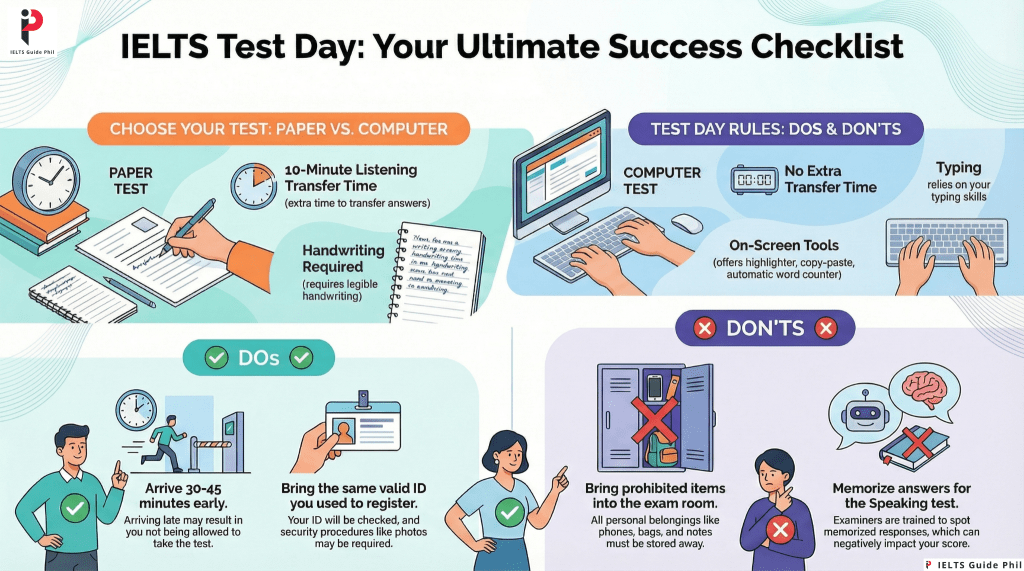
1. On the Computer, There’s No Time to Transfer Your Listening Answers
For those familiar with the paper-based IELTS, the Listening section ends with a crucial 10-minute window. This time is specifically provided for you to carefully transfer your answers from the question booklet to your official answer sheet. It’s a safety net that allows for review and corrections.
However, for the computer-based test, this 10-minute transfer time does not exist. You are required to type your answers directly into the computer as you listen to the audio. While this requires you to be fast, the computer-based format offers other advantages, such as an on-screen word counter for the Writing section and the ability to highlight text, which you should practice using beforehand. This is a critical, counter-intuitive piece of information; being unprepared for this immediate-entry format could cause unnecessary panic and significantly impact your score.
2. Your Speaking Test Could Be a Week Before or After Your Main Exam
Many candidates assume the entire IELTS exam is a single-day event. While the Listening, Reading, and Writing sections are always completed in one sitting, your Speaking test may be scheduled on the same day, or up to 7 days before or after your main test date. This logistical surprise can unsettle an unprepared candidate, so it is vital to confirm all your dates in advance to manage your travel, accommodation, and mental preparation effectively.
3. Don’t Memorize Your Speaking Answers
In an attempt to feel more prepared, a common but misguided strategy is to write and memorize answers for potential questions in the Speaking test. This is a critical mistake. Examiners are trained to spot rehearsed responses, which sound unnatural and stilted. The Speaking test is designed to assess your ability to communicate naturally and confidently, not your ability to perform a script. Focus on practicing your fluency and spontaneity rather than memorizing lines.
4. Your Mindset Is Your Secret Weapon
Your mental preparation is just as crucial as your academic study. The pressure of test day can be intense, but a strategic mindset can help you stay calm and perform at your best. This isn’t just soft advice; it’s a practical tool for success. Key strategies include:
- Trusting the hard work you’ve already put in.
- Staying positive and confident in your abilities.
- Visualizing yourself achieving your target band score.
- Using deep breathing techniques to manage anxiety if it arises.
“Success is where preparation and opportunity meet.” – Bobby Unser
Ultimately, the IELTS exam isn’t just a test of your English; it’s an assessment of your planning, strategy, and focus under pressure. By understanding the logistical nuances and cultivating a resilient mindset, you prepare for the entire challenge, not just the questions on the page. True preparation covers every aspect of the journey, right up to the final minute of the test. Remember the core message from the experts: You’ve got this!
#IELTSPrep #IELTSTips #StudySmart #ExamSuccess #MindsetMatters #IELTSStrategy #TestDayReady #IELTSSpeaking #IELTSListening #ComputerBasedIELTS #IELTSMindset #IELTSPreparation #BandScoreGoals #EnglishExamTips #BeyondTheBooks #IELTS #IELTSGuidePhil
 IELTS Guide Phil
Leave a comment