
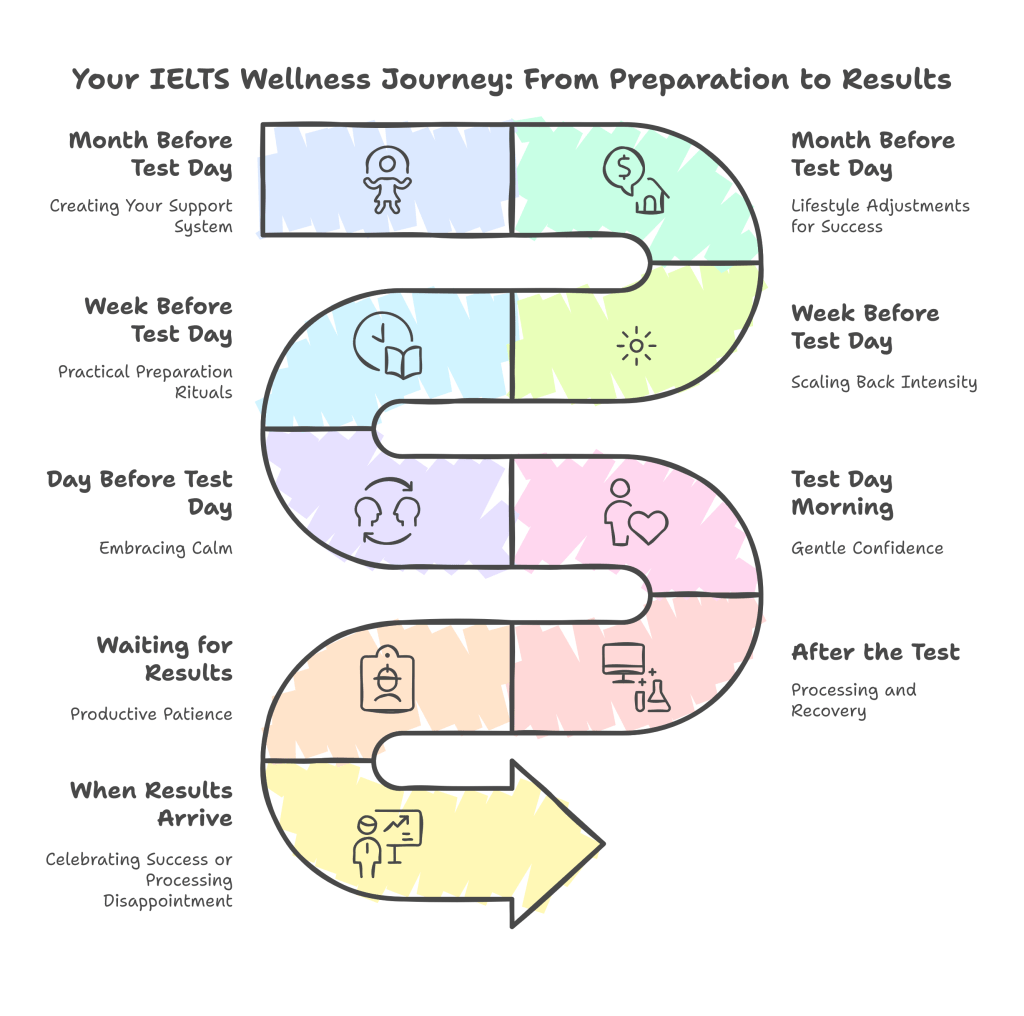
Taking the IELTS is more than just a language test—it’s a significant step toward your dreams of studying abroad, advancing your career, or starting a new chapter in your life. While technical preparation is essential, your mental and emotional well-being plays an equally crucial role in your success. This guide focuses on nurturing a healthy mindset and establishing supportive routines that will serve you well beyond test day.
The Psychology of Test Success
Understanding Test Anxiety
Test anxiety is completely normal and affects most IELTS candidates. Rather than fighting these feelings, acknowledge them as a natural response to an important event. Your nervousness actually shows how much this opportunity means to you—and that’s perfectly okay.
The key is transforming anxiety into focused energy. When you feel those butterflies, remind yourself: “I’m excited about showcasing the English skills I’ve worked so hard to develop.”
Reframing Your IELTS Journey
Instead of viewing IELTS as a hurdle to overcome, consider it a celebration of your language learning journey. You’re not just taking a test; you’re demonstrating months or years of dedication to mastering English. This shift in perspective can transform stress into pride and confidence.
Pre-Test Wellness: The Month Before
Creating Your Support System
Build your cheerleading squad: Your family and friends want to support you, but they might not know how. Share your goals with them and let them know specific ways they can help—whether that’s giving you quiet study time, celebrating small victories, or simply listening when you need to talk through your concerns.
Connect with fellow test-takers: Join online IELTS communities or local study groups. Sharing experiences with others who understand your journey can provide immense comfort and practical insights. You’ll quickly realize you’re not alone in feeling nervous or excited.
Consider professional support: If test anxiety feels overwhelming, don’t hesitate to speak with a counselor or coach. Many universities offer free counseling services, and there are professionals who specialize in test anxiety.
Lifestyle Adjustments for Success
Sleep hygiene: Establish a consistent sleep schedule at least two weeks before your test. Quality sleep improves memory consolidation, emotional regulation, and cognitive performance. Aim for 7-9 hours nightly, and create a relaxing bedtime routine that doesn’t involve screens for the hour before sleep.
Nutrition for brain health: Focus on foods that fuel sustained concentration: complex carbohydrates, lean proteins, healthy fats, and plenty of water. Limit caffeine and sugar, which can cause energy crashes. Think of your brain as a high-performance engine that deserves premium fuel.
Movement and exercise: Regular physical activity reduces stress hormones and improves mood through endorphin release. You don’t need intensive workouts—a daily 20-30 minute walk, some gentle yoga, or dancing to your favorite music can work wonders.
Mindfulness and relaxation: Incorporate brief mindfulness practices into your daily routine. This could be five minutes of deep breathing, a short meditation using apps like Headspace or Calm, or simply sitting quietly with a cup of tea while observing your surroundings.
The Week Before: Gentle Preparation Mode
Scaling Back Intensity
Resist the urge to cram intensively in the final week. Your English skills are already developed—now it’s time to maintain them while prioritizing your well-being. Light review and practice are sufficient.
Practical Preparation Rituals
Create a test day kit: Prepare everything you need in advance: ID documents, confirmation emails, comfortable clothes, and any permitted items. Having this ready reduces morning stress and gives you a sense of control.
Practice your test day routine: Do a “dress rehearsal” by waking up at your test day time, eating a similar breakfast, and doing light English practice. This familiarizes your body and mind with the rhythm of test day.
Visualization exercises: Spend a few minutes each day visualizing yourself walking confidently into the test center, feeling calm and prepared. Imagine working through the test sections successfully and leaving with a sense of accomplishment.
Managing Information Overload
Stop seeking new study materials or techniques. Trust in your preparation and avoid the temptation to learn “one more thing” that might actually create confusion or anxiety.
The Day Before: Embracing Calm
Gentle Activities
Choose relaxing activities that bring you joy: watch a favorite movie (in English for gentle exposure), cook a meal you love, spend time with supportive friends, read something enjoyable, or engage in a hobby that helps you unwind.
Emotional Check-in
It’s normal to feel a mix of emotions—excitement, nervousness, anticipation, or even some fear. Rather than judging these feelings, acknowledge them with compassion: “I notice I’m feeling anxious, and that’s completely understandable given how important this is to me.”
Final Preparations
Lay out your clothes, charge your phone, check your route to the test center, and set multiple alarms. Then consciously shift your focus away from test logistics and toward self-care.
Early Evening Wind-down
Have a light dinner, avoid alcohol and excessive caffeine, and begin your bedtime routine earlier than usual. Consider a warm bath, gentle stretching, or listening to calming music.
Test Day Morning: Gentle Confidence
Morning Routine
Wake up with enough time to avoid rushing. A hurried morning can set a stressful tone for the entire day. Follow your practiced routine: nutritious breakfast, light review if desired, and positive self-talk.
Mindful Moments
Before leaving for the test center, take a moment to appreciate how far you’ve come. You’ve dedicated time and energy to improving your English, and today is an opportunity to demonstrate that progress.
Traveling to the Test Center
Build extra travel time into your schedule to avoid rushing. Use the journey as transition time—listen to calming music, practice deep breathing, or simply observe your surroundings mindfully.
After the Test: Processing and Recovery
Immediate Post-Test Care
Congratulations—you did it! Regardless of how you feel the test went, you’ve accomplished something significant. Many test-takers experience a mix of relief, exhaustion, and uncertainty. All of these reactions are completely normal.
Avoid the post-test analysis spiral: Resist the urge to immediately dissect every section with other test-takers or search online for answers. This serves no helpful purpose and can create unnecessary anxiety about things you cannot change.
Celebration and Self-Care
Acknowledge your achievement: You prepared for and completed an important international examination. This deserves recognition, regardless of your score. Treat yourself to something special—a favorite meal, a movie, time with loved ones, or simply some well-deserved rest.
Physical recovery: Test day can be mentally and physically draining. Your body and mind need time to recover. Prioritize sleep, gentle movement, good nutrition, and hydration in the days following your test.
Emotional processing: It’s common to feel flat or emotional after a big event like IELTS. You’ve been working toward this goal for weeks or months, and it’s natural to experience some emptiness once it’s complete. Be patient with yourself as you process these feelings.
Waiting for Results: Productive Patience
Managing the Waiting Period
Results typically arrive 3-13 days after your test (depending on format), but this waiting period can feel eternal. Use this time productively rather than anxiously refreshing your email.
Reconnect with other interests: Rediscover hobbies or activities you may have neglected during your intensive preparation period. This helps restore balance to your life and provides positive distractions.
Plan for different outcomes: While staying optimistic, it’s practical to consider various scenarios. If you achieve your target score, what are your next steps? If you need to retake the test, how will you adjust your preparation? Having loose plans reduces anxiety about unknown futures.
Continue English engagement: Keep your English skills active by reading, watching movies, or having conversations, but in a relaxed, enjoyable way rather than focused study mode.
When Results Arrive
Celebrating Success
If you achieved your target score, take time to truly celebrate! Share the good news with your support system, reflect on your growth journey, and begin planning your next steps with excitement.
Processing Disappointment
If your scores didn’t meet your goals, allow yourself to feel disappointed—this is a natural and valid response. However, remember that IELTS scores reflect your performance on one specific day, not your overall English ability or your worth as a person.
Reframing “failure”: Many successful IELTS candidates took the test multiple times. Each attempt provides valuable experience and insights that improve future performance. View this not as failure, but as valuable data about areas for continued growth.
Moving Forward: Regardless of Results
Learning from the Experience
Whether you achieved your target score or plan to retake the test, reflect on what you learned about yourself during this process. What study methods worked well? How did you handle stress? What would you do differently? These insights extend far beyond IELTS preparation.
Maintaining English Progress
Your English learning journey doesn’t end with IELTS. Whether you’re preparing for academic study, career advancement, or personal growth, continue engaging with English in ways that bring you joy and serve your long-term goals.
Building on Your Achievement
Taking IELTS demonstrates courage, commitment, and resilience. These qualities will serve you well in whatever comes next—whether that’s university study, career development, or other personal goals.
Long-term Wellness Strategies
Developing Test Resilience
The skills you’ve developed preparing for and taking IELTS—time management, stress management, goal setting, and persistence—are transferable to many life situations. Recognize and appreciate these meta-skills you’ve gained.
Creating Sustainable Learning Habits
Transform your IELTS preparation experience into lasting learning habits. What routines supported your growth? How can you maintain regular English practice without the pressure of test preparation?
Supporting Others
Consider how you might support future IELTS candidates in your community. Sharing your experience, offering encouragement, or volunteering with language learning programs can provide perspective and purpose while helping others.
Remember: You Are More Than Your Score
Your IELTS score is one piece of data about your English proficiency on a specific day. It doesn’t define your intelligence, your potential, your worth, or your future success. You are a complex, capable individual with unique strengths and perspectives that extend far beyond any test score.
The courage you showed in pursuing this goal, the dedication you demonstrated in preparation, and the resilience you’ve built through this process are achievements worth celebrating regardless of your numerical results.
Final Thoughts: The Journey Continues
Your IELTS experience is one chapter in your larger story of growth, learning, and pursuing your dreams. Whether this test opens doors to your next opportunity or becomes a stepping stone to future attempts, you’ve invested in yourself and your English abilities.
Be proud of taking this step. Be kind to yourself throughout the process. Trust in your resilience and capability. And remember that every expert was once a beginner, every success story includes challenges, and your journey is uniquely yours.
The skills, confidence, and self-awareness you’ve gained through this experience will serve you long after your IELTS scores arrive. You’re not just preparing for a test—you’re preparing for success in your academic, professional, and personal endeavors.
Trust the process, trust yourself, and remember that you have everything within you to achieve your goals, whether with this IELTS attempt or the next. Your dreams are worth the effort, and you are capable of making them reality.
#IELTSGuidePhil #IELTSMindset #TestAnxiety #IELTSWellness #LanguageLearning #TestPreparation #IELTSMotivation #StudyAbroad #EnglishLearning #IELTSSupport #MentalHealth #TestSuccess #IELTSJourney #SelfCare #ExamStress #IELTSConfidence #LanguageGoals #PersonalGrowth #IELTSCommunity #TestStrategy #PositiveMindset #IELTSLife #EnglishProficiency #StudyMotivation #IELTSInspiration
 IELTS Guide Phil
Leave a comment