
IELTS Writing Task 1 General Training requires you to write a letter in response to a given situation. While the content differs from Academic Task 1, Grammatical Range and Accuracy remains equally crucial, accounting for 25% of your total score. Understanding how to demonstrate grammatical variety and precision in letter writing is essential for achieving your target band score. You can watch this YouTube video explainer by IELTS Guide Phil.
What is Grammatical Range and Accuracy in Letter Writing?
Grammatical Range refers to the variety of grammatical structures you use throughout your letter. This includes different sentence types, verb tenses, conditionals, and modal verbs appropriate for letter writing contexts.
Grammatical Accuracy refers to how correctly you use these structures. Your grammar should support clear communication and maintain the appropriate tone for your letter type (formal, semi-formal, or informal).
Band Score Descriptors for Grammatical Range and Accuracy
Band 9
- Uses a wide range of structures with full flexibility and accuracy
- Rare minor errors occur only as ‘slips’
- Grammar supports sophisticated expression of ideas
Band 8
- Uses a wide range of structures flexibly and accurately
- Majority of sentences are error-free
- Makes only occasional errors that don’t impede communication
Band 7
- Uses a variety of complex structures appropriately
- Frequently produces error-free sentences
- Has good control of grammar and punctuation but may make a few errors
Band 6
- Uses a mix of simple and complex sentence forms
- Makes some errors in grammar and punctuation but they rarely reduce communication
- Grammar generally supports the letter’s purpose
Band 5
- Uses only a limited range of structures
- Attempts complex sentences but these tend to be less accurate than simple sentences
- Frequent grammatical errors may cause some difficulty for the reader
Essential Grammar Structures for Letter Writing
1. Letter-Appropriate Tenses
- Present Perfect: “I have been experiencing problems with…”
- Past Simple: “I visited your store last week and encountered…”
- Future forms: “I will be traveling next month and would like to…”
- Present Continuous: “I am writing to complain about…”
2. Modal Verbs and Conditionals
- Politeness: “Could you please help me with…?” “I would appreciate if you could…”
- Conditionals: “If you could arrange this, I would be very grateful.”
- Suggestions: “You might want to consider…” “Perhaps you could…”
3. Complex Sentence Structures
- Relative clauses: “The product, which I purchased last month, has stopped working.”
- Participial constructions: “Having waited for two hours, I decided to leave.”
- Subordinate clauses: “Although I understand your policy, I believe an exception should be made.”
4. Appropriate Formality Levels
- Formal: “I am writing to express my dissatisfaction with…”
- Semi-formal: “I wanted to let you know about a problem I’ve had…”
- Informal: “I’m writing to tell you about my amazing trip!”
5. Linking and Cohesive Devices
- “Furthermore,” “However,” “In addition,” “As a result”
- “Despite this,” “Nevertheless,” “On the other hand”
Letter Type Examples with Grammar Focus
Formal Complaint Letter
Situation: You bought a defective product and want a refund.
❌ Poor grammar: “Dear Sir, I buy your product last week but it not work good. I want money back because is broken. Please send refund quick.”
✅ Good grammar: “Dear Sir or Madam, I am writing to express my dissatisfaction with a product I purchased from your store last week. Unfortunately, the item has proved to be defective and I would therefore like to request a full refund. I would appreciate it if this matter could be resolved promptly.”
Semi-formal Information Request
Situation: You want information about a course at a local college.
❌ Poor grammar: “Dear Sir, I want know about English course in your college. Can you tell me when it start and how much cost? I need this information because I want improve my English.”
✅ Good grammar: “Dear Course Administrator, I am writing to inquire about the English language courses offered at your college. Could you please provide me with information regarding the course schedule, fees, and entry requirements? I would be particularly interested in knowing when the next intake begins, as I am keen to improve my English skills.”
Informal Thank You Letter
Situation: Thank a friend for helping you move house.
❌ Poor grammar: “Dear John, Thank you for help me moving house last week. It was very helpful and I appreciate much. Without your help, I cannot finish everything.”
✅ Good grammar: “Dear John, I wanted to write and thank you for all your help with moving house last week. Your assistance was invaluable, and I honestly don’t know how I would have managed without you. The whole process went so much more smoothly because of your support.”
Common Mistakes and How to Fix Them
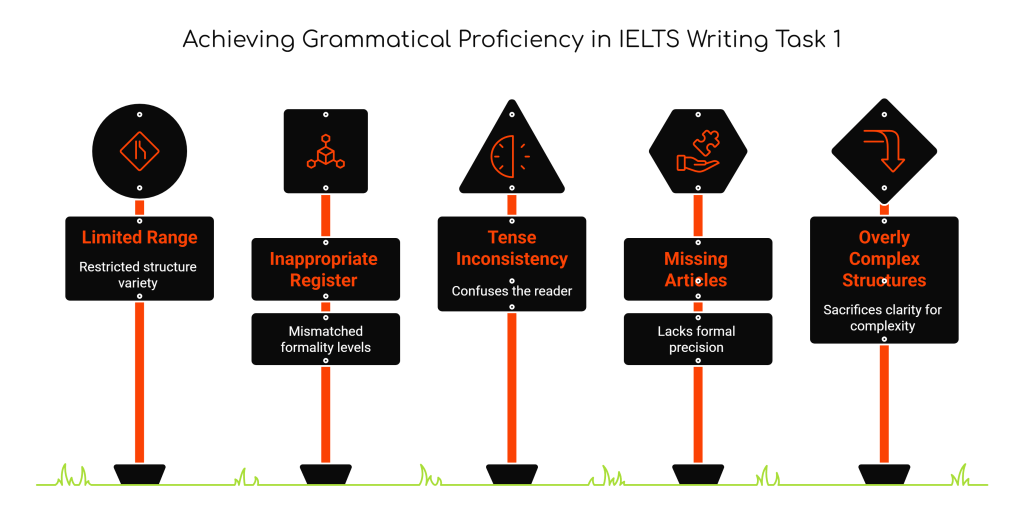
Mistake 1: Inappropriate Register/Formality
❌ Formal letter: “Hi there! I’m really mad about this broken thing I bought.” ✅ Formal letter: “Dear Sir/Madam, I am writing to express my concern regarding a defective product I recently purchased.”
Mistake 2: Incorrect Modal Verb Usage
❌ “You must help me immediately with this problem.”
✅ “I would be grateful if you could assist me with this matter.” (formal)
✅ “Could you possibly help me with this?” (semi-formal)
Mistake 3: Tense Inconsistency
❌ “I visited your restaurant last week and I am having a terrible experience.” ✅ “I visited your restaurant last week and had a terrible experience.”
Mistake 4: Missing Articles in Formal Contexts
❌ “I am writing to complain about service I received.”
✅ “I am writing to complain about the service I received.”
Mistake 5: Overly Complex Structures
❌ “Despite the fact that I have been, throughout the entire duration of my experience, consistently disappointed by what I would characterize as inadequate service…”
✅ “Although I have been consistently disappointed by the inadequate service during my recent visits…”
Mistake 6: Inappropriate Contractions in Formal Letters
❌ Formal: “I can’t understand why you haven’t replied to my previous letter.” ✅ Formal: “I cannot understand why you have not replied to my previous letter.”
✅ Informal: “I can’t understand why you haven’t replied!” (appropriate for friends/family)
Essential Dos and Don’ts
✅ DOs
1. Match Grammar to Letter Type
- Use appropriate formality level throughout
- Employ suitable modal verbs for politeness
- Choose correct pronouns and titles
2. Vary Your Sentence Structures
- Mix simple, compound, and complex sentences
- Use different sentence beginnings
- Include appropriate subordinate clauses
3. Use Letter-Specific Grammar Patterns
- Opening phrases: “I am writing to…” “I would like to…”
- Request language: “Could you please…” “I would appreciate…”
- Closing expressions: “I look forward to…” “Thank you for your time…”
4. Maintain Consistent Tone
- Keep the same level of formality throughout
- Use grammar that supports your letter’s purpose
- Ensure politeness in requests and complaints
5. Use Appropriate Conditionals
- First conditional for likely outcomes
- Second conditional for polite requests
- Mixed conditionals for complex situations
❌ DON’Ts
1. Don’t Mix Formality Levels
- Avoid switching between formal and informal grammar
- Don’t use slang in formal letters
- Maintain consistency in address forms
2. Don’t Overuse Complex Grammar
- Avoid unnecessarily complicated structures
- Don’t sacrifice clarity for complexity
- Keep sentences manageable in length
3. Don’t Ignore Letter Conventions
- Don’t forget appropriate openings and closings
- Avoid inappropriate contractions in formal contexts
- Don’t use overly direct language in complaints
4. Don’t Neglect Punctuation
- Use commas correctly in addresses and dates
- Include proper punctuation in formal expressions
- Be consistent with punctuation style
5. Don’t Use Inappropriate Modal Verbs
- Avoid “must” in requests (too direct)
- Don’t use “will” for polite requests
- Choose modals that match your letter’s tone
Grammar Patterns for Different Letter Types
Formal Letters (Complaints, Job Applications, Official Requests)
Opening patterns:
- “I am writing to express my concern about…”
- “I would like to apply for the position of…”
- “I am writing with regard to…”
Body paragraphs:
- “I would be grateful if you could…”
- “Unfortunately, I must inform you that…”
- “I believe it would be appropriate to…”
Closing patterns:
- “I look forward to hearing from you.”
- “I would appreciate your prompt attention to this matter.”
- “Thank you for your consideration.”
Semi-formal Letters (Neighbors, Acquaintances, Service Providers)
Opening patterns:
- “I’m writing to let you know about…”
- “I wanted to ask you about…”
- “I hope you don’t mind me writing…”
Body paragraphs:
- “Could you possibly help me with…?”
- “I was wondering if you might be able to…”
- “Perhaps you could consider…”
Closing patterns:
- “Thanks for your help with this.”
- “I’d really appreciate your assistance.”
- “Hope to hear from you soon.”
Informal Letters (Friends, Family)
Opening patterns:
- “Great to hear from you!”
- “Hope you’re doing well!”
- “Just wanted to drop you a line…”
Body paragraphs:
- “Guess what happened to me!”
- “You’ll never believe what I did…”
- “I can’t wait to tell you about…”
Closing patterns:
- “Can’t wait to see you!”
- “Write back soon!”
- “Love,” “Cheers,” “Best wishes,”
Practice Strategies
1. Letter Type Identification
Practice identifying whether a prompt requires formal, semi-formal, or informal register, then use appropriate grammar accordingly.
2. Grammar Pattern Drills
Focus on letter-specific patterns:
- Request language practice
- Complaint expression exercises
- Thank you and appreciation structures
3. Register Consistency Exercises
Write the same content in different registers to practice maintaining appropriate grammar throughout.
4. Modal Verb Practice
Practice using different modal verbs for various letter functions (requesting, suggesting, complaining, thanking).
Frequently Asked Questions
Q1: How do I know which grammar level to use for different letter types?
A: Match your grammar to the relationship with the recipient. Formal letters (unknown recipients, official contexts) require more complex, polite structures. Informal letters (friends, family) can use simpler, more direct grammar with contractions.
Q2: Can I use contractions in IELTS GT Writing Task 1?
A: Yes, but only in informal letters to friends or family. Avoid contractions in formal and semi-formal letters as they’re considered too casual for these contexts.
Q3: Should I use complex grammar even in informal letters?
A: While informal letters allow for simpler structures, you still need to demonstrate grammatical range. Use a variety of sentence types and some complex structures, but keep the tone natural and friendly.
Q4: How important are modal verbs in letter writing?
A: Very important. Modal verbs help you express politeness, make requests, give suggestions, and show appropriate levels of certainty. They’re essential for achieving the right tone in your letter.
Q5: What’s the most common grammar mistake in GT Task 1?
A: Inconsistent formality levels – mixing formal and informal grammar within the same letter. Also, using inappropriate modal verbs for requests (e.g., “you must” instead of “could you please”).
Q6: How can I make my grammar more sophisticated without being overly complex?
A: Use varied sentence beginnings, include appropriate subordinate clauses, employ a range of modal verbs, and use different tenses where appropriate. Focus on structures that serve your communication purpose.
Q7: Is passive voice appropriate in letter writing?
A: Yes, especially in formal complaints or when you want to sound diplomatic: “Mistakes were made” rather than “You made mistakes.” However, don’t overuse it.
Q8: How do I avoid being too direct in complaint letters?
A: Use conditional structures (“I would appreciate if you could…”), passive voice for sensitive topics, and modal verbs that soften your requests (“might,” “could,” “would”).
Sample Grammar Structures by Letter Purpose
Making Requests
- “I would be grateful if you could…”
- “Could you possibly arrange for…?”
- “I was wondering if it might be possible to…”
- “Would it be convenient for you to…?”
Making Complaints
- “I am writing to express my dissatisfaction with…”
- “Unfortunately, I must bring to your attention…”
- “I feel compelled to inform you that…”
- “I believe you should be aware that…”
Giving Information
- “I am pleased to inform you that…”
- “You might be interested to know that…”
- “I thought you should know that…”
- “I wanted to let you know that…”
Expressing Gratitude
- “I cannot thank you enough for…”
- “I am extremely grateful for your…”
- “Your assistance has been invaluable…”
- “I really appreciate everything you’ve done…”
Making Suggestions
- “Perhaps you might consider…”
- “It might be worth exploring…”
- “You could possibly try…”
- “Have you thought about…?”
Final Tips for Success
- Identify the letter type first – this determines your grammatical choices
- Practice register consistency – maintain the same formality level throughout
- Master letter-specific phrases – learn appropriate openings, transitions, and closings
- Use modal verbs effectively – they’re crucial for politeness and appropriate tone
- Vary your sentence structures – show range while maintaining clarity
- Time yourself – practice completing letters in 20 minutes
- Check formality consistency – ensure your grammar matches the required register
- Study model answers – analyze how different letter types use grammar differently
Conclusion
Achieving high scores in Grammatical Range and Accuracy for IELTS General Training Writing Task 1 requires understanding how grammar serves different letter-writing purposes. By mastering appropriate register, using varied sentence structures, and employing letter-specific grammatical patterns, you can effectively communicate your message while demonstrating the grammatical range examiners are looking for. Remember that in letter writing, grammar should always support your communication purpose and maintain the appropriate relationship with your reader.
The key to success lies in matching your grammatical choices to your letter type, maintaining consistency throughout, and demonstrating variety without sacrificing clarity or appropriateness.
#IELTSGuidePhil #IELTS #IELTSWriting #IELTSTask1GT #IELTSGeneralTraining #IELTSGrammar #IELTSPreparation #LetterWriting #EnglishGrammar #IELTSBand7 #IELTSBand8 #IELTSStudy #TestPreparation #FormalLetters #InformalLetters #WritingSkills #IELTSExam #LanguageLearning #TestTaking #IELTSHelp #StudyTips #EnglishLanguageLearning #IELTSSuccess #GrammarTips #ModalVerbs #RegisterAndTone
 IELTS Guide Phil
Leave a comment