
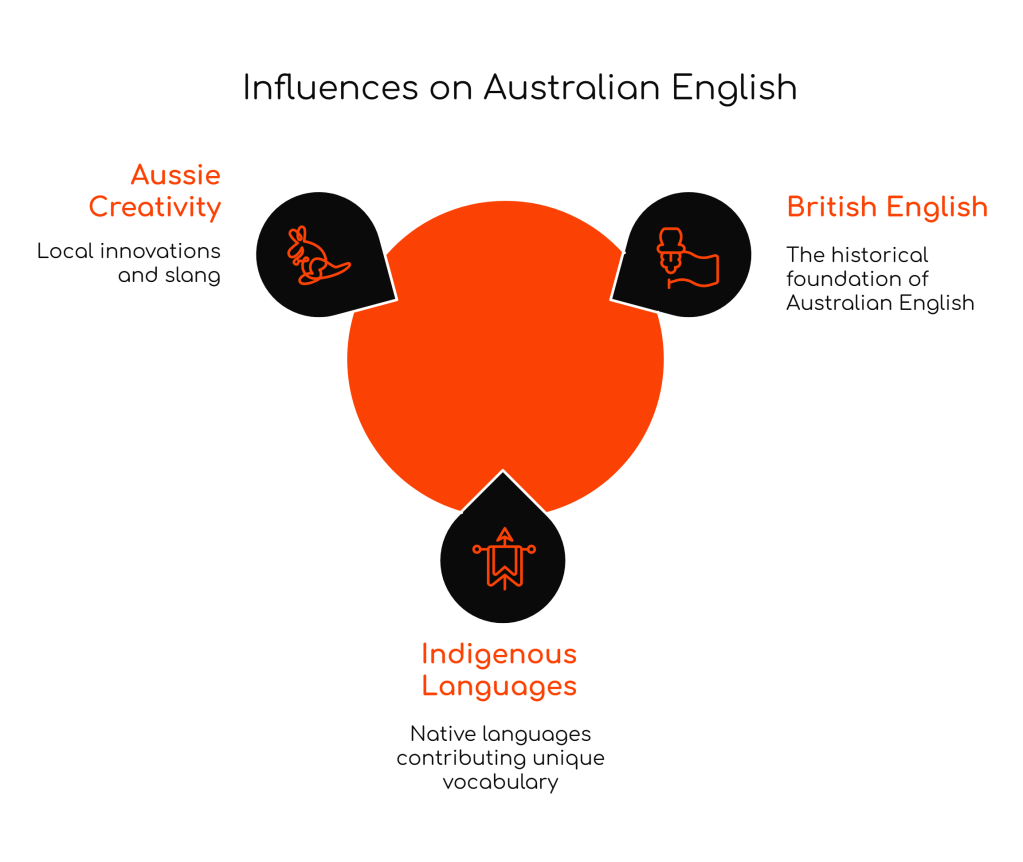
G’day mate! Whether you’re an American heading Down Under or an Aussie planning a trip to the States, understanding the unique vocabulary differences between American and Australian English can save you from some pretty amusing misunderstandings. Australian English has its own colorful character, influenced by British English, Indigenous languages, and a healthy dose of Aussie creativity. Let’s dive into 100 fascinating word differences that’ll help you navigate conversations on either side of the Pacific.
Food & Drink
1. Cookie (US) → Biscuit (AU)
- Meaning: Sweet baked treat
- American: “I’ll have a chocolate chip cookie with my coffee.”
- Australian: “I’ll have a chocolate chip biscuit with my coffee.”
2. Candy (US) → Lollies (AU)
- Meaning: Confectionery treats
- American: “The kids love Halloween candy.”
- Australian: “The kids love lollies from the corner shop.”
3. Popsicle (US) → Icy pole (AU)
- Meaning: Frozen treat on a stick
- American: “It’s hot; let’s get some popsicles.”
- Australian: “It’s hot; let’s get some icy poles.”
4. Ketchup (US) → Tomato sauce (AU)
- Meaning: Tomato-based condiment
- American: “Pass the ketchup for the fries.”
- Australian: “Pass the tomato sauce for the chips.”
5. Jell-O (US) → Jelly (AU)
- Meaning: Gelatin dessert
- American: “The kids love green Jell-O.”
- Australian: “The kids love green jelly.”
6. Cotton candy (US) → Fairy floss (AU)
- Meaning: Spun sugar confection
- American: “Let’s get cotton candy at the fair.”
- Australian: “Let’s get fairy floss at the show.”
7. Soda/Soft drink (US) → Soft drink/Fizzy drink (AU)
- Meaning: Carbonated beverage
- American: “I’ll have a soda with lunch.”
- Australian: “I’ll have a soft drink with lunch.”
8. Cooler (US) → Esky (AU)
- Meaning: Insulated container for drinks
- American: “Pack the drinks in the cooler.”
- Australian: “Pack the drinks in the esky.”
9. Barbecue (US) → Barbie (AU)
- Meaning: Outdoor cooking event
- American: “We’re having a barbecue this weekend.”
- Australian: “We’re having a barbie this weekend.”
10. Zucchini (US) → Zucchini (AU)
- Meaning: Green summer squash
- American: “Add some zucchini to the pasta.”
- Australian: “Add some zucchini to the pasta.”
Transportation & Automotive
11. Truck (US) → Ute (AU)
- Meaning: Small pickup truck
- American: “Load the supplies in the truck.”
- Australian: “Load the supplies in the ute.”
12. Semi-truck (US) → Road train (AU)
- Meaning: Large freight vehicle
- American: “The semi-truck is carrying produce.”
- Australian: “The road train is carrying produce.”
13. Station wagon (US) → Wagon (AU)
- Meaning: Large family car
- American: “They drive a station wagon.”
- Australian: “They drive a wagon.”
14. Hood (US) → Bonnet (AU)
- Meaning: Car engine cover
- American: “Check under the hood.”
- Australian: “Check under the bonnet.”
15. Trunk (US) → Boot (AU)
- Meaning: Car’s rear storage
- American: “Put the groceries in the trunk.”
- Australian: “Put the groceries in the boot.”
16. Turn signal (US) → Indicator (AU)
- Meaning: Car’s directional light
- American: “Use your turn signal.”
- Australian: “Use your indicator.”
17. Windshield (US) → Windscreen (AU)
- Meaning: Front car window
- American: “The windshield is cracked.”
- Australian: “The windscreen is cracked.”
18. Gas/Gasoline (US) → Petrol (AU)
- Meaning: Vehicle fuel
- American: “We need to get gas.”
- Australian: “We need to get petrol.”
19. Gas station (US) → Petrol station/Service station (AU)
- Meaning: Fuel retail location
- American: “Stop at the next gas station.”
- Australian: “Stop at the next servo.”
20. Parking lot (US) → Car park (AU)
- Meaning: Vehicle parking area
- American: “The parking lot is full.”
- Australian: “The car park is full.”
Clothing & Accessories
21. Sneakers (US) → Runners (AU)
- Meaning: Athletic shoes
- American: “I need new sneakers for the gym.”
- Australian: “I need new runners for the gym.”
22. Flip-flops (US) → Thongs (AU)
- Meaning: Rubber sandals
- American: “I’ll wear flip-flops to the beach.”
- Australian: “I’ll wear thongs to the beach.”
23. Sweater (US) → Jumper (AU)
- Meaning: Knitted pullover
- American: “It’s cold; grab a sweater.”
- Australian: “It’s cold; grab a jumper.”
24. Pants (US) → Trousers (AU)
- Meaning: Leg-covering garments
- American: “These pants are too long.”
- Australian: “These trousers are too long.”
25. Underwear (US) → Undies (AU)
- Meaning: Undergarments
- American: “I need to buy new underwear.”
- Australian: “I need to buy new undies.”
26. Swimsuit (US) → Swimmers/Togs (AU)
- Meaning: Swimming attire
- American: “Don’t forget your swimsuit.”
- Australian: “Don’t forget your swimmers.”
27. Raincoat (US) → Raincoat/Mac (AU)
- Meaning: Waterproof jacket
- American: “Bring a raincoat; it might rain.”
- Australian: “Bring a raincoat; it might rain.”
Home & Living
28. Apartment (US) → Flat/Unit (AU)
- Meaning: Residential dwelling
- American: “They live in a nice apartment.”
- Australian: “They live in a nice flat.”
29. Realtor (US) → Real estate agent (AU)
- Meaning: Property sales professional
- American: “Our realtor found us a great house.”
- Australian: “Our real estate agent found us a great house.”
30. Faucet (US) → Tap (AU)
- Meaning: Water control device
- American: “The faucet is leaking.”
- Australian: “The tap is leaking.”
31. Garbage (US) → Rubbish (AU)
- Meaning: Waste material
- American: “Take out the garbage.”
- Australian: “Take out the rubbish.”
32. Trash can (US) → Bin (AU)
- Meaning: Waste container
- American: “The trash can is full.”
- Australian: “The bin is full.”
33. Flashlight (US) → Torch (AU)
- Meaning: Portable light
- American: “Grab the flashlight.”
- Australian: “Grab the torch.”
34. Outlet (US) → Power point (AU)
- Meaning: Electrical socket
- American: “Plug it into the outlet.”
- Australian: “Plug it into the power point.”
35. Closet (US) → Wardrobe (AU)
- Meaning: Clothes storage space
- American: “Hang it in the closet.”
- Australian: “Hang it in the wardrobe.”
36. Backyard (US) → Backyard (AU)
- Meaning: Rear outdoor space
- American: “The kids are playing in the backyard.”
- Australian: “The kids are playing in the backyard.”
Entertainment & Media
37. Movie (US) → Film (AU)
- Meaning: Motion picture
- American: “Let’s watch a movie.”
- Australian: “Let’s watch a film.”
38. Movie theater (US) → Cinema (AU)
- Meaning: Film venue
- American: “Meet me at the movie theater.”
- Australian: “Meet me at the cinema.”
39. TV (US) → Telly (AU)
- Meaning: Television
- American: “What’s on TV tonight?”
- Australian: “What’s on the telly tonight?”
40. Remote control (US) → Remote (AU)
- Meaning: TV controller
- American: “Where’s the remote control?”
- Australian: “Where’s the remote?”
41. Commercial (US) → Ad/Advert (AU)
- Meaning: Television advertisement
- American: “The commercial was funny.”
- Australian: “The ad was funny.”
School & Education
42. Elementary school (US) → Primary school (AU)
- Meaning: Early education
- American: “She teaches elementary school.”
- Australian: “She teaches primary school.”
43. High school (US) → Secondary school/High school (AU)
- Meaning: Teenage education
- American: “He’s starting high school.”
- Australian: “He’s starting high school.”
44. Principal (US) → Principal/Head teacher (AU)
- Meaning: School leader
- American: “The principal called a meeting.”
- Australian: “The principal called a meeting.”
45. Eraser (US) → Rubber (AU)
- Meaning: Pencil mark remover
- American: “Can I borrow your eraser?”
- Australian: “Can I borrow your rubber?”
46. Backpack (US) → Schoolbag (AU)
- Meaning: Student’s bag
- American: “Pack your backpack for school.”
- Australian: “Pack your schoolbag for school.”
47. Recess (US) → Break/Recess (AU)
- Meaning: School break time
- American: “The kids play during recess.”
- Australian: “The kids play during break.”
48. Math (US) → Maths (AU)
- Meaning: Mathematics
- American: “Math is my favorite subject.”
- Australian: “Maths is my favourite subject.”
Sports & Recreation
49. Soccer (US) → Football (AU)
- Meaning: Sport with round ball
- American: “The soccer game is tonight.”
- Australian: “The football match is tonight.”
50. Football (US) → American football (AU)
- Meaning: Sport with oval ball
- American: “Sunday football is popular.”
- Australian: “American football is less common here.”
51. Field (US) → Ground/Oval (AU)
- Meaning: Sports playing area
- American: “The players ran onto the field.”
- Australian: “The players ran onto the ground.”
52. Team (US) → Side (AU)
- Meaning: Sports group
- American: “Our team won the championship.”
- Australian: “Our side won the championship.”
53. Game (US) → Match (AU)
- Meaning: Sporting event
- American: “What time is the game?”
- Australian: “What time is the match?”
54. Coach (US) → Coach (AU)
- Meaning: Team trainer
- American: “The coach called a timeout.”
- Australian: “The coach called a timeout.”
Work & Business
55. Resume (US) → CV/Resume (AU)
- Meaning: Job application document
- American: “Send me your resume.”
- Australian: “Send me your CV.”
56. Vacation (US) → Holiday (AU)
- Meaning: Time off work
- American: “I’m taking a vacation.”
- Australian: “I’m taking a holiday.”
57. Raise (US) → Pay rise (AU)
- Meaning: Salary increase
- American: “She got a raise.”
- Australian: “She got a pay rise.”
58. Fired (US) → Sacked (AU)
- Meaning: Dismissed from job
- American: “He was fired yesterday.”
- Australian: “He was sacked yesterday.”
Money & Shopping
59. Bill (US) → Note (AU)
- Meaning: Paper money
- American: “Do you have a twenty-dollar bill?”
- Australian: “Do you have a twenty-dollar note?”
60. Check (US) → Cheque (AU)
- Meaning: Written payment
- American: “I’ll pay by check.”
- Australian: “I’ll pay by cheque.”
61. Store (US) → Shop (AU)
- Meaning: Retail establishment
- American: “I’m going to the store.”
- Australian: “I’m going to the shop.”
62. Shopping cart (US) → Trolley (AU)
- Meaning: Shopping basket on wheels
- American: “Get a shopping cart.”
- Australian: “Get a trolley.”
63. Purse (US) → Handbag (AU)
- Meaning: Woman’s bag
- American: “She forgot her purse.”
- Australian: “She forgot her handbag.”
64. Wallet (US) → Wallet (AU)
- Meaning: Money holder
- American: “My wallet is in my pocket.”
- Australian: “My wallet is in my pocket.”
Health & Medicine
65. Drugstore (US) → Pharmacy/Chemist (AU)
- Meaning: Medicine shop
- American: “Pick up the prescription at the drugstore.”
- Australian: “Pick up the prescription at the chemist.”
66. Band-Aid (US) → Band-Aid/Bandage (AU)
- Meaning: Adhesive bandage
- American: “Put a Band-Aid on that cut.”
- Australian: “Put a Band-Aid on that cut.”
67. Physical therapy (US) → Physiotherapy (AU)
- Meaning: Rehabilitation treatment
- American: “She needs physical therapy.”
- Australian: “She needs physiotherapy.”
Communication & Technology
68. Cell phone (US) → Mobile phone/Mobile (AU)
- Meaning: Portable phone
- American: “My cell phone is dead.”
- Australian: “My mobile is dead.”
69. Zip code (US) → Postcode (AU)
- Meaning: Mail sorting code
- American: “What’s your zip code?”
- Australian: “What’s your postcode?”
70. Mail (US) → Post/Mail (AU)
- Meaning: Postal service
- American: “The mail arrives at noon.”
- Australian: “The post arrives at noon.”
71. Mailbox (US) → Letterbox (AU)
- Meaning: Mail container
- American: “Check the mailbox.”
- Australian: “Check the letterbox.”
72. Mailman (US) → Postie (AU)
- Meaning: Mail carrier
- American: “The mailman delivered a package.”
- Australian: “The postie delivered a package.”
Baby & Children
73. Diaper (US) → Nappy (AU)
- Meaning: Baby’s absorbent garment
- American: “The baby needs a diaper change.”
- Australian: “The baby needs a nappy change.”
74. Pacifier (US) → Dummy (AU)
- Meaning: Baby’s soother
- American: “Where’s the baby’s pacifier?”
- Australian: “Where’s the baby’s dummy?”
75. Stroller (US) → Pram/Pusher (AU)
- Meaning: Baby transport
- American: “Push the stroller to the park.”
- Australian: “Push the pram to the park.”
76. Crib (US) → Cot (AU)
- Meaning: Baby’s bed
- American: “The baby is sleeping in the crib.”
- Australian: “The baby is sleeping in the cot.”
Tools & Hardware
77. Wrench (US) → Spanner (AU)
- Meaning: Bolt-turning tool
- American: “Hand me that wrench.”
- Australian: “Hand me that spanner.”
78. Screwdriver (US) → Screwdriver (AU)
- Meaning: Screw-turning tool
- American: “I need a Phillips screwdriver.”
- Australian: “I need a Phillips screwdriver.”
79. Pliers (US) → Pliers (AU)
- Meaning: Gripping tool
- American: “Use the pliers to grip it.”
- Australian: “Use the pliers to grip it.”
80. Hammer (US) → Hammer (AU)
- Meaning: Striking tool
- American: “Hit the nail with the hammer.”
- Australian: “Hit the nail with the hammer.”
Australian-Specific Terms
81. Thongs (US: underwear) → Thongs (AU: flip-flops)
- Meaning: Rubber sandals vs. underwear
- American: “Thongs are a type of underwear.”
- Australian: “Thongs are perfect for the beach.”
82. Rubber (US: eraser) → Rubber (AU: eraser)
- Meaning: Pencil mark remover
- American: “Can I borrow your rubber?”
- Australian: “Can I borrow your rubber?”
83. Fanny (US: vulgar term) → Fanny (AU: very vulgar term)
- Meaning: Considered more offensive in Australia
- American: “Pack it in your fanny pack.”
- Australian: “Pack it in your bum bag.” (fanny is very rude)
84. Rubber boots (US) → Gumboots (AU)
- Meaning: Waterproof boots
- American: “Wear your rubber boots in the rain.”
- Australian: “Wear your gumboots in the rain.”
85. Saran wrap (US) → Glad wrap (AU)
- Meaning: Plastic food wrap
- American: “Cover it with Saran wrap.”
- Australian: “Cover it with Glad wrap.”
86. Parka (US) → Puffer jacket (AU)
- Meaning: Warm winter coat
- American: “Wear your parka; it’s freezing.”
- Australian: “Wear your puffer jacket; it’s freezing.”
Australian Slang & Unique Terms
87. Awesome (US) → Brilliant/Ripper (AU)
- Meaning: Excellent or great
- American: “That concert was awesome!”
- Australian: “That concert was brilliant!”
88. Buddy/Pal (US) → Mate (AU)
- Meaning: Friend
- American: “Hey buddy, how’s it going?”
- Australian: “Hey mate, how’s it going?”
89. Restroom (US) → Toilet/Loo (AU)
- Meaning: Bathroom
- American: “Where’s the restroom?”
- Australian: “Where’s the toilet?”
90. Liquor store (US) → Bottle shop/Bottle-o (AU)
- Meaning: Alcohol retailer
- American: “Stop by the liquor store.”
- Australian: “Stop by the bottle-o.”
91. Convenience store (US) → Corner shop/Milk bar (AU)
- Meaning: Small retail store
- American: “Grab some milk from the convenience store.”
- Australian: “Grab some milk from the corner shop.”
92. Pickup truck (US) → Ute (AU)
- Meaning: Small truck
- American: “Load the tools in the pickup truck.”
- Australian: “Load the tools in the ute.”
93. Cooler (US) → Esky (AU)
- Meaning: Insulated container
- American: “Pack the beer in the cooler.”
- Australian: “Pack the beer in the esky.”
94. Definitely (US) → Definitely/Too right (AU)
- Meaning: Certainly
- American: “I’ll definitely be there.”
- Australian: “I’ll definitely be there, too right!”
95. Afternoon (US) → Arvo (AU)
- Meaning: Time after noon
- American: “See you this afternoon.”
- Australian: “See you this arvo.”
96. Breakfast (US) → Brekkie (AU)
- Meaning: Morning meal
- American: “What’s for breakfast?”
- Australian: “What’s for brekkie?”
97. Chocolate (US) → Choccy (AU)
- Meaning: Cocoa confection
- American: “I love chocolate cake.”
- Australian: “I love choccy cake.”
98. Mosquito (US) → Mozzie (AU)
- Meaning: Biting insect
- American: “The mosquitoes are bad tonight.”
- Australian: “The mozzies are bad tonight.”
99. Sunglasses (US) → Sunnies (AU)
- Meaning: Eye protection
- American: “Don’t forget your sunglasses.”
- Australian: “Don’t forget your sunnies.”
100. Definitely (US) → Fair dinkum (AU)
- Meaning: Genuine or true
- American: “That’s definitely true.”
- Australian: “That’s fair dinkum.”
Understanding Australian English
Australian English is a fascinating blend of British English foundations with unique local innovations. The tendency to shorten words and add “-ie” or “-o” endings (like “arvo” for afternoon, “brekkie” for breakfast) is distinctly Australian. This linguistic creativity reflects the laid-back, friendly nature of Australian culture.
Cultural Context
Many of these differences stem from Australia’s history as a British colony, which explains why Australian English often aligns more closely with British English than American English. However, Australia has also developed its own unique vocabulary, particularly for local flora, fauna, and cultural concepts.
The use of “mate” as a universal term of address, regardless of actual friendship, exemplifies the egalitarian nature of Australian society. Similarly, the tendency to use diminutives (shortened forms) reflects the informal, approachable character of Australian communication.
Practical Tips
When visiting Australia or communicating with Australians:
- Be prepared for confusion with “thongs” – they’re flip-flops, not underwear!
- “Fanny” is considered very rude – use “bum” instead if you must refer to that body part
- Embrace the abbreviations – Australians love shortening words
- “Rubber” means eraser – not what Americans might think
- Sports terminology differs – “football” usually means Australian Rules Football or soccer
Regional Variations
Just as American English varies by region, Australian English has its own regional differences. Terms like “swimmers” vs. “togs” for swimwear, or “devon” vs. “fritz” for processed meat, can vary between states. These regional variations add even more richness to the Australian English tapestry.
Final Thoughts
Whether you’re planning a trip to Australia, working with Australian colleagues, or simply curious about how English has evolved in different parts of the world, understanding these vocabulary differences helps bridge cultural gaps. The beauty of Australian English lies not just in its unique words, but in how it reflects the Australian spirit – direct, friendly, and unpretentious.
Remember, language is about communication and connection. While these differences exist, Australians and Americans generally understand each other well. The key is to approach these differences with humor and curiosity – after all, they’re part of what makes our shared language so wonderfully diverse.
So whether you’re grabbing a cold one from the esky or packing a cooler for the beach, putting on your thongs or flip-flops, or heading to the bottle-o or liquor store, you’re participating in the rich, evolving story of English across the Pacific. Fair dinkum!
#IELTSGuidePhil #AmericanEnglish #AustralianEnglish #Aussie #EnglishLanguage #Vocabulary #LanguageLearning #ESL #EnglishDifferences #AustralianSlang #EnglishVariations #LanguageVariations #EnglishWords #LearnEnglish #EnglishTips #LanguageEducation #EnglishVocabulary #AmericanVsAustralian #EnglishGrammar #LanguageFacts #AustralianCulture #G’day #Mate #FairDinkum #DownUnder #EnglishAccent
 IELTS Guide Phil
Leave a comment