
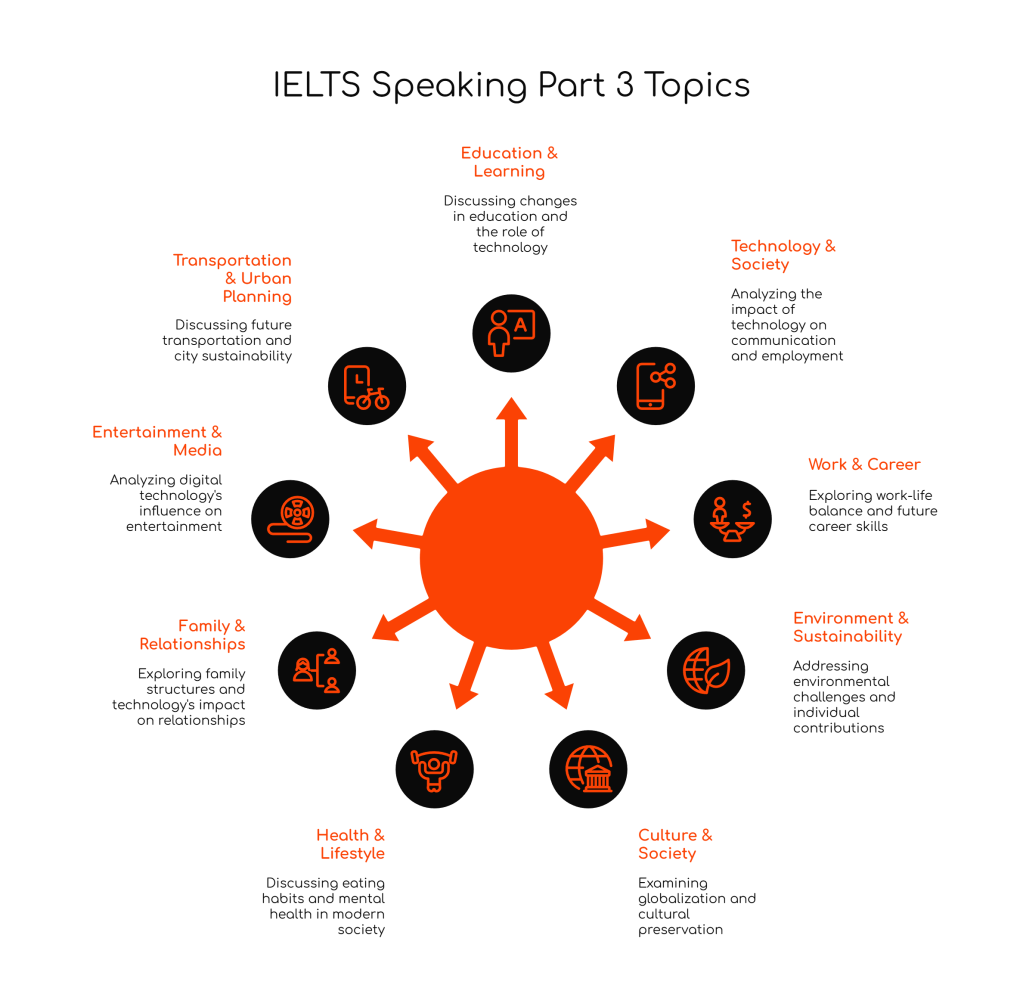
Introduction to IELTS Speaking Part 3
Speaking Part 3 is the most challenging section of the IELTS Speaking test, lasting 4-5 minutes. Unlike Parts 1 and 2, this section requires you to discuss abstract ideas, analyze issues, and express opinions on complex topics. The examiner will ask follow-up questions related to the topic from Part 2, requiring deeper analysis and more sophisticated language.
Key Features:
- Abstract and analytical questions
- Requires speculation, comparison, and evaluation
- Tests your ability to discuss complex ideas
- Demands higher-level vocabulary and grammar structures
- Focus on giving detailed, well-developed responses
EDUCATION & LEARNING
1. How has education changed in your country over the past few decades?
Example Answer: Education in my country has undergone dramatic transformations over the past few decades. Most notably, there’s been a significant shift from traditional rote learning methods to more interactive, student-centered approaches. Technology integration has revolutionized classrooms, with digital whiteboards and online learning platforms becoming commonplace. Additionally, there’s greater emphasis on critical thinking skills rather than mere memorization, and educational accessibility has improved considerably through government initiatives.
2. Do you think online learning will replace traditional classroom education?
Example Answer: While online learning has gained tremendous momentum, especially after the pandemic, I don’t believe it will completely replace traditional classroom education. Both methods have distinct advantages. Online learning offers flexibility and accessibility, allowing students to learn at their own pace. However, classroom education provides irreplaceable social interaction, hands-on experiences, and immediate feedback. I envision a hybrid model becoming the norm, combining the best of both approaches.
3. What role should parents play in their children’s education?
Example Answer: Parents should play a supportive yet balanced role in their children’s education. They should create a conducive learning environment at home, encourage curiosity, and show interest in their child’s academic progress. However, it’s crucial that parents don’t become overly controlling or put excessive pressure on their children. The ideal approach involves collaboration with teachers, providing emotional support, and helping children develop good study habits while allowing them to develop independence.
4. How important is it for schools to teach practical life skills?
Example Answer: Teaching practical life skills in schools is extremely important and often overlooked in traditional curricula. Skills such as financial literacy, time management, basic cooking, and interpersonal communication are essential for adult life. Many students graduate academically prepared but struggle with everyday tasks. Schools should integrate these practical skills into their programs because not all students receive such guidance at home, and these abilities are fundamental for successful independent living.
5. What are the advantages and disadvantages of homework?
Example Answer: Homework has both merits and drawbacks. On the positive side, it reinforces classroom learning, develops self-discipline, and allows students to practice skills independently. It also helps teachers assess student understanding and progress. However, excessive homework can lead to stress, burnout, and reduced time for extracurricular activities or family interaction. The key is finding the right balance – homework should be meaningful and appropriately challenging rather than busy work.
TECHNOLOGY & SOCIETY
6. How has technology changed the way people communicate?
Example Answer: Technology has revolutionized communication in unprecedented ways. We’ve moved from face-to-face conversations and letters to instant messaging, video calls, and social media platforms. Communication has become faster, more convenient, and global – we can instantly connect with people worldwide. However, this has also led to more superficial interactions, decreased face-to-face communication skills, and sometimes miscommunication due to the lack of non-verbal cues in digital communication.
7. Do you think social media has more positive or negative effects on society?
Example Answer: Social media presents a double-edged sword for society. Positively, it has democratized information sharing, enabled global connections, and provided platforms for social movements and awareness campaigns. Small businesses can reach wider audiences, and people can maintain relationships across distances. However, negative impacts include the spread of misinformation, cyberbullying, privacy concerns, and addiction-like behaviors. The effects largely depend on how individuals and society choose to use these platforms.
8. What impact will artificial intelligence have on employment?
Example Answer: Artificial intelligence will likely have a profound but complex impact on employment. While AI will undoubtedly automate many routine and repetitive jobs, potentially causing displacement in certain sectors, it will also create new job categories and opportunities. Jobs requiring creativity, emotional intelligence, and complex problem-solving will remain largely human-dominated. The key challenge will be retraining workers and adapting educational systems to prepare people for an AI-integrated economy.
9. How do you think the internet has changed the way people learn?
Example Answer: The internet has fundamentally transformed learning by making information incredibly accessible and diverse. Students can now access lectures from world-renowned institutions, find specialized resources, and learn through various multimedia formats. Self-directed learning has become more feasible, and people can pursue interests that might not be available locally. However, this abundance of information also presents challenges in terms of quality control and the need for better digital literacy skills to evaluate sources critically.
10. What are the dangers of excessive screen time?
Example Answer: Excessive screen time poses several significant health and social risks. Physically, it can lead to eye strain, poor posture, and reduced physical activity contributing to obesity. Mentally, it may cause attention problems, sleep disorders, and in extreme cases, addiction-like behaviors. Socially, excessive screen time can impair face-to-face communication skills and reduce real-world social interactions. For children, it may impact cognitive development and academic performance if not properly managed.
WORK & CAREER
11. How has the concept of work-life balance changed over time?
Example Answer: The concept of work-life balance has evolved significantly, particularly in recent decades. Previously, work often took precedence with long hours being seen as dedication. Today, there’s growing recognition that personal well-being and family time are equally important. Remote work options, flexible schedules, and mental health awareness have become more mainstream. The pandemic accelerated this shift, with many people reassessing their priorities and demanding more balanced lifestyles from employers.
12. What skills will be most important for future careers?
Example Answer: Future careers will likely prioritize adaptability and continuous learning ability above all else. Technical skills will remain important, but soft skills like emotional intelligence, creativity, and critical thinking will become increasingly valuable as AI handles routine tasks. Digital literacy will be essential across all fields, along with cross-cultural communication skills in our globalized economy. The ability to collaborate remotely and manage uncertainty will also be crucial in rapidly changing work environments.
13. Do you think job security is important?
Example Answer: Job security remains important but its definition has evolved. Traditional lifetime employment with one company has largely disappeared, so modern job security comes more from having marketable skills and adaptability rather than tenure. While financial stability and predictable income are valuable for planning and mental well-being, excessive focus on security might limit growth opportunities. The ideal approach is balancing reasonable security with professional development and calculated risks.
14. How important is it to enjoy your work?
Example Answer: Enjoying your work is extremely important for overall life satisfaction and mental health. People spend roughly a third of their adult lives working, so finding meaning and satisfaction in that time significantly impacts well-being. Job satisfaction often leads to better performance, creativity, and career advancement. However, it’s also realistic to acknowledge that not every aspect of any job will be enjoyable, and sometimes practical considerations like supporting family must take priority over pure passion.
15. What are the benefits and drawbacks of working from home?
Example Answer: Working from home offers numerous benefits including eliminating commute time, providing schedule flexibility, and creating a personalized work environment. It can improve work-life balance and reduce stress for many people. Cost savings on transportation and work clothing are additional advantages. However, drawbacks include potential isolation, difficulty separating work and personal life, reduced collaboration with colleagues, and possible distractions at home. Success largely depends on individual personality, job type, and home setup.
ENVIRONMENT & SUSTAINABILITY
16. What are the biggest environmental challenges facing the world today?
Example Answer: The world faces several critical environmental challenges, with climate change being perhaps the most urgent. Rising global temperatures are causing extreme weather events, melting ice caps, and threatening ecosystems. Pollution, particularly plastic pollution in oceans, poses severe threats to marine life. Deforestation is destroying biodiversity and reducing the planet’s capacity to absorb carbon dioxide. Additionally, overconsumption and waste generation in developed countries create unsustainable resource demands.
17. How can individuals contribute to environmental protection?
Example Answer: Individuals can contribute to environmental protection through daily lifestyle choices and advocacy. Reducing energy consumption by using efficient appliances and renewable energy sources makes a significant impact. Transportation choices like using public transit, cycling, or electric vehicles reduce carbon footprints. Waste reduction through recycling, composting, and mindful consumption helps conserve resources. Supporting environmentally responsible businesses and participating in local conservation efforts amplifies individual impact through collective action.
18. Do you think governments or individuals bear more responsibility for environmental protection?
Example Answer: Both governments and individuals bear crucial but different responsibilities for environmental protection. Governments have the power to implement large-scale policies, regulations, and infrastructure changes that individuals cannot achieve alone. They can establish emissions standards, invest in renewable energy, and negotiate international agreements. However, individual actions create demand for sustainable products and demonstrate public support for environmental policies. The most effective approach requires coordinated efforts from both levels, with governments enabling and individuals driving change.
19. How might cities need to change to become more sustainable?
Example Answer: Cities must undergo comprehensive transformations to become sustainable. Urban planning should prioritize public transportation, cycling infrastructure, and walkable neighborhoods to reduce vehicle dependence. Green building standards and energy-efficient architecture should become mandatory. Cities need more green spaces, urban farming initiatives, and improved waste management systems. Smart city technologies can optimize resource usage, while renewable energy sources should power municipal operations. Water conservation and management systems are also crucial for sustainability.
20. What role does education play in environmental awareness?
Example Answer: Education plays a fundamental role in building environmental awareness and fostering behavioral change. Environmental education helps people understand complex ecological relationships and the consequences of their actions. It empowers individuals to make informed decisions and develop sustainable habits from an early age. Educational programs can dispel myths, present scientific evidence, and inspire action. Schools, universities, and community programs that integrate environmental themes across subjects create more environmentally conscious citizens who can advocate for and implement sustainable practices.
CULTURE & SOCIETY
21. How has globalization affected local cultures?
Example Answer: Globalization has created both opportunities and challenges for local cultures. On one hand, it has facilitated cultural exchange, allowing people to learn about and appreciate diverse traditions, foods, and art forms. Local artists and creators can reach global audiences through digital platforms. However, globalization has also led to cultural homogenization, with dominant cultures potentially overwhelming smaller ones. Traditional practices, languages, and local businesses sometimes struggle to survive against global standardization and multinational corporations.
22. Is it important to preserve traditional customs and practices?
Example Answer: Preserving traditional customs and practices is extremely important for several reasons. These traditions represent collective human wisdom, cultural identity, and historical continuity. They provide communities with a sense of belonging and help maintain cultural diversity, which enriches our global heritage. Traditional practices often contain valuable knowledge about sustainable living, medicine, and social organization. However, preservation shouldn’t mean stagnation – traditions can evolve and adapt while maintaining their core essence and relevance.
23. How do you think immigration affects society?
Example Answer: Immigration generally enriches society through cultural diversity, economic contributions, and innovation. Immigrants bring different perspectives, skills, and entrepreneurial spirit, often filling labor gaps and starting businesses. Cultural exchange leads to enhanced cuisine, arts, and social understanding. However, immigration can also create challenges, including integration difficulties, potential cultural conflicts, and economic competition in certain sectors. Success largely depends on thoughtful immigration policies, community support systems, and mutual respect between immigrants and established residents.
24. What factors influence cultural change?
Example Answer: Several factors drive cultural change in modern society. Technology is perhaps the most significant catalyst, altering how people communicate, work, and entertain themselves. Economic developments change lifestyle patterns and social structures. Education and media exposure broaden perspectives and introduce new ideas. Generational shifts bring different values and priorities. Migration and globalization facilitate cultural mixing and exchange. Political changes can also influence social norms and cultural practices, while environmental challenges may necessitate cultural adaptations.
25. How important is it for young people to understand their cultural heritage?
Example Answer: Understanding cultural heritage is crucial for young people’s identity development and social connection. It provides them with roots, helping them understand their place in history and society. Cultural knowledge often includes valuable life lessons, moral guidance, and practical wisdom accumulated over generations. It fosters pride and self-confidence while enabling meaningful connections with older generations. However, this understanding should be balanced with openness to other cultures and the ability to critically evaluate which traditions remain relevant in contemporary contexts.
HEALTH & LIFESTYLE
26. How have people’s eating habits changed over the past few decades?
Example Answer: Eating habits have transformed dramatically due to urbanization, technology, and changing lifestyles. Fast food and processed foods have become more prevalent as people seek convenience due to busy schedules. Portion sizes have generally increased, contributing to obesity rates in many countries. However, there’s also been growing awareness of nutrition, leading to increased interest in organic foods, vegetarianism, and specialized diets. Food delivery apps and meal kits have changed how people access and prepare food.
27. What are the main causes of stress in modern society?
Example Answer: Modern society presents numerous stress sources, with work-related pressures being particularly prominent. Job insecurity, long hours, and competitive environments create chronic stress. Financial concerns, including debt and cost of living pressures, significantly impact mental health. Social media and constant connectivity create pressure to maintain appearances and stay perpetually available. Urban living often involves traffic, noise, and overcrowding. Additionally, information overload and rapid social change can create anxiety about keeping up with technological and cultural developments.
28. How important is physical exercise for mental health?
Example Answer: Physical exercise plays a crucial role in mental health maintenance and improvement. Scientific research consistently shows that regular exercise reduces symptoms of depression and anxiety by releasing endorphins and other mood-regulating chemicals. Exercise provides stress relief, improves sleep quality, and boosts self-esteem through achievement and physical improvement. It also offers social interaction opportunities and can serve as meditation in motion. The routine and discipline of exercise can provide structure and purpose, particularly beneficial for people struggling with mental health challenges.
29. Do you think people today are healthier than previous generations?
Example Answer: This question has a complex answer depending on which aspects of health we consider. In many ways, people today are healthier due to medical advances, vaccines, and increased life expectancy. We have better understanding of nutrition, disease prevention, and treatment options. However, modern lifestyles have created new health challenges including sedentary behavior, processed food consumption, and stress-related illnesses. Mental health awareness has improved, but anxiety and depression rates appear to be rising. Overall health outcomes vary significantly by socioeconomic status and geographic location.
30. What role should governments play in promoting public health?
Example Answer: Governments should play an active but balanced role in promoting public health through policy, education, and infrastructure. They should regulate food safety, environmental standards, and tobacco and alcohol sales while funding healthcare systems and disease prevention programs. Public health campaigns and educational initiatives help citizens make informed choices. Infrastructure investments in parks, bike lanes, and recreational facilities promote active lifestyles. However, government involvement should respect personal freedom and avoid being overly paternalistic, focusing on creating conditions that enable healthy choices rather than mandating them.
FAMILY & RELATIONSHIPS
31. How have family structures changed in modern society?
Example Answer: Family structures have diversified significantly in modern society. The traditional nuclear family model, while still common, now coexists with single-parent families, blended families, same-sex parent families, and multi-generational households. People are marrying later or choosing not to marry at all, and birth rates have generally declined in developed countries. Extended families often live farther apart due to mobility for education and career opportunities. These changes reflect evolving social values, economic necessities, and greater acceptance of diverse lifestyle choices.
32. What are the advantages and disadvantages of large families?
Example Answer: Large families offer several advantages including built-in companionship, shared responsibilities, and strong support networks. Children often develop better social skills, learn to share and compromise, and benefit from diverse sibling relationships. Family traditions and bonds tend to be strong, and there’s usually someone available for help during difficult times. However, disadvantages include higher financial costs, less individual attention from parents, more complex family dynamics, and potential competition among siblings. Space and resource limitations can create stress for parents and children alike.
33. How important is it for children to maintain relationships with extended family?
Example Answer: Maintaining relationships with extended family provides children with valuable benefits for emotional and social development. Grandparents, aunts, uncles, and cousins offer different perspectives, experiences, and forms of support beyond what parents can provide. These relationships help children understand their family history and cultural heritage while building a broader support network. Extended family can provide stability during family crises and offer alternative role models. However, the quality of these relationships matters more than quantity, and toxic relationships should be limited regardless of family ties.
34. What factors contribute to successful marriages or partnerships?
Example Answer: Successful marriages and partnerships typically involve several key factors. Communication skills are fundamental – partners need to express needs, resolve conflicts constructively, and listen actively. Mutual respect, trust, and shared values provide the foundation for long-term compatibility. Financial compatibility and agreement on major life decisions like children and career priorities prevent major conflicts. Emotional support, physical affection, and maintaining individual identities while building together contribute to relationship satisfaction. Commitment to working through difficulties rather than abandoning the relationship during challenges is also crucial.
35. How do you think technology has affected family relationships?
Example Answer: Technology has had mixed effects on family relationships. Positively, it enables families separated by distance to maintain regular contact through video calls, messaging, and social media. Shared entertainment through streaming services and games can bring families together. However, technology can also create barriers within households when family members become absorbed in individual devices rather than interacting with each other. Screen time can reduce quality conversation and face-to-face bonding time. The key is establishing healthy boundaries and using technology to enhance rather than replace genuine family connection.
ENTERTAINMENT & MEDIA
36. How has the entertainment industry changed with digital technology?
Example Answer: Digital technology has revolutionized the entertainment industry in unprecedented ways. Streaming platforms have largely replaced traditional television scheduling, giving consumers on-demand access to vast content libraries. Social media has enabled direct artist-fan interaction and independent content creation, bypassing traditional gatekeepers. Digital distribution has reduced costs and barriers for creators while enabling global reach. However, this has also intensified competition, changed revenue models, and raised concerns about content quality and fair compensation for creators. The industry continues adapting to these rapid technological changes.
37. Do you think violent content in media affects people’s behavior?
Example Answer: The relationship between violent media content and behavior is complex and continues to be researched and debated. While most people can distinguish between entertainment and reality, there may be concerns about desensitization to violence, particularly among young people whose critical thinking skills are still developing. The context, frequency, and age of exposure matter significantly. However, millions of people consume violent entertainment without engaging in violent behavior, suggesting that individual factors, family environment, and social context play larger roles in behavioral development than media alone.
38. What are the benefits and drawbacks of social media influencers?
Example Answer: Social media influencers offer both benefits and drawbacks to society. Positively, they can democratize fame and success, allowing creative individuals to build careers independently. They often provide entertainment, education, and inspiration to their audiences while promoting products and causes they believe in. Influencers can raise awareness about important social issues and create communities around shared interests. However, concerns include promotion of unrealistic lifestyle standards, undisclosed advertising, spread of misinformation, and potential negative impacts on young people’s self-esteem and consumer habits. Regulation and media literacy education are becoming increasingly important.
39. How do you think reading habits have changed with digital media?
Example Answer: Reading habits have undergone significant transformation with digital media. E-books and audiobooks have made literature more accessible and portable, while online articles and blogs have created more diverse reading opportunities. However, digital media has also contributed to shorter attention spans and fragmented reading patterns, with people often skimming rather than reading deeply. Social media and multimedia content compete for attention that previously went to books and magazines. While overall reading volume may have increased due to online content, the depth and focus of reading appear to have decreased for many people.
40. What role should celebrities play in society?
Example Answer: Celebrities occupy a unique position in society that comes with both opportunities and responsibilities. Their platforms can effectively raise awareness about important social issues, promote charitable causes, and inspire positive change through their influence. Many celebrities use their status to support education, environmental protection, and social justice causes. However, celebrity influence shouldn’t replace expert knowledge on complex issues, and society should be cautious about giving too much weight to celebrity opinions on matters outside their expertise. The ideal role involves using their platform responsibly while acknowledging the limits of their authority.
TRANSPORTATION & URBAN PLANNING
41. How do you think transportation will change in the future?
Example Answer: Future transportation will likely be dominated by electric and autonomous vehicles, fundamentally changing how we travel. Self-driving cars could reduce traffic accidents, optimize traffic flow, and provide mobility for elderly and disabled individuals. Electric vehicles will help reduce pollution and dependence on fossil fuels. We may see more shared transportation services and less private vehicle ownership, particularly in urban areas. Public transportation systems will become more efficient and interconnected, while technologies like hyperloop or improved high-speed rail could revolutionize long-distance travel.
42. What are the main transportation problems in cities?
Example Answer: Cities face numerous transportation challenges that affect quality of life and economic efficiency. Traffic congestion wastes time, increases pollution, and raises stress levels for commuters. Inadequate public transportation forces more people to rely on private vehicles, exacerbating congestion. Parking shortages and high costs create additional problems, while air pollution from vehicles affects public health. Many cities lack proper cycling infrastructure, limiting sustainable transportation options. Poor integration between different transportation modes makes commuting complicated, and transportation inequality often affects low-income residents disproportionately.
43. Should cities prioritize public transportation over private vehicles?
Example Answer: Cities should generally prioritize public transportation over private vehicles for several compelling reasons. Public transit is more efficient in terms of space utilization, environmental impact, and cost-effectiveness for moving large numbers of people. It reduces traffic congestion, air pollution, and parking demands while providing affordable mobility options for all income levels. However, this doesn’t mean completely eliminating private vehicles, which remain necessary for certain situations and locations not well-served by public transit. The goal should be creating comprehensive, efficient public transportation that makes private vehicle use optional rather than mandatory.
44. How important is it for cities to be pedestrian and bicycle-friendly?
Example Answer: Creating pedestrian and bicycle-friendly cities is extremely important for multiple reasons. Such infrastructure promotes physical health through active transportation, reduces environmental pollution, and decreases traffic congestion. Walkable and bikeable cities foster community interaction, support local businesses, and improve overall quality of life. These transportation modes are accessible to people of various economic levels and ages. Additionally, pedestrian and cycling infrastructure often makes cities more attractive to tourists and young professionals, supporting economic development while creating more livable urban environments.
45. What are the environmental impacts of different transportation methods?
Example Answer: Transportation methods vary dramatically in their environmental impact. Private vehicles, especially those using fossil fuels, produce significant carbon emissions, air pollution, and noise while requiring substantial infrastructure. Air travel has among the highest per-mile carbon footprints. Public transportation like buses and trains are more efficient per passenger but still produce emissions. Cycling and walking have virtually no environmental impact and actually promote health. Electric vehicles reduce emissions but depend on the cleanliness of the electrical grid. Ships and trains are generally more efficient than trucks for freight transport over long distances.
ECONOMICS & CONSUMERISM
46. How has consumer behavior changed in recent years?
Example Answer: Consumer behavior has evolved significantly, particularly accelerated by digital technology and recent global events. Online shopping has become mainstream, with consumers expecting convenience, fast delivery, and competitive prices. There’s growing awareness of environmental and ethical considerations, leading to increased demand for sustainable and ethically-produced goods. Subscription services and the sharing economy have changed ownership patterns, with people preferring access over possession in many categories. Social media influences purchasing decisions more than traditional advertising, and consumers increasingly value experiences over material possessions.
47. Do you think advertising has too much influence on people’s purchasing decisions?
Example Answer: Advertising does have significant influence on purchasing decisions, and this influence can be both positive and problematic. Effective advertising helps consumers discover products that genuinely meet their needs and informs them about features and benefits. However, advertising can also manipulate emotions, create artificial needs, and promote overconsumption. The sophistication of modern advertising, particularly digital advertising that uses personal data, raises concerns about manipulation. The impact varies by individual, with some people more susceptible than others. Media literacy education can help people make more conscious purchasing decisions.
48. What are the advantages and disadvantages of a cashless society?
Example Answer: A cashless society offers several advantages including increased convenience, reduced crime related to cash theft, better transaction tracking for tax purposes, and lower costs for businesses handling money. Digital payments enable faster transactions and innovative financial services. However, disadvantages include privacy concerns as all transactions become traceable, potential exclusion of people without access to banking or technology, and vulnerability to system failures or cyber attacks. Additionally, cashless systems may make it harder for people to track spending and manage budgets effectively.
49. How do economic conditions affect people’s lifestyle choices?
Example Answer: Economic conditions significantly influence lifestyle choices across all aspects of life. During economic prosperity, people tend to spend more on luxury items, travel, dining out, and entertainment. They may choose larger homes, better neighborhoods, and premium services. Economic downturns force people to prioritize necessities, reduce discretionary spending, and seek value-oriented options. Employment security affects major decisions like starting families, buying homes, or pursuing education. Income levels determine access to healthcare, education quality, and recreational opportunities, creating lasting impacts on life outcomes and social mobility.
50. What role do small businesses play in the economy?
Example Answer: Small businesses play crucial roles in economic health and development. They create jobs, often providing more personalized employment experiences and opportunities for skill development than large corporations. Small businesses drive innovation, frequently introducing new products, services, or business models that larger companies later adopt. They contribute to economic diversity and resilience, reducing dependence on large corporations. Local small businesses keep money circulating within communities and provide personalized customer service. However, they also face challenges including limited resources, difficulty competing with large corporations, and vulnerability to economic downturns.
FOOD & AGRICULTURE
51. How has food production changed over the past century?
Example Answer: Food production has been revolutionized over the past century through industrialization, technology, and scientific advances. The Green Revolution introduced high-yield crop varieties, chemical fertilizers, and pesticides, dramatically increasing production capacity. Mechanization reduced labor requirements while increasing efficiency. Food processing and preservation techniques extended shelf life and enabled global distribution. However, these changes have also raised concerns about environmental impact, sustainability, soil health, and the nutritional quality of processed foods compared to traditional farming methods.
52. What are the benefits and risks of genetically modified foods?
Example Answer: Genetically modified foods offer potential benefits including increased crop yields, enhanced nutritional content, and resistance to pests, diseases, and harsh environmental conditions. This technology could help address world hunger and malnutrition while reducing pesticide use. However, risks and concerns include potential unknown long-term health effects, environmental impacts on non-target species, development of resistant pests, and economic control by large corporations over seed supplies. The scientific consensus suggests current GM foods are safe, but continued research and regulation remain important.
53. How important is it to support local food production?
Example Answer: Supporting local food production provides numerous benefits for communities, environment, and economy. Local food typically offers better freshness, taste, and nutritional value due to shorter transportation time. It reduces environmental impact from transportation, supports local farmers and economies, and helps preserve agricultural land and rural communities. Local food systems also provide greater food security and resilience against supply chain disruptions. However, local production may be limited by climate, season, and economic efficiency, making some level of regional or global food trade necessary and beneficial.
54. What factors influence people’s food choices?
Example Answer: Food choices are influenced by multiple interconnected factors. Taste preferences, often developed in childhood, play a primary role, along with cultural background and family traditions. Economic factors significantly impact choices, as healthy foods are sometimes more expensive than processed alternatives. Convenience and time constraints lead many people toward fast food and prepared meals. Health consciousness, dietary restrictions, and nutritional knowledge increasingly influence decisions. Marketing, social media, and peer influence also affect food choices, while availability and accessibility in local areas determine options.
55. How might climate change affect global food security?
Example Answer: Climate change poses serious threats to global food security through multiple pathways. Rising temperatures, changing precipitation patterns, and extreme weather events can reduce crop yields and disrupt agricultural systems. Some regions may become unsuitable for traditional crops while others might become more productive, requiring massive agricultural adaptation. Water scarcity will affect irrigation-dependent farming, while rising sea levels threaten coastal agricultural areas. These changes could increase food prices, reduce nutritional quality of crops, and disproportionately affect developing countries, potentially leading to increased hunger and social instability.
CRIME & SAFETY
56. What are the most effective ways to reduce crime in society?
Example Answer: Effective crime reduction requires comprehensive, multi-faceted approaches addressing root causes rather than just punishment. Education and economic opportunity programs help prevent crime by providing alternatives to illegal activities. Community policing builds trust between law enforcement and residents while addressing local concerns. Rehabilitation and reintegration programs for offenders reduce recidivism rates. Social services addressing mental health, substance abuse, and family support tackle underlying issues. Environmental design improvements like better lighting and eliminating crime opportunities also help. Most importantly, addressing inequality and ensuring everyone has access to basic needs reduces desperation-driven crime.
57. How has technology changed the nature of crime?
Example Answer: Technology has fundamentally transformed criminal activity, creating new categories of crime while changing traditional ones. Cybercrime has emerged as a major threat, including identity theft, financial fraud, hacking, and online harassment. Technology enables criminals to operate across borders and target victims globally. However, technology also provides law enforcement with powerful tools including surveillance systems, forensic analysis, data analytics, and communication monitoring. The challenge lies in balancing crime prevention capabilities with privacy rights and ensuring law enforcement keeps pace with rapidly evolving criminal technologies.
58. Do you think longer prison sentences deter crime?
Example Answer: Research suggests that longer prison sentences have limited effectiveness as crime deterrents. While some deterrent effect exists, most criminals don’t carefully calculate potential sentences before committing crimes, especially in emotional or desperate situations. The certainty of being caught appears more important than sentence severity in preventing crime. Additionally, longer sentences are expensive for society and may actually increase recidivism by making reintegration more difficult. Evidence supports focusing resources on crime prevention, rehabilitation programs, and addressing root causes rather than simply extending prison terms.
59. What role should communities play in crime prevention?
Example Answer: Communities play crucial roles in crime prevention through social cohesion, vigilance, and support systems. Strong communities with active resident participation create informal social control that discourages criminal behavior. Neighborhood watch programs, community organizations, and local engagement help identify problems early and provide social support for at-risk individuals. Communities can advocate for better lighting, parks, and services while supporting programs for youth and families. Building relationships between residents and local police improves communication and trust. However, community involvement must be balanced with avoiding vigilantism or discrimination.
60. How do economic conditions relate to crime rates?
Example Answer: Economic conditions and crime rates show complex relationships that vary by crime type and context. Poverty and inequality often correlate with higher property crime rates as people may turn to theft when facing economic hardship. Unemployment, particularly among young people, can increase crime by reducing legitimate opportunities and income sources. However, the relationship isn’t straightforward – some affluent areas experience high white-collar crime rates, while many poor communities have low crime rates due to strong social bonds. Economic downturns can increase some crimes while decreasing others, and effective social safety nets can moderate these effects.
AGING & DEMOGRAPHICS
61. How is population aging affecting society?
Example Answer: Population aging presents both challenges and opportunities for society. Healthcare systems face increased demand and costs as older populations require more medical care and long-term services. Social security and pension systems strain under growing numbers of retirees relative to working-age contributors. Labor shortages may develop in some sectors as birth rates decline. However, older adults also contribute through experience, volunteering, grandparenting, and continued economic participation. Technology and improved health are enabling longer, more productive lives. Society must adapt infrastructure, services, and policies to accommodate demographic changes.
62. What are the advantages and disadvantages of an aging workforce?
Example Answer: An aging workforce brings valuable advantages including extensive experience, institutional knowledge, strong work ethic, and mentorship capabilities. Older workers often demonstrate reliability, problem-solving skills, and professional networks developed over decades. They can provide stability and continuity in organizations. However, challenges may include resistance to new technologies, higher healthcare costs, potential skills gaps in rapidly changing fields, and reduced physical capacity for certain jobs. The key is leveraging older workers’ strengths while providing support for continuous learning and adaptation to evolving workplace requirements.
63. How should society support elderly people?
Example Answer: Society should provide comprehensive support for elderly people through multiple approaches. Healthcare systems must offer affordable, accessible medical care and long-term care services. Social programs should ensure adequate income security through pensions and social insurance. Communities need age-friendly infrastructure including accessible public transportation, housing, and recreational facilities. Intergenerational programs can combat isolation while preserving knowledge transfer. Technology should be made accessible to help seniors maintain independence and social connections. Most importantly, society should value elderly contributions and maintain their dignity while providing necessary support.
64. What impact does an aging population have on healthcare systems?
Example Answer: Aging populations create significant pressures on healthcare systems worldwide. Increased demand for medical services, chronic disease management, and long-term care drives up costs and requires more healthcare professionals. Emergency services face higher utilization rates, while specialized geriatric care becomes more necessary. Healthcare infrastructure must adapt to accommodate mobility limitations and multiple chronic conditions. However, this also creates opportunities for medical innovation, technology development, and new healthcare careers. Systems must balance cost management with quality care while preparing for continued demographic shifts.
65. How might retirement age policies need to change in the future?
Example Answer: Retirement age policies will likely need significant adjustments to reflect demographic and economic realities. As life expectancy increases and birth rates decline, extending working years becomes necessary to maintain pension system sustainability. However, policies should be flexible, recognizing that not everyone can work longer due to health or job requirements. Gradual retirement options, part-time work arrangements, and career transition programs could ease the adjustment. Policies should also consider job market impacts and ensure older workers don’t displace younger ones but rather contribute complementary skills and experience.
ARTS & CREATIVITY
66. How important is art education in schools?
Example Answer: Art education plays a vital role in comprehensive education and child development. It develops creativity, critical thinking, and problem-solving skills that benefit all areas of learning. Art education helps students express themselves, understand different cultures, and develop aesthetic appreciation. It can improve academic performance in other subjects by enhancing cognitive abilities and providing alternative learning pathways for different learning styles. Additionally, arts education can boost self-confidence, provide emotional outlets, and potentially lead to creative careers. However, it must be balanced with other essential subjects in curriculum planning.
67. Do you think government should fund the arts?
Example Answer: Government funding for the arts serves important public interests and should be supported, though the extent is debatable. Arts funding preserves cultural heritage, supports creative industries that contribute to economic growth, and ensures arts access regardless of economic status. Public funding enables experimental and educational art that might not be commercially viable but has cultural value. It also supports artists during development phases and maintains cultural institutions. However, funding should be transparent, merit-based, and balanced with other public priorities. Private and corporate funding should complement rather than replace public investment.
68. How has digital technology changed the art world?
Example Answer: Digital technology has revolutionized the art world in numerous ways. It has created entirely new art forms including digital art, interactive installations, and virtual reality experiences. Social media platforms allow artists to reach global audiences directly without traditional gatekeepers like galleries or publishers. Digital tools have democratized art creation, making sophisticated techniques accessible to more people. Online galleries and virtual exhibitions have expanded art accessibility. However, concerns exist about digital art’s permanence, authenticity, and the potential devaluation of traditional artistic skills. Technology has also raised questions about art ownership and reproduction rights.
69. What makes a work of art valuable?
Example Answer: Art value derives from multiple complex factors that interact in dynamic ways. Artistic quality, including technical skill, creativity, and emotional impact, forms the foundation of value. Historical significance, rarity, and provenance contribute to monetary worth. The artist’s reputation, career trajectory, and critical recognition heavily influence value. Market demand, cultural trends, and collector preferences create fluctuations. Investment potential and speculation also affect prices. However, artistic value extends beyond monetary worth to include cultural significance, personal meaning, and social impact. The art market sometimes undervalues important works while overvaluing others based on fashion rather than merit.
70. How do cultural differences affect artistic expression?
Example Answer: Cultural differences profoundly shape artistic expression through various influences. Religious and philosophical traditions provide themes, symbols, and aesthetic principles that vary across cultures. Historical experiences, including colonization, war, and social movements, inspire different artistic responses. Cultural values regarding individualism versus community, nature relationships, and social hierarchies influence artistic content and style. Available materials, climate, and geography affect traditional art forms. Language differences impact literature, poetry, and performance art. However, globalization is creating more cultural mixing and universal themes while raising questions about cultural appropriation and authenticity.
POLITICS & GOVERNANCE
71. What makes a good political leader?
Example Answer: Effective political leaders typically possess several key qualities that enable them to serve their constituents well. Integrity and ethical behavior are fundamental, as leaders must be trustworthy and accountable to the public. Strong communication skills help leaders explain policies, build consensus, and inspire confidence. Decisive decision-making ability, combined with willingness to seek expert advice, enables effective governance. Empathy and understanding of diverse perspectives help leaders represent all citizens fairly. Experience, either in politics or relevant fields, provides necessary background knowledge. Most importantly, genuine commitment to public service rather than personal gain distinguishes great leaders from merely ambitious ones.
72. How important is it for young people to participate in politics?
Example Answer: Young people’s political participation is extremely important for healthy democracy and representative governance. They bring fresh perspectives, innovative ideas, and energy to political processes. Young voters have the longest stake in political decisions’ long-term consequences, particularly regarding issues like climate change, education, and economic policy. Their participation ensures policies consider intergenerational impacts and future sustainability. Additionally, early political engagement often leads to lifelong civic participation, strengthening democratic institutions. However, youth participation requires accessible information, relevant issues, and meaningful opportunities to contribute beyond just voting.
73. What are the advantages and disadvantages of different voting systems?
Example Answer: Different voting systems offer various trade-offs between representation, simplicity, and governance effectiveness. First-past-the-post systems are simple and usually produce clear majorities but may not reflect overall vote percentages and can marginalize smaller parties. Proportional representation systems better reflect voter preferences and encourage coalition-building but may lead to unstable governments and complex negotiations. Ranked choice voting allows more nuanced preference expression and reduces negative campaigning but can be confusing for voters. Each system shapes party behavior, campaign strategies, and governance outcomes, with no perfect solution for all democratic goals.
74. How do you think social media has changed politics?
Example Answer: Social media has fundamentally transformed political communication and engagement. Politicians can now communicate directly with constituents without media intermediaries, potentially increasing transparency and accessibility. Grassroots organizing and fundraising have become more efficient and widespread. Citizens can more easily access information and participate in political discussions. However, social media has also enabled rapid misinformation spread, created echo chambers that polarize opinions, and allowed foreign interference in elections. The speed and volume of information can overwhelm voters’ ability to process and verify claims, potentially undermining informed decision-making.
75. What role should international organizations play in world affairs?
Example Answer: International organizations serve crucial roles in addressing global challenges that transcend national boundaries. They provide forums for diplomatic dialogue, conflict resolution, and peaceful cooperation between nations. Organizations like the UN, WHO, and World Bank coordinate responses to global crises, facilitate development aid, and establish international standards. They help smaller nations have voices in global affairs and can mediate disputes between larger powers. However, these organizations face limitations including enforcement challenges, funding dependencies, and potential dominance by powerful nations. Their effectiveness depends on member state cooperation and willingness to compromise sovereignty for collective benefits.
SCIENCE & INNOVATION
76. How has scientific research changed society?
Example Answer: Scientific research has profoundly transformed society across virtually every aspect of human life. Medical advances have dramatically increased life expectancy, eliminated diseases, and improved quality of life. Technological innovations from scientific research have revolutionized communication, transportation, and daily activities. Agricultural science has increased food production and security. Environmental science has improved our understanding of climate change and conservation needs. However, scientific advances also raise ethical questions, create new risks, and sometimes disrupt traditional ways of life. Society must balance embracing beneficial innovations while carefully managing potential negative consequences.
77. What are the ethical concerns surrounding genetic engineering?
Example Answer: Genetic engineering raises complex ethical concerns that society must carefully consider. Issues include consent and safety, particularly for future generations who cannot consent to genetic modifications. There are concerns about creating genetic inequality if enhancements become available only to wealthy individuals. Religious and philosophical objections exist regarding “playing God” or altering natural creation. Potential unintended consequences and irreversible changes worry many people. However, genetic engineering also offers tremendous benefits for treating genetic diseases, improving food security, and addressing environmental challenges. Balancing these benefits with ethical concerns requires ongoing public dialogue and careful regulation.
78. How important is space exploration for humanity?
Example Answer: Space exploration provides significant benefits for humanity despite its high costs. Scientific knowledge gained from space research advances our understanding of the universe, physics, and our planet’s place in it. Space technology has produced countless innovations that benefit daily life, including satellites for communication and GPS, weather forecasting, and medical devices. Space exploration inspires young people to pursue science and technology careers. It also provides potential long-term benefits including resource extraction, planetary defense against asteroids, and eventual human settlement beyond Earth. However, critics argue resources might be better spent on Earth’s problems.
79. What impact might artificial intelligence have on scientific research?
Example Answer: Artificial intelligence promises to accelerate scientific research dramatically by automating data analysis, identifying patterns humans might miss, and generating hypotheses for testing. AI can process vast amounts of research literature, suggest new research directions, and optimize experimental design. It enables scientists to tackle more complex problems and analyze larger datasets than previously possible. However, concerns exist about AI reliability, the potential for biased results, and the risk of reducing human creativity and intuition in scientific discovery. The most effective approach likely involves AI augmenting rather than replacing human scientists.
80. How should society balance scientific progress with ethical considerations?
Example Answer: Balancing scientific progress with ethical considerations requires ongoing dialogue between scientists, ethicists, policymakers, and the public. Regulatory frameworks should provide oversight without unnecessarily hindering beneficial research. Independent ethics review boards can evaluate research proposals and ensure informed consent and safety measures. Public education and engagement help citizens understand both benefits and risks of scientific advances. International cooperation is important for establishing consistent ethical standards. The key is maintaining flexibility to adapt to new discoveries while upholding core ethical principles like human dignity, safety, and fairness.
TRAVEL & TOURISM
81. How has tourism affected different countries and cultures?
Example Answer: Tourism has brought both significant benefits and challenges to countries and cultures worldwide. Economically, tourism provides employment, foreign currency, and infrastructure development, particularly benefiting developing nations. It can preserve cultural traditions, historical sites, and natural areas by making them economically valuable. Cultural exchange through tourism promotes understanding and tolerance between different peoples. However, mass tourism can also damage environments, overwhelm local infrastructure, and commodify cultures in ways that lose authenticity. Overtourism in popular destinations creates problems for local residents, while tourism dependence makes economies vulnerable to external shocks.
82. What are the environmental impacts of travel?
Example Answer: Travel, particularly air travel, has substantial environmental impacts that are increasingly concerning. Aviation contributes significantly to greenhouse gas emissions and climate change, while cruise ships produce marine pollution and waste. Mass tourism can damage fragile ecosystems, contribute to overtourism in sensitive areas, and increase waste generation. However, tourism can also fund conservation efforts, create economic incentives for environmental protection, and raise awareness about environmental issues. Sustainable tourism practices, carbon offset programs, and choosing local destinations over distant ones can help minimize negative impacts while preserving tourism’s benefits.
83. How might travel change in the future?
Example Answer: Future travel will likely be shaped by environmental concerns, technology advances, and changing consumer preferences. Sustainable travel options will become more important, with electric aircraft for short distances and improved rail networks as alternatives to flying. Virtual reality might reduce some business travel needs, while remote work enables slower, longer-term travel styles. Space tourism may become accessible to more people, while autonomous vehicles could transform road trips. Health considerations, highlighted by recent pandemics, may permanently change travel protocols and preferences. Travelers will likely seek more authentic, responsible experiences rather than mass tourism.
84. What are the benefits of traveling to different countries?
Example Answer: International travel provides numerous personal and broader benefits. It exposes people to different cultures, languages, and worldviews, promoting tolerance and understanding. Travel develops problem-solving skills, adaptability, and confidence through navigating unfamiliar situations. It provides educational experiences that can’t be replicated at home, offering firsthand learning about history, geography, and cultures. Travel can improve language skills, create lasting memories, and provide perspective on one’s own culture and life circumstances. Additionally, it contributes to personal growth, reduces prejudices, and creates global connections that can benefit both individuals and international relations.
85. How important is cultural sensitivity when traveling?
Example Answer: Cultural sensitivity is extremely important for respectful and meaningful travel experiences. Understanding local customs, traditions, and social norms helps avoid offense and shows respect for host communities. It enables deeper cultural exchange and more authentic experiences while preventing misunderstandings that could damage relationships between tourists and locals. Cultural sensitivity also helps preserve local traditions and prevents the commodification or trivialization of cultural practices. Travelers who demonstrate respect and interest in local culture often receive warmer welcomes and richer experiences. Additionally, cultural sensitivity helps ensure tourism benefits rather than harms local communities.
LANGUAGE & COMMUNICATION
86. How important is it to learn foreign languages?
Example Answer: Learning foreign languages provides numerous cognitive, cultural, and practical benefits in our interconnected world. It enhances cognitive flexibility, memory, and problem-solving skills while potentially delaying age-related cognitive decline. Language learning opens doors to different cultures, literature, and ways of thinking, promoting empathy and global understanding. Practically, multilingualism improves career opportunities in an increasingly global economy and facilitates travel and international relationships. It also helps preserve linguistic diversity and cultural heritage. However, the importance varies by individual circumstances, career goals, and access to learning opportunities.
87. How has globalization affected language diversity?
Example Answer: Globalization has had mixed effects on language diversity worldwide. On one hand, dominant languages like English have spread rapidly due to international business, technology, and media, sometimes at the expense of local languages. Many indigenous and minority languages face extinction as younger generations adopt more widely-used languages for economic opportunities. However, globalization has also increased awareness of linguistic diversity and sparked preservation efforts. Digital technology enables minority language communities to connect globally and preserve their languages through online platforms. The challenge is maintaining the benefits of lingua francas while preserving linguistic diversity.
88. What role does body language play in communication?
Example Answer: Body language plays a crucial role in human communication, often conveying more information than spoken words. It includes facial expressions, gestures, posture, eye contact, and personal space usage, which can indicate emotions, attitudes, and intentions. Body language can reinforce, contradict, or modify verbal messages, helping listeners interpret meaning and sincerity. Cultural differences in body language can lead to misunderstandings in international contexts. Understanding body language improves interpersonal skills and helps detect deception or discomfort. However, over-interpretation can be problematic, and cultural context is essential for accurate interpretation.
89. How has digital communication changed the way people interact?
Example Answer: Digital communication has fundamentally altered human interaction patterns and social behaviors. It has enabled instant global communication, maintained relationships across distances, and created new forms of social connection through social media platforms. However, it has also reduced face-to-face interaction skills, shortened attention spans, and sometimes led to more superficial relationships. Digital communication can lack emotional nuance and non-verbal cues, leading to misunderstandings. It has created new social etiquette rules and expectations around response times and availability. The challenge is leveraging digital communication’s benefits while maintaining meaningful personal connections.
90. Do you think translation technology will eliminate the need to learn languages?
Example Answer: While translation technology has improved dramatically and continues advancing, it’s unlikely to completely eliminate the need for language learning. Technology excels at literal translation but often misses cultural nuances, humor, poetry, and context-dependent meanings that human language learners understand. Learning languages provides cultural insights, cognitive benefits, and personal connections that technology cannot replicate. However, translation technology can serve as a valuable learning aid and enable basic communication in emergency situations. The future likely involves technology assisting rather than replacing human language abilities, particularly for deeper cultural understanding and professional applications.
GENDER & EQUALITY
91. How have gender roles changed in modern society?
Example Answer: Gender roles have undergone significant transformation in modern society, though change varies globally and culturally. Traditional expectations of men as primary breadwinners and women as homemakers have evolved toward more egalitarian arrangements. Women have gained increased access to education, career opportunities, and political participation. Men are more frequently taking active parenting roles and expressing emotions more openly. However, challenges remain including wage gaps, workplace discrimination, and unequal domestic labor distribution. Social expectations continue evolving, with younger generations often embracing more fluid gender concepts and questioning traditional binary roles.
92. What challenges do women still face in the workplace?
Example Answer: Despite significant progress, women continue facing various workplace challenges worldwide. The gender pay gap persists across many industries and countries, with women earning less than men for similar work. Career advancement can be hindered by unconscious bias, limited networking opportunities, and assumptions about commitment related to family responsibilities. Work-life balance disproportionately affects women due to traditional caregiving expectations. Sexual harassment and discrimination remain serious concerns in many workplaces. Additionally, women are underrepresented in leadership positions and certain fields like technology and finance. However, awareness and legislation are gradually addressing these issues.
93. How important is it to have equal representation in government?
Example Answer: Equal representation in government is crucial for democratic legitimacy and effective governance. When government reflects society’s diversity, it brings varied perspectives, experiences, and priorities to decision-making processes. Women and minorities often have different policy priorities and approaches that benefit from direct representation. Equal representation can increase public trust in government and encourage broader civic participation. It also serves as symbolic importance, showing all citizens that leadership opportunities are available to them. However, representation should be based on qualifications and merit while ensuring systematic barriers don’t prevent equal opportunity.
94. What factors contribute to gender inequality?
Example Answer: Gender inequality stems from multiple interconnected factors across social, economic, and cultural dimensions. Historical patriarchal systems have created institutional biases that persist despite legal changes. Cultural norms and stereotypes about gender roles influence expectations and opportunities from childhood. Economic factors include occupational segregation, unequal pay, and the undervaluation of care work traditionally performed by women. Educational barriers, though diminishing, still exist in some regions and fields. Legal frameworks may lack adequate protection or enforcement of equality rights. Unconscious bias affects hiring, promotion, and evaluation decisions even when explicit discrimination is illegal.
95. How can society promote gender equality?
Example Answer: Promoting gender equality requires comprehensive approaches addressing systemic and cultural barriers. Education plays a crucial role by challenging stereotypes, providing equal opportunities, and teaching respect for all genders. Legal frameworks should ensure equal rights and protection while being effectively enforced. Workplace policies like parental leave, flexible schedules, and anti-discrimination measures help create equal opportunities. Media representation and role models can challenge stereotypes and inspire diverse aspirations. Men’s involvement as allies and advocates is essential for changing social norms. Economic empowerment through equal pay, access to finance, and support for women entrepreneurs are also vital components.
FINAL QUESTIONS (96-100)
96. How do you think social attitudes have changed over the past generation?
Example Answer: Social attitudes have shifted dramatically over the past generation across numerous areas. There’s greater acceptance of diversity in family structures, sexual orientation, and gender identity. Environmental consciousness has increased significantly, with climate change becoming a mainstream concern. Mental health awareness has improved, reducing stigma and encouraging help-seeking. Technology acceptance has grown rapidly, with digital natives having different privacy expectations and communication preferences. However, some attitudes have become more polarized, particularly around political and social issues. Globalization has created both increased cultural awareness and sometimes nationalist reactions.
97. What role does social media play in shaping public opinion?
Example Answer: Social media plays an increasingly powerful role in shaping public opinion through rapid information dissemination and algorithm-driven content delivery. It enables grassroots movements to organize quickly and amplify previously marginalized voices. However, it also facilitates echo chambers where people primarily encounter information confirming their existing beliefs. The viral nature of social media can spread both accurate information and misinformation rapidly. Influencers and targeted advertising can manipulate opinions, while fake accounts and bots can create artificial consensus. The challenge lies in harnessing social media’s democratizing potential while mitigating its capacity for manipulation and polarization.
98. How important is it for countries to preserve their national identity in a globalized world?
Example Answer: Preserving national identity while embracing globalization requires careful balance and thoughtful approaches. National identity provides cultural continuity, social cohesion, and shared values that help societies function effectively. It preserves unique traditions, languages, and perspectives that contribute to global diversity. However, rigid adherence to nationalist ideology can lead to isolation, xenophobia, and conflict with international cooperation needs. The healthiest approach involves maintaining cultural distinctiveness while remaining open to beneficial global influences. This means preserving core values and traditions while adapting to changing circumstances and learning from other cultures.
99. What do you think are the biggest challenges facing humanity in the future?
Example Answer: Humanity faces several interconnected challenges that will require unprecedented global cooperation to address effectively. Climate change stands out as perhaps the most urgent, threatening ecosystems, food security, and human settlements worldwide. Growing inequality within and between nations creates social instability and threatens democratic institutions. Technological disruption, while beneficial, also poses risks through job displacement, privacy erosion, and potential misuse of artificial intelligence. Demographic shifts, including aging populations and urbanization, strain infrastructure and social systems. Additionally, maintaining peace and cooperation while managing resource scarcity and migration pressures will test international institutions and human wisdom.
100. How optimistic are you about the future of humanity?
Example Answer: I maintain cautious optimism about humanity’s future while acknowledging serious challenges ahead. Human history demonstrates remarkable adaptability, innovation, and cooperation in facing crises. Technological advances continue providing solutions to longstanding problems, while global communication enables unprecedented collaboration. Younger generations show increased environmental awareness and social consciousness. However, current challenges like climate change, inequality, and political polarization require urgent, coordinated action that tests human cooperation abilities. The future depends largely on whether humanity can overcome short-term thinking, national interests, and individual selfishness to address collective challenges. Success is possible but not guaranteed, making continued effort and vigilance essential.
STRATEGIES FOR IELTS SPEAKING PART 3 SUCCESS
Key Tips for High Scores:
1. Structure Your Responses
- Begin with a clear position or main idea
- Provide supporting arguments and examples
- Conclude with a summary or broader implication
2. Use Advanced Vocabulary
- Employ topic-specific vocabulary
- Use synonyms to avoid repetition
- Include idiomatic expressions naturally
3. Show Critical Thinking
- Present multiple perspectives
- Acknowledge complexity and nuance
- Use phrases like “However,” “On the other hand,” “It depends”
4. Give Extended Responses
- Aim for 1-2 minutes per answer
- Elaborate with examples and explanations
- Connect ideas logically
5. Use Sophisticated Grammar
- Employ complex sentence structures
- Use conditional statements
- Include passive voice and advanced tenses
Common Question Types:
- Compare and Contrast: “How do X and Y differ?”
- Cause and Effect: “What factors contribute to…?”
- Future Predictions: “How might X change in the future?”
- Advantages/Disadvantages: “What are the benefits and drawbacks of…?”
- Opinion and Evaluation: “How important is…?”
- Solutions: “How can society address…?”
Language for Success:
Expressing Opinions:
- “In my view…”
- “It seems to me that…”
- “I would argue that…”
Showing Balance:
- “While this may be true, we should also consider…”
- “Although there are benefits, we must acknowledge…”
Speculating:
- “It’s likely that…”
- “We might expect to see…”
- “It’s conceivable that…”
Remember: Part 3 tests your ability to discuss abstract concepts and analyze complex issues. Focus on developing ideas fully rather than giving simple answers.
#IELTS #IELTSSpeaking #IELTSSpeakingPart3 #Band7Plus #IELTSModelAnswers #IELTSVocabulary #IELTSPrep #FluentEnglish #IELTSGuidePhil #StudyIELTS #IELTSBand9 #IELTSTestTips #IELTSSuccess #EnglishForIELTS #IELTSPracticeQuestions
 IELTS Guide Phil
Leave a comment