
Introduction
IELTS Writing Task 1 General Training requires candidates to write a letter in response to a given situation. This comprehensive guide addresses the 100 most frequently asked questions about this task, providing detailed answers and explanations to help you achieve your target band score.
Format and Structure Questions
1. What is IELTS Writing Task 1 General Training?
IELTS Writing Task 1 General Training is a letter-writing task where you respond to a given situation by writing a formal, semi-formal, or informal letter of at least 150 words within 20 minutes.
2. How long should my letter be?
Your letter should be at least 150 words. Writing significantly fewer words may result in a lower score, while writing much more than 200 words may indicate poor time management.
3. How much time should I spend on Task 1?
Allocate exactly 20 minutes to Task 1. This leaves 40 minutes for Task 2, which carries more weight in your overall Writing score.
4. What are the three types of letters in GT Task 1?
The three types are:
- Formal letters: To unknown recipients, authorities, or official bodies
- Semi-formal letters: To people you know professionally but not personally
- Informal letters: To friends, family members, or close acquaintances
5. How do I identify the letter type?
Examine the relationship between you and the recipient mentioned in the prompt. Unknown recipients require formal letters, professional contacts need semi-formal letters, and personal relationships call for informal letters.
6. What’s the basic structure of a GT Task 1 letter?
Every letter should include:
- Salutation (Dear Sir/Madam, Dear Mr. Smith, Dear John)
- Opening paragraph (purpose of writing)
- Body paragraphs (addressing all bullet points)
- Closing paragraph (concluding remarks)
- Sign-off (Yours faithfully/sincerely, Best regards, Love)
7. Should I include my address in the letter?
No, do not include addresses, dates, or your actual name. The IELTS format doesn’t require these elements.
8. Can I use bullet points in my letter?
No, write in full sentences and paragraphs. Bullet points are not appropriate for letter format and will negatively impact your score.
9. How many paragraphs should my letter have?
Typically 3-4 paragraphs work best: opening, 1-2 body paragraphs addressing the bullet points, and closing.
10. Should I write by hand or can I type?
In the actual test, you write by hand. Practice handwriting to ensure legibility and speed.
Content and Task Response Questions
11. What does “address all bullet points” mean?
You must respond to every requirement mentioned in the task prompt, usually presented as 2-3 bullet points that specify what information to include.
12. What happens if I miss a bullet point?
Missing any bullet point will significantly reduce your Task Response score, potentially limiting you to Band 5 or lower.
13. How detailed should my responses to bullet points be?
Each bullet point should be addressed with sufficient detail, typically 2-3 sentences minimum, to demonstrate full development of ideas.
14. Can I add extra information not mentioned in the bullet points?
Yes, additional relevant information can enhance your letter, but ensure all required points are covered first.
15. What if I don’t understand the situation described?
Read the prompt carefully multiple times. If still unclear, make reasonable assumptions based on context clues and proceed with the task.
16. Should I invent specific details?
Yes, you’re expected to create realistic details like names, dates, places, and specific circumstances to make your letter authentic and well-developed.
17. How do I ensure my letter sounds natural?
Use appropriate tone, varied sentence structures, and relevant vocabulary while maintaining the formal, semi-formal, or informal register consistently.
18. What’s the purpose statement and why is it important?
The purpose statement, usually in the opening paragraph, clearly explains why you’re writing. It’s crucial for Task Response scoring.
19. Can I write about personal experiences?
Yes, even in formal letters, you can mention relevant personal experiences when they support your purpose for writing.
20. How do I make my letter engaging?
Use specific details, varied vocabulary, appropriate tone, and ensure your content is relevant and interesting to the recipient.
Formal Letter Questions
21. When do I write a formal letter?
Write formal letters when addressing unknown recipients, government officials, company managers, or any authority figure you don’t know personally.
22. What salutation should I use for formal letters?
Use “Dear Sir or Madam” when the recipient’s name is unknown, or “Dear Mr./Ms. [Last name]” when the name is provided.
23. How should I close a formal letter?
Use “Yours faithfully” when you don’t know the recipient’s name, or “Yours sincerely” when you do know their name.
24. What tone should I maintain in formal letters?
Maintain a respectful, professional, and polite tone throughout. Avoid contractions, slang, or overly casual expressions.
25. Can I use contractions in formal letters?
No, avoid contractions like “I’m,” “don’t,” or “can’t.” Use full forms: “I am,” “do not,” “cannot.”
26. What vocabulary should I use in formal letters?
Use sophisticated, professional vocabulary. Choose formal alternatives: “request” instead of “ask,” “assistance” instead of “help.”
27. How do I make complaints formally?
State the problem clearly, provide specific details, explain the impact, and specify what resolution you expect.
28. How do I make formal requests?
Clearly state what you need, provide justification, explain why it’s important, and express appreciation for consideration.
29. What’s the difference between “Yours faithfully” and “Yours sincerely”?
“Yours faithfully” is used when you don’t know the recipient’s name (Dear Sir/Madam), while “Yours sincerely” is used when you know their name.
30. Can I express emotions in formal letters?
Yes, but express them professionally. Instead of “I’m furious,” write “I am extremely disappointed” or “I am deeply concerned.”
Semi-formal Letter Questions
31. When do I write semi-formal letters?
Write semi-formal letters to people you know professionally but not personally, such as teachers, landlords, neighbors, or work colleagues.
32. What salutation works for semi-formal letters?
Use “Dear Mr./Ms. [Last name]” or “Dear [First name]” depending on your relationship level.
33. How should I close semi-formal letters?
Use “Best regards,” “Kind regards,” or “Yours sincerely.”
34. What tone should I use in semi-formal letters?
Balance professionalism with friendliness. Be polite and respectful but slightly more relaxed than formal letters.
35. Can I use some contractions in semi-formal letters?
Occasionally, but use them sparingly. When in doubt, avoid contractions to maintain professionalism.
36. How do I write to my teacher?
Address them respectfully, clearly state your purpose, provide necessary details, and thank them for their time and consideration.
37. How do I write to my landlord?
Be respectful and professional, clearly explain any issues or requests, provide specific details, and suggest reasonable solutions.
38. How do I write to a neighbor?
Be friendly but respectful, acknowledge the relationship, clearly explain the situation, and work toward mutual understanding.
39. What if I’m writing to a work colleague?
Maintain professionalism while being collegial, clearly communicate your message, and consider the workplace context.
40. How formal should semi-formal letters be?
More formal than personal letters but less formal than official correspondence. Strike a balance based on your relationship.
Informal Letter Questions
41. When do I write informal letters?
Write informal letters to friends, family members, close relatives, or anyone you have a personal relationship with.
42. What salutation should I use for informal letters?
Use “Dear [First name],” “Hi [Name],” or “Hello [Name].”
43. How should I close informal letters?
Use “Love,” “Best wishes,” “Cheers,” “Take care,” or “See you soon.”
44. What tone should I maintain in informal letters?
Use a warm, friendly, personal tone. Be conversational and natural, as if speaking to the person directly.
45. Can I use contractions in informal letters?
Yes, contractions are expected and natural in informal letters. Use “I’m,” “don’t,” “can’t,” etc.
46. What vocabulary is appropriate for informal letters?
Use everyday vocabulary, including slang when appropriate, casual expressions, and personal language.
47. How do I write to a friend?
Be natural and conversational, share personal details, use familiar language, and maintain the friendly tone throughout.
48. Can I use exclamation marks in informal letters?
Yes, exclamation marks are appropriate in informal letters to express enthusiasm, surprise, or emphasis.
49. How do I invite someone informally?
Be enthusiastic, provide clear details about the event, explain why you want them there, and make it easy for them to respond.
50. Can I use humor in informal letters?
Yes, appropriate humor can make your letter engaging and natural, but ensure it’s suitable for the situation and relationship.
Language and Grammar Questions
51. What grammar structures should I use?
Use a variety of complex sentences, conditional structures, passive voice when appropriate, and demonstrate range in your grammar.
52. How important is grammar accuracy?
Very important. Frequent grammar errors can significantly lower your score, even if your content is good.
53. Should I use complex sentences?
Yes, but balance complexity with clarity. Use a mix of simple, compound, and complex sentences naturally.
54. What tense should I use?
Use tenses appropriately based on context. Past tense for completed actions, present for current situations, future for plans.
55. Can I use passive voice?
Yes, passive voice is particularly useful in formal letters when the focus is on the action rather than the doer.
56. How do I show advanced vocabulary?
Use varied, precise vocabulary appropriate to the context. Avoid repetition and demonstrate range in your word choice.
57. What if I make spelling mistakes?
Minor spelling errors won’t drastically affect your score, but frequent mistakes will. Practice common vocabulary and double-check when possible.
58. Should I use linking words?
Yes, use appropriate linking words to connect ideas smoothly: furthermore, however, in addition, consequently, etc.
59. How do I avoid repetition?
Use synonyms, pronouns, and varied sentence structures. Plan your vocabulary before writing to ensure variety.
60. What’s the difference between “would” and “will”?
“Would” is more polite and tentative, often used in requests. “Will” is more direct and certain.
Common Scenarios and Topics
61. How do I write a complaint letter?
Clearly state the problem, provide specific details, explain the impact on you, and specify what resolution you expect.
62. How do I write a request letter?
State your request clearly, provide justification, explain why it’s important, and express appreciation for consideration.
63. How do I write an apology letter?
Acknowledge the mistake, take responsibility, explain what happened, express genuine regret, and offer to make amends.
64. How do I write an invitation letter?
Provide clear event details, explain why you want them there, make them feel welcome, and request a response.
65. How do I write a thank you letter?
Specify what you’re thanking them for, explain why it was important, describe the positive impact, and express genuine appreciation.
66. How do I write about accommodation issues?
Describe the problem specifically, explain how it affects you, provide evidence if relevant, and suggest reasonable solutions.
67. How do I write about job-related matters?
Be professional, provide relevant details, clearly state your purpose, and maintain appropriate formality level.
68. How do I write about travel plans?
Provide specific details about dates, locations, and activities. Express enthusiasm and invite participation or advice.
69. How do I write about health issues?
Be specific about symptoms or concerns, explain the impact, request appropriate action, and maintain suitable formality.
70. How do I write about educational matters?
Clearly state your academic needs, provide relevant background, explain importance, and request specific assistance.
Assessment and Scoring Questions
71. How is Task 1 scored?
Task 1 is scored on four criteria: Task Achievement, Coherence and Cohesion, Lexical Resource, and Grammatical Range and Accuracy.
72. What is Task Achievement?
Task Achievement evaluates how well you address all parts of the task, maintain appropriate tone, and fulfill the purpose of the letter.
73. What is Coherence and Cohesion?
This assesses logical organization, clear progression of ideas, appropriate paragraphing, and effective use of linking devices.
74. What is Lexical Resource?
Lexical Resource evaluates your vocabulary range, accuracy, appropriateness, and ability to use less common words effectively.
75. What is Grammatical Range and Accuracy?
This measures your use of various grammatical structures, accuracy in grammar and punctuation, and overall language control.
76. What’s the minimum band score I need?
This depends on your target institution or immigration requirements. Common requirements range from Band 6.0 to 7.5.
77. How much does Task 1 contribute to my overall Writing score?
Task 1 accounts for one-third of your Writing score, while Task 2 accounts for two-thirds.
78. Can I get Band 9 on Task 1?
Yes, but it requires excellent performance across all criteria: complete task fulfillment, perfect organization, sophisticated vocabulary, and flawless grammar.
79. What’s considered a good Task 1 score?
Band 6.5-7.0 is generally considered good, while Band 7.5+ is excellent. Your target depends on your specific requirements.
80. How do examiners assess tone appropriateness?
Examiners evaluate whether your language, formality level, and style match the relationship with the recipient and the situation described.
Test Strategy and Preparation Questions
81. How should I prepare for Task 1?
Practice different letter types regularly, study model answers, learn appropriate vocabulary and phrases, and time yourself during practice.
82. Should I memorize templates?
While templates can provide structure, avoid memorizing entire phrases. Focus on understanding patterns and adapting them naturally.
83. How do I manage time effectively?
Spend 2-3 minutes planning, 15-16 minutes writing, and 1-2 minutes reviewing. Stick to this timing during practice.
84. What should I do if I finish early?
Use remaining time to review grammar, spelling, and ensure all bullet points are addressed. Don’t add unnecessary content.
85. What if I run out of time?
Prioritize completing all bullet points over perfect grammar. A complete but imperfect letter scores better than an incomplete perfect one.
86. Should I use a pencil or pen?
The test center provides pencils. Practice with pencil to get comfortable with the writing tool you’ll use.
87. How do I practice letter writing?
Use official IELTS materials, practice regularly with different scenarios, time yourself, and seek feedback on your writing.
88. What mistakes should I avoid?
Don’t miss bullet points, mix letter types, use inappropriate tone, write too little, or spend too much time on Task 1.
89. How do I improve my vocabulary?
Learn topic-specific vocabulary, practice using synonyms, study model answers, and create vocabulary lists for different letter types.
90. Should I write rough drafts?
No, there’s insufficient time for drafts. Plan briefly, then write your final version directly.
Advanced Tips and Techniques
91. How do I make my writing more sophisticated?
Use varied sentence structures, precise vocabulary, appropriate idioms, and demonstrate clear logical progression of ideas.
92. What’s the secret to natural-sounding letters?
Understand the context deeply, use appropriate register consistently, include realistic details, and write as you would genuinely communicate.
93. How do I handle unfamiliar topics?
Use your general knowledge, make reasonable assumptions, focus on addressing the bullet points, and maintain appropriate tone.
94. Should I use personal pronouns?
Yes, letters are personal communications. Use “I,” “you,” “we” naturally as appropriate for the context.
95. How do I create smooth transitions?
Use appropriate linking words, refer back to previous points, and ensure logical flow between paragraphs and ideas.
96. What if I disagree with something in the prompt?
Address the situation as presented, but you can express your perspective diplomatically within the appropriate tone.
97. How do I show personality in my writing?
Use natural language, include personal touches, express genuine emotions appropriately, and let your authentic voice come through.
98. Should I use questions in my letters?
Yes, rhetorical questions can be effective, especially in informal letters. Direct questions are also appropriate when seeking information.
99. How do I end my letter strongly?
Summarize your main purpose, restate key requests or information, express appropriate sentiment, and use a suitable closing phrase.
100. What’s the most important advice for success?
Practice regularly with different scenarios, understand the assessment criteria, manage your time effectively, and always address all bullet points completely.
Conclusion
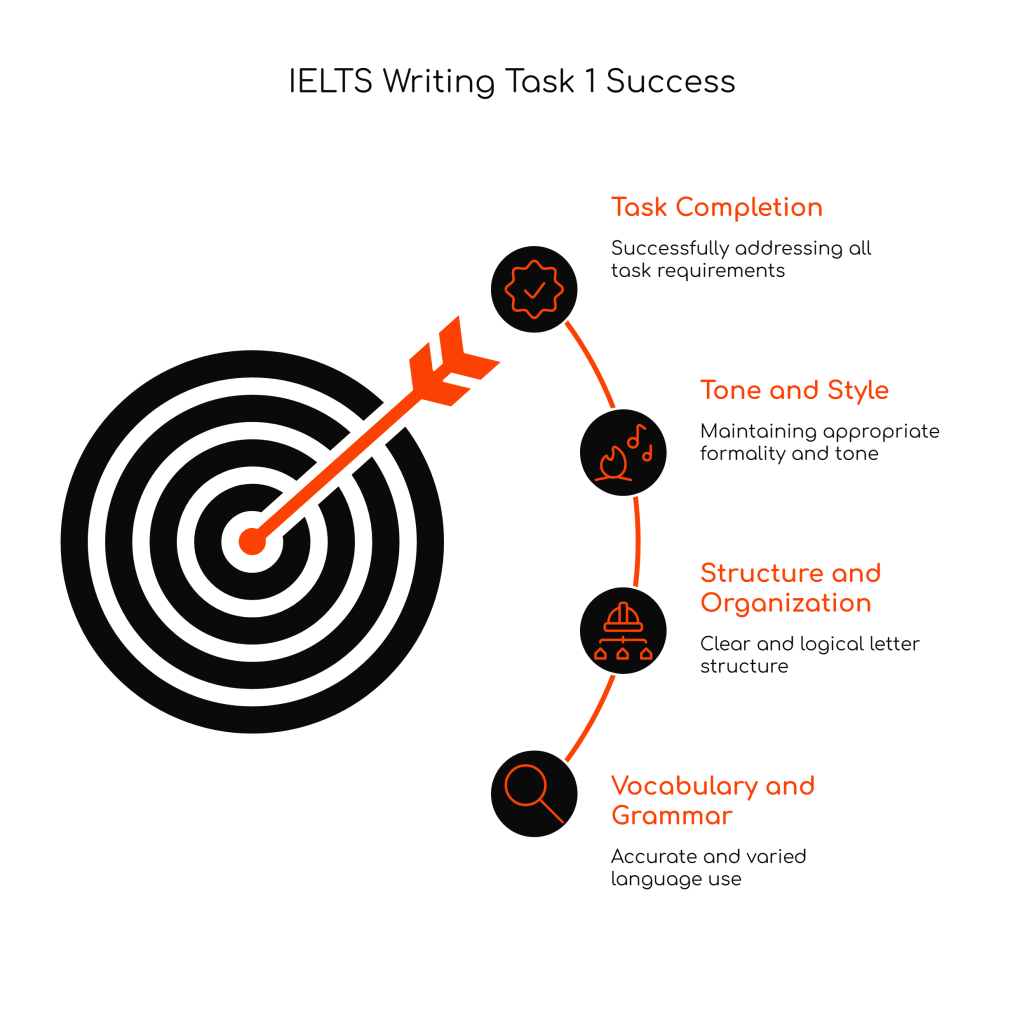
Success in IELTS Writing Task 1 General Training requires understanding the format, practicing different letter types, managing time effectively, and addressing all task requirements completely. Focus on appropriate tone, clear organization, varied vocabulary, and accurate grammar. Regular practice with feedback will help you achieve your target band score.
Remember that consistency in tone, complete task fulfillment, and clear communication are more important than perfect grammar. With dedicated preparation and understanding of these key concepts, you can excel in this task and move closer to your IELTS goals.
#IELTSWriting #IELTSGeneralTraining #IELTSTask1 #IELTSPreparation #LetterWriting #IELTSTips #EnglishWriting #IELTSStudy #TestPreparation #EnglishLearning #AcademicWriting #IELTSSuccess #WritingSkills #EnglishExam #IELTSHelp #IELTSGuidePhil
 IELTS Guide Phil
Leave a comment