
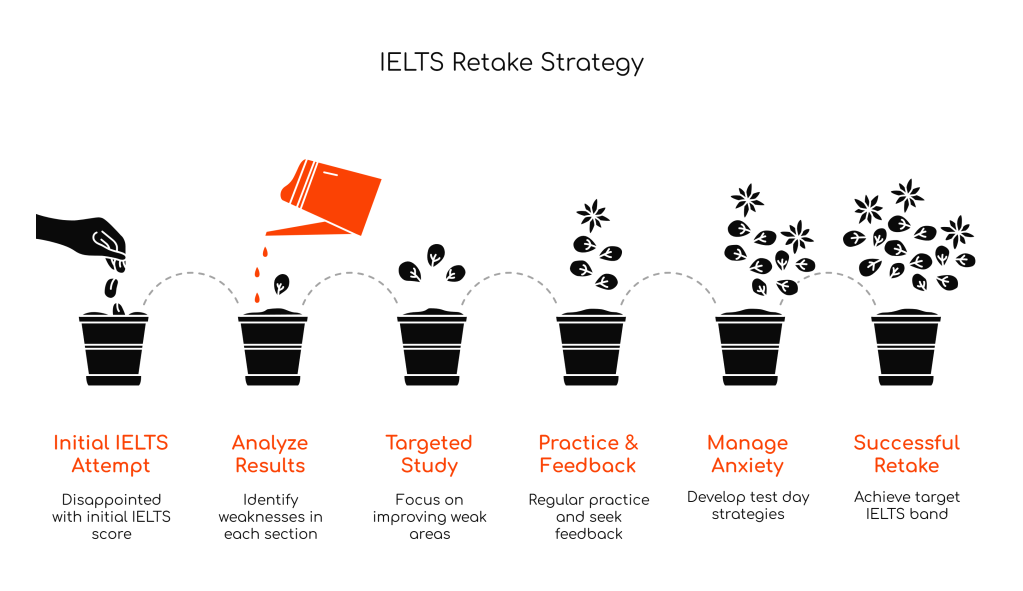
Receiving IELTS results that fall short of your target band can feel devastating, especially when important opportunities hang in the balance. However, falling short on your first attempt is more common than you might think—many successful candidates required multiple attempts to achieve their goals. The key lies not in dwelling on disappointment, but in transforming this setback into a strategic comeback. Here’s your comprehensive guide to analyzing what went wrong and creating a winning retake strategy.
Processing Your Results: The First 48 Hours
Allow Yourself to Feel Disappointed
It’s natural to feel frustrated, disappointed, or even angry when your scores don’t meet expectations. Acknowledge these feelings rather than suppressing them. Spend a day processing the emotional impact, but don’t let disappointment turn into prolonged discouragement. Remember that this is a temporary setback, not a permanent failure.
Avoid Immediate Reactions
Resist the urge to immediately book another test date or drastically change your preparation approach in the first 48 hours. Emotional decision-making rarely leads to effective strategies. Instead, take time to process your results objectively before making any commitments.
Detailed Score Analysis: Understanding What Went Wrong
Break Down Each Section
Examine your band scores for each of the four skills individually. Often, one or two sections significantly impact your overall average. Identify which areas fell furthest below your target—these become your primary focus areas for improvement.
Compare with Practice Test Performance
Review your practice test scores from the weeks leading up to your actual test. If there’s a significant discrepancy, consider factors like test anxiety, unfamiliarity with the test center environment, or timing issues. If practice scores were consistently similar to your actual results, your preparation strategy needs fundamental adjustments.
Identify Specific Weaknesses
Go beyond overall band scores to understand specific skill deficits. For writing, was it task achievement, coherence, vocabulary, or grammar? For speaking, was it fluency, pronunciation, vocabulary range, or grammatical accuracy? This granular analysis guides your targeted improvement efforts.
Common Reasons for Underperformance
Inadequate Preparation Time
Many candidates underestimate the preparation time required for significant band score improvements. If you prepared for less than two months or studied inconsistently, insufficient preparation likely contributed to your results. Meaningful improvement typically requires sustained, focused effort over several months.
Imbalanced Skill Development
Focusing disproportionately on reading and listening while neglecting writing and speaking is a common mistake. Speaking and writing often require more intensive practice and feedback, yet many candidates allocate minimal time to these productive skills.
Test Strategy Deficiencies
Poor time management, unfamiliarity with question types, or inadequate test-taking strategies can significantly impact performance regardless of English proficiency. If your English level seems adequate but scores don’t reflect this, strategic issues may be the culprit.
Test Day Factors
Anxiety, illness, lack of sleep, or external distractions can severely impact performance. If you suspect test day factors significantly affected your results, your retake strategy should include better preparation for the testing environment and conditions.
Creating Your Comeback Strategy
Set a Realistic Timeline
Based on the gap between your current and target scores, establish a realistic timeline for retaking IELTS. Generally, allow at least 6-8 weeks between attempts for meaningful improvement, though larger gaps may require 3-4 months of additional preparation. Don’t rush into a retake without adequate preparation time.
Develop a Targeted Study Plan
Create a study plan that allocates more time to your weakest areas while maintaining strengths. If writing was your lowest score, dedicate 40-50% of your study time to writing practice, feedback, and improvement. However, don’t completely neglect other sections—maintaining existing skill levels is equally important.
Address Fundamental Gaps
If grammar or vocabulary significantly impacted your scores across multiple sections, address these foundational issues before focusing on test-specific strategies. Sometimes, stepping back to strengthen language fundamentals yields better results than intensive test practice.
Section-Specific Improvement Strategies
Listening Enhancement
If listening scores were below target, focus on accent familiarity, note-taking techniques, and prediction strategies. Practice with various English accents (British, Australian, American, Canadian) and work on identifying keyword synonyms and paraphrases that commonly appear in IELTS listening sections.
Reading Skill Development
For reading improvements, develop skimming and scanning techniques, practice identifying question types quickly, and work on time management. Focus on understanding passage structure and practicing with academic texts similar to IELTS difficulty levels.
Writing Transformation
Writing improvement often requires external feedback and systematic practice. Focus on task response accuracy, essay structure, cohesive devices, and vocabulary range. Practice writing within time limits and seek feedback from qualified instructors or online platforms that provide detailed writing assessments.
Speaking Confidence Building
Speaking improvements come through regular practice and exposure. Record yourself speaking on IELTS topics, practice with conversation partners, and work on fluency through regular speaking activities. Address specific issues like pronunciation, grammatical range, or vocabulary usage based on your score breakdown.
Choosing Better Preparation Resources
Reassess Your Materials
If your previous preparation materials didn’t yield desired results, consider upgrading to more comprehensive resources. Official IELTS materials provide the most accurate test representation, while specialized courses or tutoring might address specific weaknesses more effectively.
Consider Professional Help
If self-study didn’t produce adequate results, consider investing in professional instruction. IELTS instructors can identify specific issues you might miss and provide targeted feedback, particularly for writing and speaking sections where self-assessment is challenging.
Utilize Technology and Apps
Modern IELTS preparation apps and online platforms offer personalized learning experiences, progress tracking, and immediate feedback. These tools can supplement traditional study methods and provide additional practice opportunities.
Managing Test Anxiety and Performance Issues
Develop Test Day Strategies
If anxiety or test day performance contributed to poor results, develop specific strategies for managing stress and optimizing performance. Practice relaxation techniques, develop pre-test routines, and familiarize yourself thoroughly with test procedures and timing.
Simulate Test Conditions
Create practice sessions that closely mirror actual test conditions, including timing, environment, and stress levels. Take full-length practice tests in quiet environments with strict time limits to build comfort with test pressure.
Build Confidence Through Preparation
Confidence comes from thorough preparation and familiarity with test content. The more comfortable you become with IELTS question types, timing, and strategies, the less likely anxiety will impact your performance.
Financial and Timeline Considerations
Budget for Multiple Attempts
Accept that achieving target scores might require multiple attempts and budget accordingly. Include costs for additional preparation materials, possible tutoring, and multiple test registrations in your planning.
Adjust Application Timelines
If IELTS scores are required for time-sensitive applications, communicate with relevant institutions about potential delays. Some programs offer conditional acceptance or allow submission of updated scores after initial applications.
Consider Alternative Pathways
Research whether your target institutions accept other English proficiency tests or have alternative demonstration methods for English competency. Having backup options reduces pressure and provides flexibility.
Maintaining Motivation and Perspective
Focus on Skill Development, Not Just Scores
View IELTS preparation as an opportunity to genuinely improve your English communication skills rather than merely achieving test scores. This perspective makes the process more meaningful and sustainable.
Celebrate Small Improvements
Acknowledge progress in individual skills or question types, even if overall scores haven’t reached targets yet. Recognizing incremental improvements maintains motivation during challenging preparation periods.
Connect with Others
Join online communities or study groups with other IELTS candidates. Sharing experiences, challenges, and strategies with others in similar situations provides emotional support and practical insights.
When to Retake and When to Reassess
Indicators for Retaking Soon
If your scores were close to targets (within 0.5 bands) and you’ve identified specific, addressable issues, a relatively quick retake might be appropriate. Similarly, if test day factors clearly impacted performance, addressing these issues and retaking can be effective.
Signs You Need More Time
If your scores were significantly below targets (1+ bands away) or fundamental language skills need development, invest more time in preparation before retaking. Rushing into multiple attempts without adequate improvement rarely yields better results.
Creating Your Action Plan
Week 1-2: Analysis and Planning Thoroughly analyze your results, identify specific weaknesses, research new preparation resources, and create a detailed study schedule with realistic timelines.
Weeks 3-6: Intensive Targeted Practice Focus heavily on your weakest areas while maintaining other skills. Seek feedback on writing and speaking, and take regular practice tests to monitor progress.
Weeks 7-8: Test Preparation and Strategy Fine-tune test strategies, practice under exam conditions, and prepare mentally and logistically for your retake. Avoid intensive studying in the final few days before your test.
Final Thoughts: Turning Setback into Comeback
Missing your target IELTS band score is disappointing, but it’s not the end of your journey—it’s valuable feedback for improvement. Many successful professionals, students, and immigrants required multiple IELTS attempts before achieving their goals. What matters most is how you respond to this challenge.
Use this experience to develop resilience, better study strategies, and deeper English language skills. The discipline, persistence, and strategic thinking you develop through this process will serve you well beyond IELTS, in your academic, professional, and personal endeavors.
Remember, IELTS measures your current English proficiency at a specific moment in time. With focused effort, strategic preparation, and persistence, improvement is not just possible—it’s inevitable. Your target band score is still achievable; it just requires a more informed and strategic approach.
Your comeback story starts now. Take the lessons from this experience, implement a stronger strategy, and approach your retake with confidence, preparation, and determination. Success is not about avoiding failure—it’s about learning from setbacks and coming back stronger.
#IELTSGuidePhil #IELTS #IELTSRetake #IELTSMotivation #IELTSComeback #TestRetake #IELTSImprovement #IELTSFailed #BandScore #IELTSStrategy #IELTSSecondChance #NeverGiveUp #IELTSJourney #TestAnxiety #IELTSPreparation #StudyHarder #IELTSGoals #Resilience #IELTSSupport #BounceBack #IELTSChallenge #TestPrep #IELTSMotivation #LanguageLearning #IELTSSuccess #EnglishImprovement #IELTSCommunity #StudyTips #IELTSAdvice #TestTaking #IELTSPersistence #AchieveYourGoals
 IELTS Guide Phil
Leave a comment