
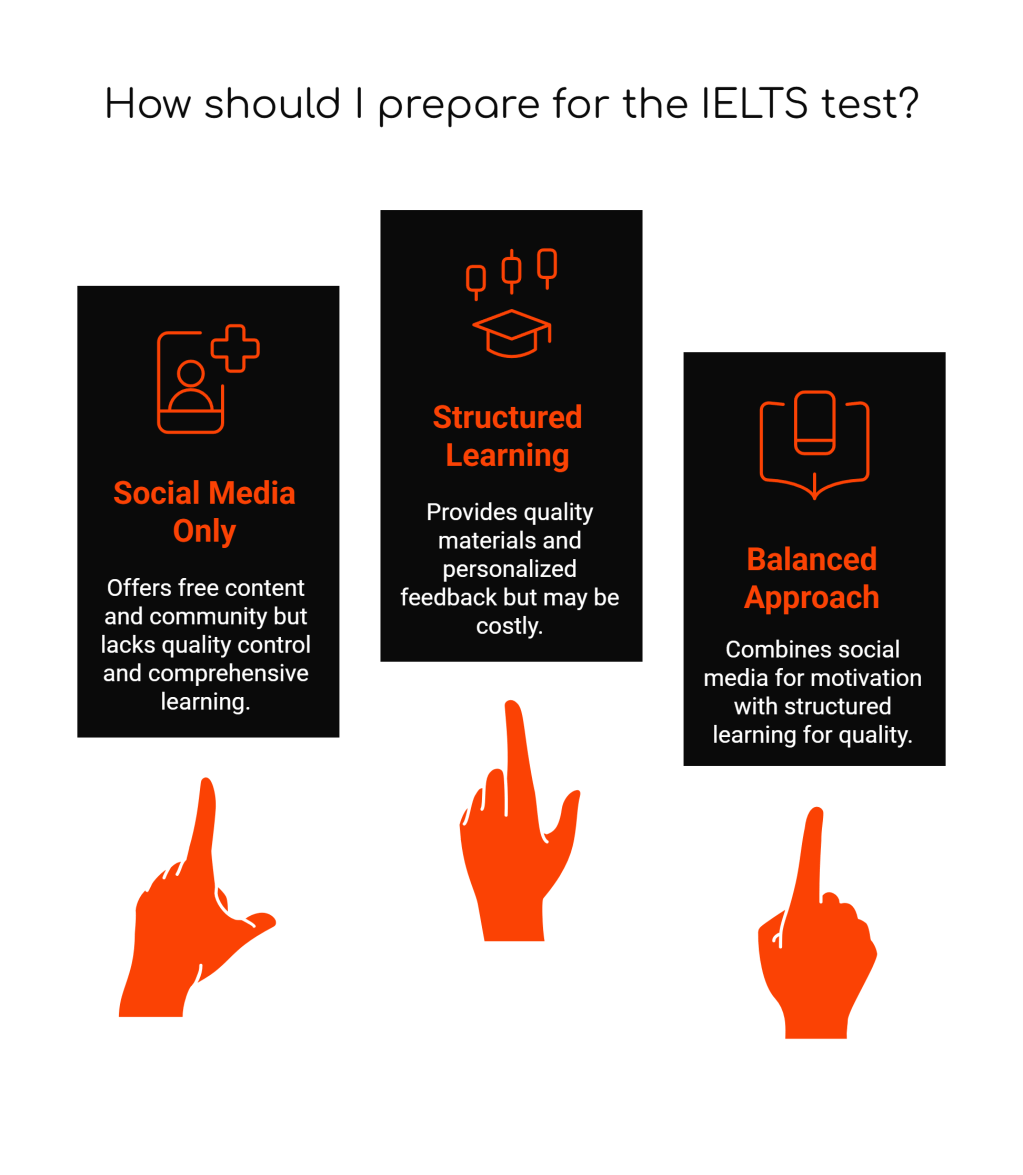
In today’s digital age, YouTube tutorials and social media study groups have become go-to resources for IELTS preparation. The appeal is obvious: free content, accessible anytime, and creators who promise quick results with catchy titles like “Get Band 9 in 30 Days!” or “Secret IELTS Tricks Examiners Don’t Want You to Know!” However, relying exclusively on social media for IELTS preparation can seriously undermine your chances of success and lead you down a path of ineffective study habits.
The Seductive Appeal of Social Media Learning
Social media platforms have revolutionized how we access information, and IELTS preparation content is abundant across YouTube, Instagram, TikTok, and Facebook. These platforms offer several apparent advantages that draw test-takers in:
Free and Accessible Content Unlike expensive preparation courses or books, social media content costs nothing and is available 24/7. For cash-strapped students, this seems like an ideal solution.
Bite-Sized Learning Short videos and posts feel manageable and less overwhelming than thick textbooks or lengthy courses. The digestible format creates an illusion of progress.
Community and Support Social media groups provide a sense of belonging and shared struggle. Seeing others’ journeys can be motivating and reassuring.
Variety of Perspectives Multiple creators offer different approaches, tips, and strategies, giving learners a sense of comprehensive coverage.
However, these apparent benefits mask serious underlying problems that can sabotage your IELTS preparation.
The Hidden Dangers of Social Media-Only Preparation
Lack of Quality Control and Misinformation
The Problem: Anyone can create IELTS content on social media, regardless of their qualifications, experience, or accuracy. Unlike official preparation materials or certified courses, there’s no quality assurance for user-generated content.
The Reality: Many popular IELTS YouTubers and social media influencers lack proper teaching credentials, IELTS examiner experience, or even high-level English proficiency themselves. Some have never taken the IELTS test or achieved the scores they claim to help others reach.
The Consequences: Following incorrect advice can reinforce bad habits, teach you ineffective strategies, or give you false confidence in approaches that will actually hurt your performance. You might spend months practicing techniques that work against IELTS scoring criteria.
Fragmented and Incomplete Learning
The Problem: Social media content is designed for engagement, not comprehensive education. Creators focus on eye-catching tips and “hacks” rather than systematic skill development.
The Reality: IELTS success requires integrated skill development across reading, writing, listening, and speaking. Social media content typically addresses these skills in isolation, offering quick fixes rather than building fundamental competencies.
The Consequences: You end up with a collection of disconnected tips and tricks without understanding how they fit together or how to apply them cohesively during the actual test.
The Algorithm Echo Chamber
The Problem: Social media algorithms show you content similar to what you’ve already viewed, creating an echo chamber that reinforces existing approaches rather than challenging you to grow.
The Reality: If you watch videos about “easy IELTS writing templates,” the algorithm will continue showing you template-based content, preventing exposure to more sophisticated approaches that could genuinely improve your skills.
The Consequences: You become trapped in a narrow approach to IELTS preparation, missing out on diverse strategies and perspectives that could better serve your learning style or address your specific weaknesses.
Oversimplification of Complex Skills
The Problem: Social media rewards content that makes complex topics seem simple and achievable. This leads to oversimplified explanations of nuanced language skills.
The Reality: IELTS tests sophisticated language abilities that require deep understanding and extensive practice. Complex grammatical concepts, nuanced vocabulary usage, and advanced writing structures cannot be mastered through 10-minute videos.
The Consequences: You develop surface-level understanding without the depth needed for high performance. When faced with challenging test content, your superficial knowledge proves inadequate.
Lack of Personalized Feedback
The Problem: Social media content is one-way communication. You can’t receive personalized feedback on your specific mistakes, weaknesses, or areas needing improvement.
The Reality: IELTS improvement requires identifying and correcting individual errors in pronunciation, grammar, writing structure, and reading comprehension strategies. Generic advice cannot address your unique needs.
The Consequences: You may practice incorrect techniques repeatedly, reinforcing mistakes rather than correcting them. Without feedback, you have no way of knowing if you’re improving or getting worse.
The Motivation Trap
Short-Term Dopamine vs. Long-Term Learning
Social media content is designed to trigger dopamine releases through quick wins and immediate gratification. Watching a “Band 9 Speaking Tips” video feels productive and gives you a motivation boost. However, this artificial sense of progress can become addictive, leading you to consume more content rather than doing the hard work of actual practice.
The Problem: You mistake content consumption for learning and feel productive while actually avoiding the challenging work of skill development.
The Reality: Real IELTS improvement comes from consistent, focused practice with immediate application and reflection—activities that are often uncomfortable and don’t provide instant gratification.
The Comparison Trap
Social media platforms encourage comparison with others’ highlight reels. You see posts about amazing scores, quick improvements, and success stories, which can create unrealistic expectations for your own journey.
The Problem: Constant comparison leads to discouragement when your progress doesn’t match the curated success stories you see online.
The Reality: Everyone’s IELTS journey is different, and social media posts rarely show the full picture of someone’s preparation struggles, multiple attempts, or underlying advantages.
Specific Platform Problems
YouTube’s Engagement-Driven Content
YouTube creators need views and engagement to earn money, leading to sensationalized titles and clickbait content. “Get Band 9 in One Week” gets more clicks than “Systematic Skill Development Over Months,” even though the latter is more accurate and helpful.
The Result: You’re exposed to unrealistic promises and ineffective shortcuts rather than sustainable improvement strategies.
TikTok’s Micro-Learning Illusion
TikTok’s short-form content format creates an illusion that complex skills can be learned in 60-second videos. While these might provide motivation or quick tips, they cannot deliver the depth needed for IELTS success.
The Result: You develop a fragmented understanding of IELTS requirements without the comprehensive knowledge needed for consistent high performance.
Instagram’s Aesthetic Over Substance
Instagram’s visual focus often prioritizes attractive graphics and motivational quotes over substantive educational content. Study plan templates and score celebration posts dominate over actual skill-building content.
The Result: You focus on the appearance of studying rather than effective study practices.
The Hidden Costs of “Free” Preparation
While social media content appears free, it comes with hidden costs that can be more expensive than paid alternatives:
Time Waste: Hours spent watching ineffective content could be used for productive practice or structured learning.
Opportunity Cost: Relying on inadequate preparation methods may require multiple test attempts, increasing overall costs and delaying your goals.
Confidence Damage: Poor performance due to inadequate preparation can damage confidence and create test anxiety for future attempts.
Missed Deadlines: Ineffective preparation may cause you to miss application deadlines for universities or immigration programs.
Building a Balanced Approach
This doesn’t mean social media has no place in IELTS preparation—when used appropriately, it can supplement a comprehensive study plan. Here’s how to use social media effectively:
Use Social Media as Supplementary Motivation (10-15% of study time)
- Follow accounts that provide daily motivation and tips
- Use study communities for accountability and support
- Watch success stories for inspiration during difficult periods
Verify Information Through Official Sources
- Cross-reference social media advice with official IELTS materials
- Check creator credentials and qualifications
- Look for content that aligns with official IELTS scoring criteria
Focus on Skill-Building Content
- Seek creators who emphasize systematic skill development
- Avoid channels that promise unrealistic quick fixes
- Look for content that explains the “why” behind strategies, not just the “what”
What Effective IELTS Preparation Actually Looks Like
Structured Learning (60% of study time):
- Official IELTS preparation materials
- Comprehensive textbooks from reputable publishers
- Structured courses with qualified instructors
- Systematic skill development across all four areas
Active Practice (25% of study time):
- Regular practice tests under exam conditions
- Writing essays and getting them corrected by qualified teachers
- Speaking practice with feedback from proficient speakers
- Targeted exercises addressing specific weaknesses
Supplementary Resources (15% of study time):
- Authentic English content (news, academic articles, podcasts)
- Grammar and vocabulary building through diverse sources
- Cultural knowledge development for better test context understanding
The Bottom Line: Quality Over Quantity
Social media platforms offer an overwhelming amount of IELTS content, but quantity doesn’t equal quality. The path to IELTS success isn’t about consuming more content—it’s about engaging with high-quality materials that systematically develop your English proficiency.
Your IELTS goals are too important to leave to chance or to rely on unverified advice from unqualified sources. While social media can play a supporting role in your preparation journey, it should never be your primary or only source of IELTS preparation.
Invest in proven, structured preparation methods that have helped thousands of test-takers achieve their goals. Use social media to supplement and motivate, but build your foundation on solid, comprehensive, and professionally developed materials and instruction.
Remember: the IELTS test measures real English proficiency, not your ability to apply social media tips and tricks. Develop genuine language skills through systematic study, and your scores will reflect your true abilities. There are no shortcuts to language proficiency, but there is a clear path forward for those willing to commit to comprehensive, quality preparation.
#IELTSGuidePhil #IELTS #IELTSPrep #YouTubeStudy #SocialMediaLearning #IELTSTips #StudyTips #EnglishLearning #IELTSAdvice #TestPreparation #QualityEducation #IELTSSuccess
 IELTS Guide Phil
Leave a comment