
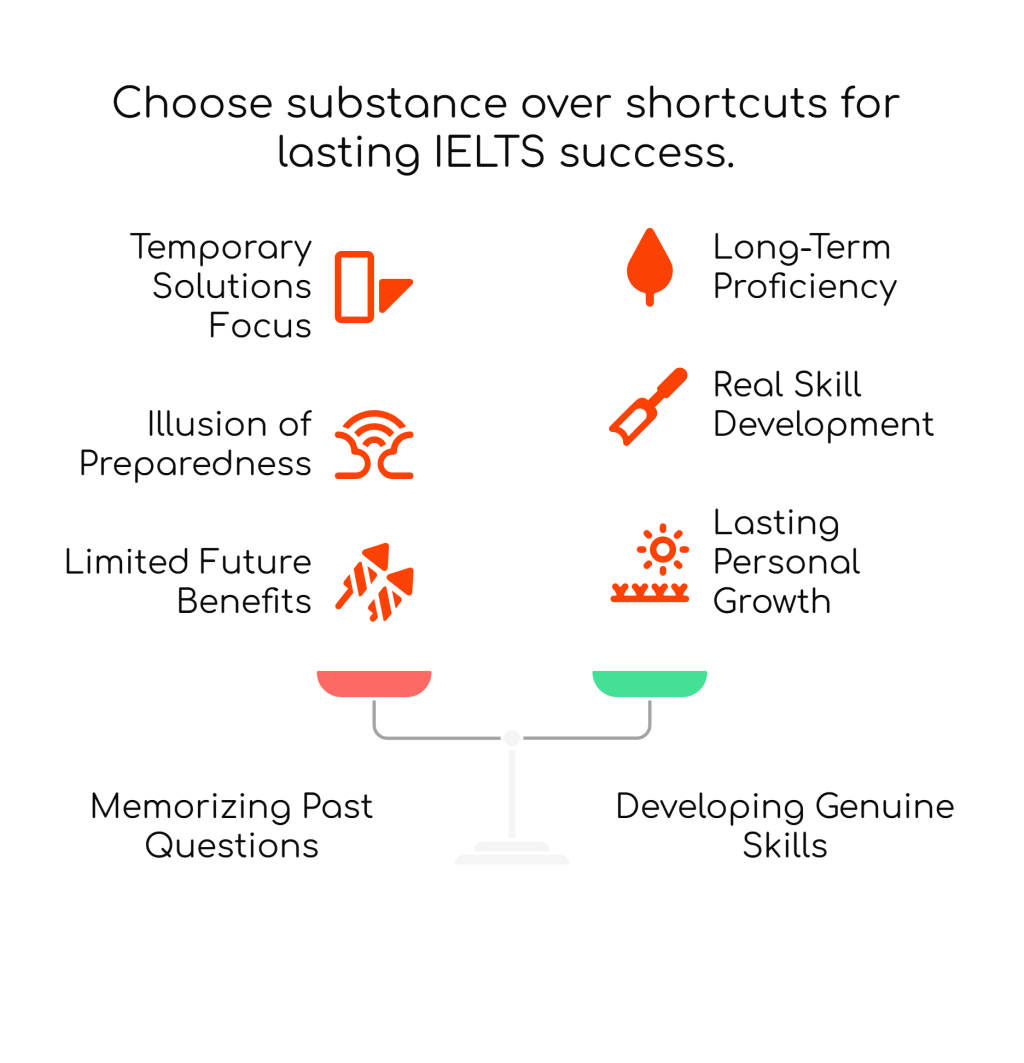
Many IELTS candidates fall into a seductive trap: believing that studying hundreds of past questions and memorizing “perfect” answers will guarantee their target score. While familiarizing yourself with the test format is essential, this approach can actually sabotage your performance and leave you unprepared for the real exam.
The Illusion of Preparedness
When you spend months drilling through past IELTS questions, you might feel incredibly prepared. You’ve seen similar topics before, you’ve practiced the timing, and you might even have memorized impressive-sounding phrases and responses. However, this false confidence crumbles when you encounter the actual test conditions.
The IELTS examiners are trained professionals who can quickly identify rehearsed, memorized responses. More importantly, the test is designed to assess your genuine English proficiency, not your ability to recall pre-written answers. When test-takers rely too heavily on memorization, they often struggle to adapt when faced with unexpected questions or need to demonstrate spontaneous language use.
Why Past Questions Can’t Predict Future Success
The IELTS is Constantly Evolving
The test makers regularly update questions, topics, and even subtle aspects of the exam format. What worked for previous test-takers might not reflect what you’ll encounter. Spending excessive time on outdated materials means you’re preparing for yesterday’s test, not tomorrow’s.
Limited Scope of Real English Use
IELTS questions, while comprehensive, represent only a fraction of real-world English communication scenarios. If you focus solely on test-specific content, you’re missing the broader language skills that not only help you pass the test but also succeed in English-speaking environments afterward.
Template Dependency Creates Rigidity
Many test-takers memorize essay templates, speaking responses, and formulaic phrases. While these might seem helpful, they often result in unnatural, robotic responses that lack the flexibility and authenticity that higher band scores require. When your memorized template doesn’t fit the actual question, you’re left scrambling.
The Skills Gap: What Really Matters
Critical Thinking and Analysis
High-scoring IELTS responses demonstrate clear reasoning, logical argumentation, and the ability to analyze complex topics. These cognitive skills can’t be memorized—they must be developed through practice with diverse, challenging content that goes beyond past exam questions.
Natural Language Flow
Fluency isn’t about speaking quickly or using complicated vocabulary you’ve memorized. It’s about natural rhythm, appropriate pausing, coherent idea development, and the ability to self-correct smoothly. These skills develop through extensive English exposure and practice, not question drilling.
Adaptive Communication
The Speaking test, in particular, requires you to engage in unpredictable conversations. Examiners might ask follow-up questions you’ve never encountered, or approach familiar topics from unexpected angles. Only genuine language proficiency allows you to navigate these situations confidently.
The Real Path to IELTS Success
Immerse Yourself in Authentic English
Instead of studying past questions for hours, spend that time consuming diverse English content: academic articles, news broadcasts, podcasts, documentaries, and literature. This exposure builds the vocabulary, cultural understanding, and language intuition that the IELTS actually tests.
Focus on Skill Integration
Rather than practicing each IELTS section in isolation, work on activities that combine multiple skills. Summarize complex articles (reading + writing), discuss documentaries (listening + speaking), or analyze opinion pieces and present your views (reading + speaking + critical thinking).
Develop Meta-Skills
Learn strategies for understanding context, making inferences, organizing thoughts quickly, and managing test anxiety. These transferable skills serve you far better than memorized responses to specific question types.
Practice Active Language Use
Engage in genuine communication opportunities: join English conversation groups, participate in online forums, write blog posts about topics you care about, or volunteer to help non-native speakers with your own language. Real communication builds the confidence and spontaneity that high IELTS scores require.
A Balanced Approach to Test Preparation
This doesn’t mean you should completely ignore past IELTS materials. Understanding the test format, timing, and question types is crucial. The key is balance:
- 20% test familiarization: Use official IELTS materials to understand format and timing
- 80% skill development: Focus on genuine English proficiency through diverse, engaging content
Take practice tests periodically to gauge your progress and identify weak areas, but spend the majority of your preparation time building the underlying English skills that make high performance possible.
The Long-Term Perspective
Remember that your IELTS score is often just the beginning of your English-language journey. Whether you’re planning to study abroad, immigrate, or advance your career, the real-world English skills you develop during preparation will serve you long after you receive your test results.
Students who focus on genuine skill development not only tend to achieve better IELTS scores but also report feeling more confident and prepared for their future English-language challenges. They can engage in academic discussions, write compelling essays, understand complex lectures, and communicate naturally in professional settings.
Conclusion
The path to IELTS success isn’t through memorizing past questions—it’s through developing genuine English proficiency that allows you to handle any question, topic, or communication challenge with confidence. Invest your time in building real skills rather than memorizing temporary solutions. Your future self, both in the test center and beyond, will thank you for choosing substance over shortcuts.
The IELTS is ultimately a measure of your ability to use English effectively in academic and general contexts. By focusing on developing these authentic abilities rather than gaming the system, you’ll not only achieve your target score but also gain the language skills that will serve you throughout your personal and professional life.
#IELTSGuidePhil #IELTS #IELTSPrep #IELTSTips #EnglishSkills #IELTSStudy #TestPreparation #EnglishProficiency #IELTSSuccess #LanguageLearning #IELTSAdvice #StudyTips
 IELTS Guide Phil
Leave a comment