
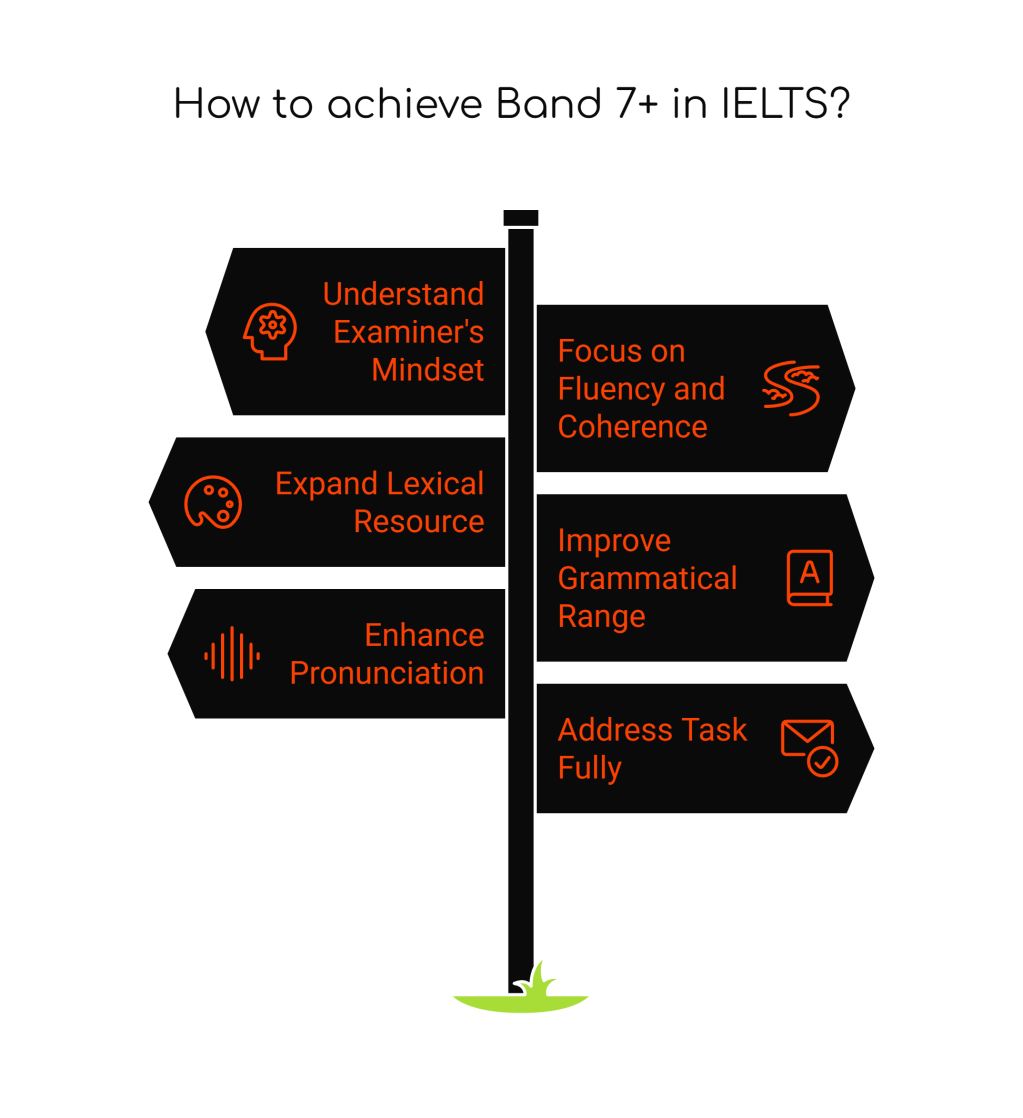
There’s no shortage of IELTS tips online—but many are based on myths, outdated advice, or student assumptions. If you want to achieve Band 7+, you need to understand how examiners actually think and what they’re trained to look for in Speaking and Writing.
In this post, we’ll explore what IELTS examiners really assess, debunk common misconceptions, and give you a clear roadmap to improve your scores based on the official band descriptors.
The Examiner’s Mindset
IELTS examiners are highly trained, follow strict band descriptors, and undergo regular monitoring to ensure fairness and consistency. They don’t grade based on emotion, personal opinion, or how nice you seem—they grade based on how well your performance matches each score band.
They ask:
- “How well does this candidate meet the criteria?”
- “Is this performance consistent across all criteria?”
- “Does this meet Band 6, 7, or higher?”
What Examiners Really Look for in IELTS Speaking
1. Fluency and Coherence
- Smooth, natural speech
- Logical sequencing of ideas
- Use of linking words (however, actually, in addition)
They want: Confidence, logical flow, no overuse of fillers
They don’t want: Memorized answers, excessive pausing, repetition
2. Lexical Resource
- Range of vocabulary
- Topic-appropriate word choice
- Use of idiomatic language naturally
They want: Flexible vocabulary, clear use of collocations
They don’t want: Slang, clichés, memorized “fancy” words
3. Grammatical Range and Accuracy
- Variety of sentence structures
- Consistent accuracy in tenses and articles
They want: Attempts at complex grammar
They don’t want: Overly simple or error-filled responses
4. Pronunciation
- Clear, understandable speech
- Use of intonation, stress, rhythm
- No need for a native accent
They want: Natural rhythm, correct word stress
They don’t want: Flat, robotic, or monotone delivery
What Examiners Really Look for in IELTS Writing
1. Task Achievement (Task 1) / Task Response (Task 2)
- Fully addresses the task
- Presents a clear position
- Supports ideas with evidence/examples
They want: Strong thesis, relevant ideas, logical development
They don’t want: Off-topic responses or memorized templates
2. Coherence and Cohesion
- Clear structure: intro, body, conclusion
- Logical paragraphing
- Appropriate linking devices
They want: Paragraph unity, smooth transitions
They don’t want: Overused connectors (e.g., “moreover, moreover…”)
3. Lexical Resource
- Precise vocabulary for the topic
- No awkward or repetitive words
- Natural paraphrasing
They want: Clear, high-level language
They don’t want: Inaccurate synonyms or overly formal phrases
4. Grammatical Range and Accuracy
- Use of varied structures: conditionals, passive voice, complex clauses
- Good control of articles, prepositions, verb forms
They want: Ambitious grammar with mostly accurate use
They don’t want: Repetitive basic sentences
Top Myths vs. Realities
| Myth | Reality |
|---|---|
| “You need a British accent.” | Clarity matters more than accent |
| “Use as many big words as possible.” | Use natural, topic-appropriate vocabulary |
| “Examiners want long, complex sentences.” | Variety is key—but clarity comes first |
| “Memorized templates boost scores.” | Examiners spot and penalize overused structures |
| “More words = higher score.” | Quality > Quantity |
| “You only need good grammar.” | All four criteria matter equally |
Do’s and Don’ts According to Examiners
Do:
- Speak naturally and confidently—even if you pause occasionally
- Focus on clarity and structure in Writing
- Expand your answers with reasons and examples
- Vary sentence types and vocabulary
Don’t:
- Memorize full essays or answers
- Panic if you make small mistakes (it’s normal!)
- Speak too fast or too slowly
- Use uncommon idioms without understanding them
Frequently Asked Questions (FAQs)
Q: Will examiners deduct points for saying “um” or “uh”?
A: Not unless it disrupts fluency significantly. Occasional fillers are natural.
Q: Do I need to finish the full Task 2 essay to get a good score?
A: Yes. A complete response with an intro, body, and conclusion is needed for Band 6.5+.
Q: Will I get a lower score if I say “I don’t know” in Speaking?
A: Not if you explain or give your best guess. Avoid dead-end answers.
Top Strategies for IELTS Success
- Use the official Band Descriptors as your checklist
Know what Band 7 looks like in each category - Record and evaluate yourself like an examiner
Ask: “Did I answer the question? Did I show range?” - Get professional feedback
Even one session can help you understand your real level - Train all 4 criteria
Don’t ignore pronunciation or coherence—they matter just as much as grammar - Practice under timed conditions
Examiners mark based on real-time performance
Final Thoughts
IELTS examiners are not looking for perfection—they are looking for evidence that you can communicate effectively in English. The best thing you can do is:
- Understand the band descriptors,
- Practice strategically,
- And focus on clarity, not complexity.
Think like an examiner, and you’ll start writing and speaking like a Band 7+ candidate.
Learn More with IELTS Guide Phil
- Explore IELTSGuidePhil.com
- Listen to the IELTS Guide Phil Podcast on Spotify
- Join our IELTS community on Facebook
#IELTSExaminers #IELTSSpeakingTips #IELTSWritingTips #IELTSMythsBusted #Band7Plus #IELTSGuidePhil #IELTSPreparation #IELTSRealityCheck #IELTSMarkingCriteria #IELTS
 IELTS Guide Phil
Leave a comment