
One of the key factors that can significantly improve your IELTS score is having a wide range of vocabulary at your disposal. Using appropriate synonyms not only demonstrates your language proficiency but also helps you avoid repetition in both the writing and speaking modules. Today, we’ll explore a comprehensive list of synonyms for common words that will elevate your IELTS performance.
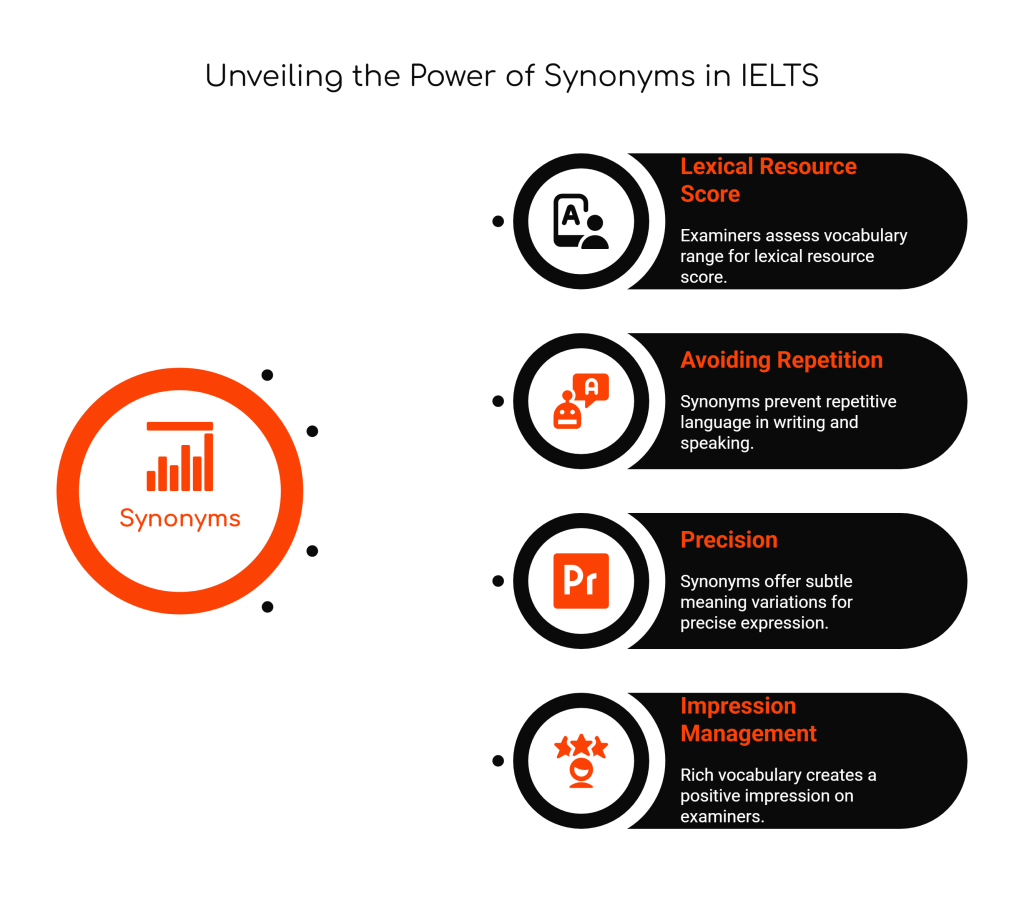
Why Synonyms Matter in IELTS
Before diving into the lists, let’s understand why synonyms are crucial for IELTS success:
- Lexical Resource Score: Examiners specifically look for vocabulary range when scoring your performance
- Avoiding Repetition: Using different words to express similar ideas makes your writing and speaking more engaging
- Precision: Different synonyms carry subtle variations in meaning, allowing for more precise expression
- Impression Management: Demonstrating a rich vocabulary creates a positive impression on the examiner
Action Words to Elevate Your Responses
Movement Verbs
Instead of repeatedly using “go” or “come,” consider these alternatives:
- Come: advance, approach, arrive, near, reach
- Go: depart, disappear, fade, move, proceed, recede, travel
- Run: dash, escape, elope, flee, hasten, hurry, race, rush, speed, sprint
- Hurry: rush, run, speed, race, hasten, urge, accelerate, bustle
- Hide: conceal, cover, mask, cloak, camouflage, screen, shroud, veil
- Move: plod, go, creep, crawl, inch, poke, drag, toddle, shuffle, trot, dawdle, walk, traipse, mosey, jog, trudge, slump, lumber, trail, lag, run, sprint, trip, bound, hotfoot, streak, stride, tear, breeze, whisk, rush, dash, dart, bolt, fling, scamper, scurry, skedaddle, scoot, scuttle, scramble, race, chase, hasten, hurry, gallop, lope, accelerate, stir, budge, travel, wander, roam, journey, trek, ride, spin, slip, glide, slide, slither, coast, flow, sail, saunter, hobble, amble, stagger, paddle, slouch, prance, straggle, meander, perambulate, waddle, wobble, pace, swagger
Action and Accomplishment Verbs
Rather than simple “do” or “make,” try these:
- Do: execute, enact, carry out, finish, conclude, effect, accomplish, achieve, attain
- Have: hold, possess, own, contain, acquire, gain, maintain, believe, bear, beget, occupy, absorb, fill, enjoy
- Use: employ, utilize, exhaust, spend, expend, consume, exercise
- Get: acquire, obtain, secure, procure, gain, fetch, find, score, accumulate, win, earn, catch, net, bag, derive, collect, gather, glean, pick up, accept, come by, regain, salvage
- Keep: hold, retain, withhold, preserve, maintain, sustain, support
- Put: place, set, attach, establish, assign, keep, save, set aside, effect, achieve, do, build
- Take: hold, catch, seize, grasp, win, capture, acquire, pick, choose, select, prefer, remove, steal, lift, rob, engage, bewitch, purchase, buy, retract, recall, assume, occupy, consume
- Make: create, originate, invent, beget, form, construct, design, fabricate, manufacture, produce, build, develop, do, effect, execute, compose, perform, accomplish, earn, gain, obtain, acquire, get
Process Verbs
- Break: fracture, rupture, shatter, smash, wreck, crash, demolish, atomize
- Destroy: ruin, demolish, raze, waste, kill, slay, end, extinguish
- Kill: slay, execute, assassinate, murder, destroy, cancel, abolish
- Cut: gash, slash, prick, nick, sever, slice, carve, cleave, slit, chop, crop, lop, reduce
- Fall: drop, descend, plunge, topple, tumble
- Fly: soar, hover, flit, wing, flee, waft, glide, coast, skim, sail, cruise
- Decide: determine, settle, choose, resolve
- Help: aid, assist, support, encourage, back, wait on, attend, serve, relieve, succor, benefit, befriend, abet
- Mark: label, tag, price, ticket, impress, effect, trace, imprint, stamp, brand, sign, note, heed, notice, designate
- Plan: plot, scheme, design, draw, map, diagram, procedure, arrangement, intention, device, contrivance, method, way, blueprint
- Show: display, exhibit, present, note, point to, indicate, explain, reveal, prove, demonstrate, expose
Antonyms: Expressing Contrast
Demonstrating knowledge of opposites can enhance your ability to express contrast:
- Begin vs. End:
- Begin: start, open, launch, initiate, commence, inaugurate, originate
- End: stop, finish, terminate, conclude, close, halt, cessation, discontinue, cease, pause, quit
- Big vs. Little:
- Big: large, enormous, huge, immense, gigantic, vast, colossal, gargantuan, sizable, grand, great, tall, substantial, mammoth
- Little: small, tiny, diminutive, shrimp, runt, miniature, puny, exiguous, dinky, cramped, limited, microscopic, slight, petite, minute
- New vs. Old:
- New: fresh, unique, original, unusual, novel, modern, current, recent
- Old: ancient, aged, used, worn, dilapidated, ragged, faded, broken-down, former, old-fashioned, outmoded, veteran, mature, venerable, primitive, traditional, archaic
- True vs. False:
- True: right, accurate, proper, precise, exact, valid, genuine, real, actual, trusty, steady, loyal, dependable, sincere, correct, factual, good, just, honest, upright, lawful, moral
- False: wrong, fake, fraudulent, counterfeit, spurious, untrue, unfounded, erroneous, deceptive, groundless, fallacious, incorrect, inaccurate, mistaken
- Fast vs. Slow:
- Fast: quick, rapid, speedy, fleet, hasty, snappy, mercurial, swiftly, rapidly, quickly, snappily, speedily, lickety-split, posthaste, hastily, expeditiously
- Slow: unhurried, gradual, leisurely, late, behind, tedious, slack
- Hot vs. Cool:
- Hot: feverish, warm, heated, sweltering, torrid, equatorial, tropical, erotic, passionate, spicy, peppery, pungent, sharp, tangy, tart, fiery, flaming, sizzling
- Cool: chilly, cold, frosty, wintry, icy, frigid
- Quiet vs. Noisy:
- Quiet: silent, still, soundless, mute, tranquil, peaceful, calm, restful, hushed, inaudible, reticent, reserved, taciturn, secretive
- Noisy: loudly, earsplitting, stentorian, strident, clamorous, boisterous, clangorous, deafening, roisterous, uproarious
- All vs. None:
- All: complete, entire, full, gross, outright, perfect, total, utter, whole, any, every, sum, totality, each and every, every bit of, bar none, every single
- None: nothing, nobody, no one, zero, zilch, not a bit, not a soul, not a thing, not any, not anyone, not anything, not one, nonexistent, null, nadir, nil, naught, void
- Normal vs. Strange:
- Normal: daily, traditional, familiar, routine, proper, ordinary, typical, everyday, usual, commonplace, natural, classic, standard, general, established, habitual, orthodox, prevalent, conventional, customary, common, regular, simple, balanced
- Strange: abnormal, aberrant, anomalous, bent, bizarre, deviant, queer, eccentric, freakish, fanatical, odd, eerie, peculiar, weird, unorthodox, nonstandard, atypical, different, irregular, nonconforming, offbeat, unusual, extraordinary
Expressing Feelings and Emotions
In the IELTS speaking test, discussing emotions with precision can significantly enhance your response:
Positive Emotions
- Happy: pleased, contented, satisfied, delighted, elated, joyful, cheerful, ecstatic, jubilant, gay, tickled, gratified, glad, blissful
- Love: like, admire, esteem, fancy, care for, cherish, adore, treasure, worship, appreciate, savor
- Calm: quiet, peaceful, still, tranquil, mild, serene, smooth, composed, collected, unruffled, level-headed, unexcited, detached, aloof
- Eager: keen, fervent, enthusiastic, involved, interested, alive to
Negative Emotions
- Angry: mad, furious, enraged, excited, wrathful, indignant, exasperated, aroused, inflamed
- Fear: fright, dread, terror, alarm, dismay, anxiety, scare, awe, horror, panic, apprehension
- Hate: despise, loathe, detest, abhor, disfavor, dislike, disapprove, abominate
- Sad: miserable, uncomfortable, wretched, heart-broken, unfortunate, poor, downhearted, sorrowful, depressed, dejected, melancholy, glum, gloomy, dismal, discouraged, unhappy
- Scared: afraid, frightened, alarmed, terrified, panicked, fearful, unnerved, insecure, timid, shy, skittish, jumpy, disquieted, worried, vexed, troubled, disturbed, horrified, terrorized, shocked, petrified
- Moody: temperamental, changeable, short-tempered, glum, morose, sullen, mopish, irritable, testy, peevish, fretful, spiteful, sulky, touchy
Descriptive Words for Writing Task 2
For IELTS Writing Task 2, being able to express positives and negatives is crucial:
Positive Descriptions
- Amazing: incredible, unbelievable, improbable, fabulous, wonderful, fantastic, astonishing, astounding, extraordinary
- Beautiful: pretty, lovely, handsome, attractive, gorgeous, dazzling, splendid, magnificent, comely, fair, ravishing, graceful, elegant, fine, exquisite, aesthetic, pleasing, shapely, delicate, stunning, glorious
- Brave: courageous, fearless, dauntless, intrepid, plucky, daring, heroic, valorous, audacious, bold, gallant, valiant, doughty, mettlesome
- Bright: shining, shiny, gleaming, brilliant, sparkling, shimmering, radiant, vivid, colorful, lustrous, luminous, incandescent, intelligent, knowing, quick-witted, smart, intellectual
- Delicious: savory, delectable, appetizing, luscious, scrumptious, palatable, delightful, enjoyable, toothsome, exquisite
- Enjoy: appreciate, delight in, be pleased, indulge in, luxuriate in, bask in, relish, devour, savor, like
- Famous: well-known, renowned, celebrated, famed, eminent, illustrious, distinguished, noted, notorious
- Funny: humorous, amusing, droll, comic, comical, laughable, silly
- Good: excellent, fine, superior, wonderful, marvelous, qualified, suited, suitable, apt, proper, capable, generous, kindly, friendly, gracious, obliging, pleasant, agreeable, pleasurable, satisfactory, well-behaved, obedient, honorable, reliable, trustworthy, safe, favorable, profitable, advantageous, righteous, expedient, helpful, valid, genuine
- Great: noteworthy, worthy, distinguished, remarkable, grand, considerable, powerful, much, mighty
- Neat: clean, orderly, tidy, trim, dapper, natty, smart, elegant, well-organized, super, desirable, spruce, shipshape, well-kept, shapely
- Popular: well-liked, approved, accepted, favorite, celebrated, common, current
- Playful: mischievous, prankish, naughty, roguish, waggish, impish, sportive
Negative Descriptions
- Awful: dreadful, terrible, abominable, bad, poor
- Bad: evil, immoral, wicked, corrupt, sinful, depraved, rotten, contaminated, spoiled, tainted, harmful, injurious, unfavorable, defective, inferior, imperfect, substandard, faulty, disagreeable, unpleasant, cross, nasty, irascible, horrible, atrocious, outrageous, scandalous, infamous, wrong, noxious, sinister, putrid, snide, deplorable, dismal, gross
- Crooked: bent, twisted, curved, hooked, zigzag
- Dangerous: perilous, hazardous, risky, uncertain, unsafe
- Dark: shadowy, unlit, murky, gloomy, dim, dusky, shaded, sunless, black, dismal, sad
- Dull: boring, tiring, tiresome, uninteresting, slow, dumb, stupid, unimaginative, lifeless, dead, insensible, tedious, wearisome, listless, expressionless, plain, monotonous, humdrum, dreary
- Fat: stout, corpulent, fleshy, beefy, paunchy, plump, full, rotund, tubby, pudgy, chubby, chunky, burly, bulky, elephantine
- Gross: improper, rude, coarse, indecent, crude, vulgar, outrageous, extreme, grievous, shameful, uncouth, obscene, low
- Lazy: indolent, slothful, idle, inactive, sluggish
- Ugly: hideous, frightful, frightening, shocking, horrible, unpleasant, monstrous, terrifying, gross, grisly, ghastly, horrid, unsightly, plain, homely, evil, repulsive, repugnant, gruesome
- Trouble: distress, anguish, anxiety, worry, wretchedness, pain, danger, peril, disaster, grief, misfortune, difficulty, concern, pains, inconvenience, exertion, effort
Communication Verbs for Speaking Tasks
For IELTS Speaking, having a range of communication verbs is particularly valuable:
- Answer: reply, respond, retort, acknowledge
- Ask: question, inquire of, seek information from, put a question to, demand, request, expect, inquire, query, interrogate, examine, quiz
- Cry: shout, yell, yowl, scream, roar, bellow, weep, wail, sob, bawl
- Mean: add up to, affect, be important, be of value, be substantive, carry weight, connote, count, denote, express, imply, intend, involve, signify, spell, stand for, suggest, value, weigh in
- Say/Tell: inform, notify, advise, relate, recount, narrate, explain, reveal, disclose, divulge, declare, command, order, bid, enlighten, instruct, insist, teach, train, direct, issue, remark, converse, speak, affirm, suppose, utter, negate, express, verbalize, voice, articulate, pronounce, deliver, convey, impart, assert, state, allege, mutter, mumble, whisper, sigh, exclaim, yell, sing
Descriptive Words for Writing Task 1
For describing trends and processes in IELTS Writing Task 1:
- Describe: portray, characterize, picture, narrate, relate, recount, represent, report, record
- Difference: disagreement, inequity, contrast, dissimilarity, incompatibility
- Explain: elaborate, clarify, define, interpret, justify, account for
- Tell: disclose, reveal, show, expose, uncover, relate, narrate, inform, advise, explain, divulge, declare, command, order, bid, recount, repeat
- Idea: thought, concept, conception, notion, understanding, opinion, plan, view, belief
- Look: gaze, see, glance, watch, survey, study, seek, search for, peek, peep, glimpse, stare, contemplate, examine, gape, ogle, scrutinize, inspect, leer, behold, observe, view, witness, perceive, spy, sight, discover, notice, recognize, peer, eye
- Story: tale, myth, legend, fable, yarn, account, narrative, chronicle, epic, sage, anecdote, record, memoir
- Think: judge, deem, assume, believe, consider, contemplate, reflect, mediate
Additional Useful Vocabulary
- Somewhat: a little, sort of, kind of, a bit, relatively, slightly, moderately, to some extent/degree, reasonably, partially, more or less, not much, rather, quite, fairly, by a long shot, by far, significantly, well
- Somehow: in a way, virtually, to a certain extent, in some measure, to some extent, to a certain degree, quasi, in a manner of speaking, effectively, anyhow, anyway, anywise, by hook or by crook, howsoever, in any way, somehow or other, someway, by some means
- Definite: certain, sure, positive, determined, clear, distinct, obvious
- Fair: just, impartial, unbiased, objective, unprejudiced, honest
- Important: necessary, vital, critical, indispensable, valuable, essential, significant, primary, principal, considerable, famous, distinguished, notable, well-known
- Interesting: fascinating, engaging, sharp, keen, bright, intelligent, animated, spirited, attractive, inviting, intriguing, provocative, thought-provoking, challenging, inspiring, involving, moving, titillating, tantalizing, exciting, entertaining, piquant, lively, racy, spicy, engrossing, absorbing, consuming, gripping, arresting, enthralling, spellbinding, curious, captivating, enchanting, bewitching, appealing
- Part: portion, share, piece, allotment, section, fraction, fragment
- Place: space, area, spot, plot, region, location, situation, position, residence, dwelling, set, site, station, status, state
How to Use Synonyms Effectively in IELTS
- Practice in Context: Don’t just memorize lists – practice using synonyms in sentences relevant to common IELTS topics
- Group by Topic: Organize synonyms by topics common in IELTS (environment, education, technology, health, etc.)
- Use Appropriately: Choose synonyms that precisely match your intended meaning
- Vary Naturally: Don’t force synonym usage; it should flow naturally in your writing and speaking
- Consider Collocations: Remember that some words only work with specific partners
Final Thoughts
Expanding your vocabulary range through mastering synonyms is one of the most effective strategies for improving your IELTS score. By incorporating these alternative words into your speaking and writing, you’ll demonstrate lexical resource and linguistic flexibility that examiners are looking for.
Remember, the goal isn’t to use complicated words for their own sake, but rather to express yourself with precision and avoid repetition. Regular practice with these synonym lists, particularly in context, will help you internalize this vocabulary and use it naturally during your IELTS test.
#IELTSVocabulary #SynonymMastery #IELTSPrep #VocabBuilding #LanguageSkills #IELTSWriting #EnglishSynonyms #IELTSSpeaking #VocabBoost #LexicalResource #IELTSGuidePhil #IELTS
 IELTS Guide Phil
Leave a comment