
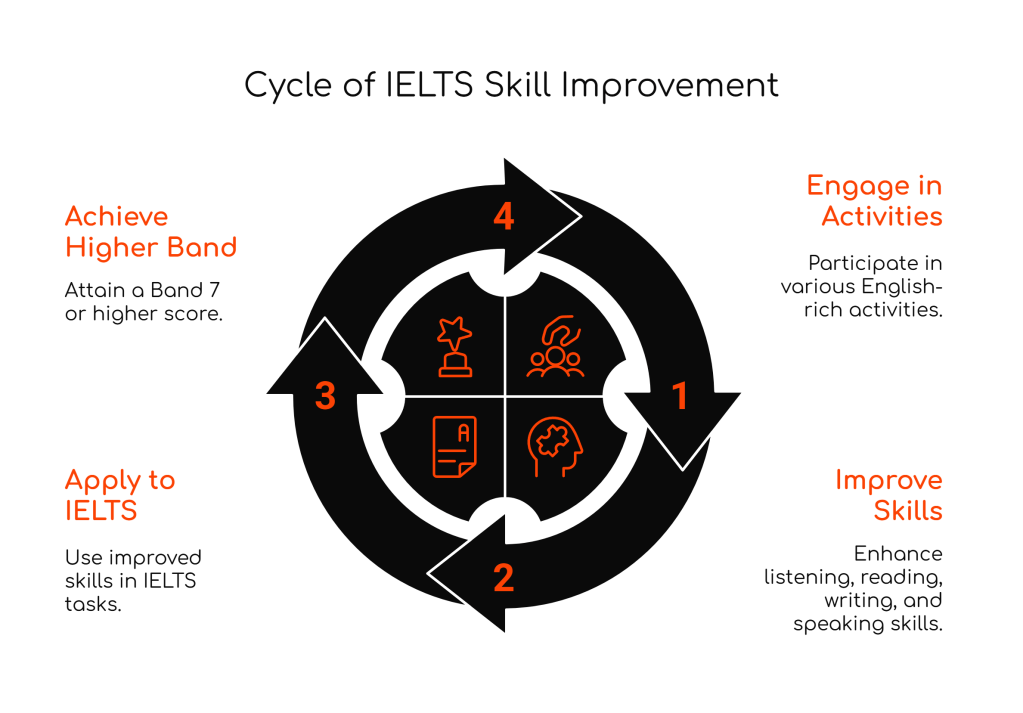
Preparing for the IELTS exam isn’t just about doing practice tests and memorizing vocabulary. To truly excel, especially if you’re targeting a Band 7 or higher, you need to immerse yourself in English-rich environments—both academic and non-academic. One of the most powerful ways to do that is through extra-curricular activities.
In this guide, you’ll discover why these activities matter, which ones work best, and how to use them to strengthen all four IELTS skills—Listening, Reading, Writing, and Speaking.
What Are Extra-Curricular Activities?
Extra-curricular activities refer to non-classroom activities that develop your knowledge, skills, and exposure to real-world English usage. These include hobbies, volunteering, media consumption, travel, and creative pursuits that enhance fluency, confidence, and cultural awareness.
Types of Extra-Curricular Activities That Improve IELTS Skills
1. Watching English Media (TV Shows, News, Documentaries)
Skills improved: Listening, Vocabulary, Pronunciation
Examples:
- Watch BBC News, TED Talks, or Netflix shows with subtitles
- Practice mimicking intonation and stress patterns
Why it helps: Improves comprehension of different accents and tones
2. Reading Newspapers, Blogs, and Academic Journals
Skills improved: Reading, Vocabulary, Writing
Examples:
- Read The Guardian, The Economist, or academic blogs
- Take notes on arguments, opinions, or writing style
Why it helps: Exposes you to complex sentence structures and IELTS-style texts
3. Keeping a Daily Journal or Blog
Skills improved: Writing, Grammar, Coherence
Examples:
- Reflect on your day, a book you read, or current events
- Try IELTS essay prompts in journal form
Why it helps: Builds fluency, improves grammar, and develops coherent thought expression
4. Joining English-Speaking Clubs or Online Communities
Skills improved: Speaking, Listening, Confidence
Examples:
- Participate in Toastmasters, Reddit discussions, or Facebook IELTS groups
- Use apps like HelloTalk or Speaky to find conversation partners
Why it helps: Provides a safe space to practice and receive feedback
5. Volunteering or Part-Time Work in English-Speaking Environments
Skills improved: Speaking, Listening, Cultural Awareness
Examples:
- Volunteer in NGOs with international staff
- Work in cafes or online jobs requiring communication in English
Why it helps: Encourages natural communication and exposes you to real-world expressions
6. Attending Free Online Lectures or Webinars
Skills improved: Listening, Note-Taking, Academic Vocabulary
Examples:
- Enroll in MOOC platforms like Coursera or edX
- Attend Zoom webinars on topics of interest
Why it helps: Simulates IELTS Listening and Academic Reading tasks
7. Creative Writing and Storytelling
Skills improved: Writing, Grammar Range, Lexical Resource
Examples:
- Write short stories, poems, or dialogues
- Participate in writing challenges
Why it helps: Strengthens use of literary and descriptive vocabulary for Speaking Part 2 and Writing Task 2
8. Language Learning Apps and Games
Skills improved: Vocabulary, Grammar, Pronunciation
Examples:
- Use Quizlet for IELTS vocabulary sets
- Try games like WordUp, Grammarly, or BBC Learning English
Why it helps: Makes language interactive and fun, reinforcing retention
9. Travel and Cultural Exchange (if possible)
Skills improved: All four skills, especially Speaking and Listening
Examples:
- Talk to native speakers
- Navigate airports, tours, and social settings in English
Why it helps: Encourages spontaneous communication and cross-cultural competence
Common Mistakes When Using Extra-Curricular Activities
- Passive consumption: Watching English shows without actively listening or taking notes
- Avoiding feedback: Practicing speaking without corrections or guidance
- One-skill focus: Overemphasizing speaking or listening only
- Inconsistency: Doing activities only when you feel like it
Dos and Don’ts
DO:
- Diversify your activities (listen, read, speak, write)
- Reflect and apply what you learn to IELTS tasks
- Engage with native and non-native speakers for real-world English
- Set weekly goals for practice time and exposure
DON’T:
- Don’t treat it as passive entertainment
- Don’t expect instant improvement without consistency
- Don’t compare your progress to others—IELTS is a personal journey
Frequently Asked Questions
Q1: How often should I engage in extra-curricular activities for IELTS?
A: Ideally, 1–2 hours daily, depending on your level and schedule. Even short, regular exposure (e.g., watching a 10-minute TED Talk) can build up over time.
Q2: Can hobbies like gaming or cooking help?
A: Yes, if done in English. Watching English-language cooking videos or joining gaming forums in English enhances listening, reading, and vocabulary skills.
Q3: Should I focus on academic content only?
A: No. While academic exposure is important, everyday English fluency is crucial, especially for Speaking and Listening.
Top Strategies for IELTS Success Using Extra-Curricular Activities
- Set SMART goals: e.g., “Watch 3 TED Talks per week and summarize them.”
- Record yourself speaking: Reflect on pronunciation and fluency.
- Keep a vocabulary notebook: Learn 10 new words weekly from readings.
- Shadow native speakers: Mimic pronunciation and intonation.
- Blend activities with IELTS tasks: Turn a podcast into a summary writing task or a TV show into listening comprehension.
Final Thoughts
Extra-curricular activities are more than just supplementary—they are often the missing link between academic knowledge and natural fluency. To achieve Band 7 or higher, your English must be accurate, flexible, and confident—something that consistent exposure and practice through engaging activities can provide.
Don’t wait until the test is near. Start integrating real English into your daily life now.
#IELTSGuidePhil #IELTSSuccess #Band7Plus #ExtraCurricularForIELTS #IELTSTips #IELTSStudyStrategies #RealEnglishPractice #IELTSBlog #IELTSSpeaking #IELTSListening #IELTSWriting #IELTSReading #IELTS
 IELTS Guide Phil
Leave a comment