
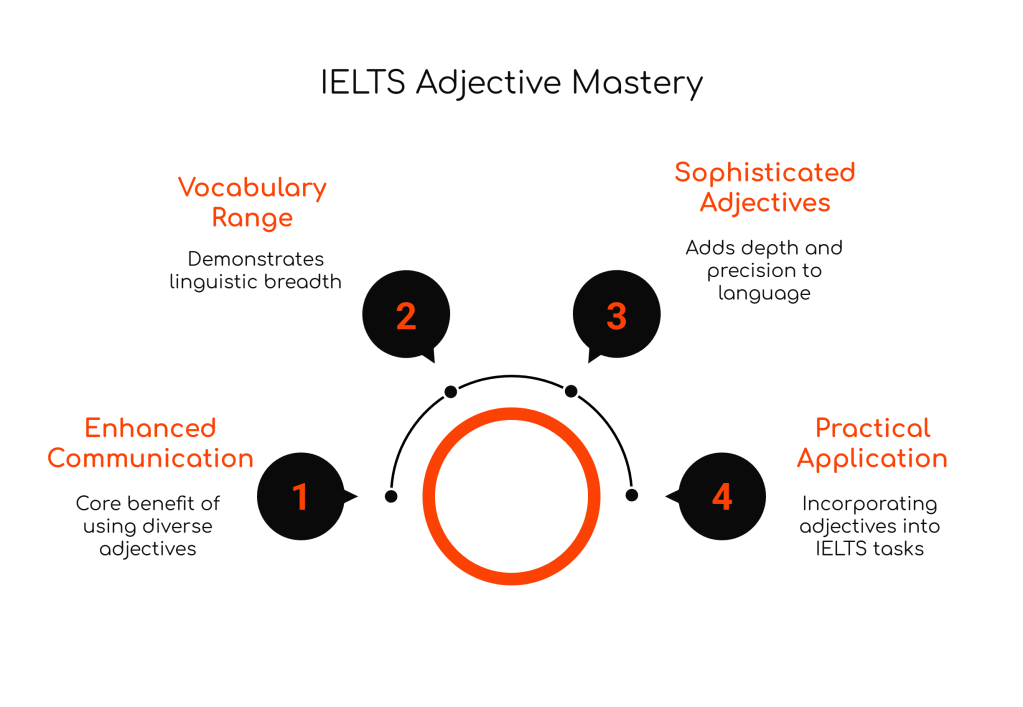
Using less common adjectives can significantly elevate your IELTS Speaking and Writing scores. Examiners look for vocabulary range and precision, and incorporating sophisticated and accurate adjectives makes your communication more vivid, natural, and academic.
Below is a curated list of 100 less common adjectives, complete with definitions and example sentences, to help you reach Band 7, 8, or 9.
100 Less Common Adjectives for a Higher IELTS Band Score
- Abject — extremely bad or severe
“They lived in abject poverty.” - Abrasive — harsh or rough in manner
“His abrasive comments offended many.” - Affluent — wealthy
“The affluent neighborhood boasted luxurious homes.” - Altruistic — selflessly concerned for others
“Her altruistic acts inspired everyone.” - Ambiguous — unclear or having multiple meanings
“His ambiguous statement confused the audience.” - Amicable — friendly and peaceful
“They had an amicable divorce.” - Arcane — known by few
“The professor’s arcane theories puzzled students.” - Arduous — very difficult
“Climbing the mountain was an arduous task.” - Audacious — bold and daring
“The audacious plan shocked everyone.” - Austere — severe or strict in manner
“The monastery had an austere atmosphere.”
- Benign — gentle or harmless
“The tumor turned out to be benign.” - Blatant — obvious and offensive
“His blatant lie angered the boss.” - Boisterous — noisy and energetic
“The boisterous crowd cheered loudly.” - Brittle — easily broken
“The glass was old and brittle.” - Candid — honest and straightforward
“She gave a candid interview.” - Caustic — severely critical or sarcastic
“His caustic remarks hurt her deeply.” - Clandestine — secretive
“They held clandestine meetings at night.” - Cogent — clear and convincing
“She presented a cogent argument.” - Colossal — extremely large
“They made a colossal mistake.” - Complacent — self-satisfied and unaware of dangers
“He grew complacent after a few small successes.”
- Conspicuous — easily noticeable
“Her red dress was conspicuous in the crowd.” - Copious — abundant in supply
“He took copious notes during the lecture.” - Cryptic — mysterious or obscure
“His cryptic message left us puzzled.” - Cumbersome — large and difficult to manage
“The cumbersome equipment slowed them down.” - Daunting — intimidating or overwhelming
“The project seemed daunting at first.” - Decrepit — worn out or ruined
“The decrepit house was barely standing.” - Deft — skillful and quick
“He made a deft move to win the match.” - Deliberate — intentional and careful
“His deliberate movements impressed the judges.” - Derelict — abandoned and neglected
“The derelict factory was demolished.” - Desolate — empty and bleak
“The desert was vast and desolate.”
- Dexterous — skillful with hands or mind
“A dexterous pianist amazed the crowd.” - Diminutive — extremely small
“The diminutive figure stood in the doorway.” - Discreet — careful and prudent
“She made discreet inquiries about the job.” - Disgruntled — dissatisfied or unhappy
“The disgruntled employees protested.” - Dismal — gloomy or depressing
“The weather was dismal all week.” - Docile — easily taught or managed
“The dog was surprisingly docile.” - Dubious — doubtful or questionable
“His dubious excuse raised suspicion.” - Ebullient — cheerful and full of energy
“Her ebullient personality won many friends.” - Eclectic — from diverse sources
“The museum had an eclectic collection.” - Elated — extremely happy
“He was elated at winning the prize.”
- Eloquent — fluent and persuasive
“She gave an eloquent speech.” - Emaciated — abnormally thin or weak
“The emaciated child was given immediate care.” - Eminent — famous and respected
“An eminent scientist visited the university.” - Ephemeral — lasting a very short time
“Their fame was ephemeral.” - Erratic — unpredictable or inconsistent
“His erratic driving concerned the police.” - Esoteric — intended for a small group
“His esoteric knowledge fascinated the experts.” - Exorbitant — unreasonably high
“The hotel charged exorbitant fees.” - Exuberant — full of energy and enthusiasm
“The crowd was exuberant after the win.” - Fallacious — misleading or false
“His argument was based on fallacious reasoning.” - Fastidious — very attentive to detail
“She was fastidious about cleanliness.”
- Feeble — weak or frail
“He gave a feeble excuse for his absence.” - Fervent — having strong feelings
“They made a fervent plea for help.” - Flimsy — weak or poorly made
“The table was too flimsy to hold much weight.” - Forlorn — pitifully sad and abandoned
“The forlorn puppy waited for adoption.” - Frugal — sparing or economical
“They lived a frugal lifestyle.” - Furtive — secretive or stealthy
“He cast a furtive glance at the clock.” - Garrulous — excessively talkative
“The garrulous neighbor shared every detail of her life.” - Gaunt — extremely thin and haggard
“The refugees appeared gaunt after the long journey.” - Grandiose — pompous or overblown
“His grandiose plans failed miserably.” - Gratuitous — unnecessary or unwarranted
“The film had gratuitous violence.”
- Gregarious — sociable and outgoing
“He was a gregarious host.” - Grotesque — comically ugly or distorted
“The painting depicted grotesque figures.” - Hapless — unfortunate
“The hapless tourist lost his passport.” - Heinous — shockingly evil
“The crime was truly heinous.” - Hilarious — extremely funny
“The comedian’s hilarious act had everyone laughing.” - Immaculate — perfectly clean or flawless
“The room was immaculate.” - Imminent — about to happen
“A storm was imminent.” - Impassive — showing no emotion
“His face remained impassive.” - Impeccable — flawless
“Her English was impeccable.” - Impervious — unaffected by
“He was impervious to criticism.”
- Impetuous — acting quickly without thought
“His impetuous decision cost him dearly.” - Incisive — clear and direct
“Her incisive comments cut through the confusion.” - Incongruous — out of place
“His casual attire was incongruous with the formal event.” - Indigent — extremely poor
“The charity helped indigent families.” - Inevitable — certain to happen
“Death is inevitable.” - Insolent — boldly disrespectful
“His insolent reply shocked the teacher.” - Intrepid — fearless
“The intrepid explorer ventured into unknown lands.” - Invincible — too powerful to be defeated
“The team felt invincible after winning 10 games.” - Judicious — having good judgment
“She made a judicious investment.” - Lamentable — deserving regret or pity
“The living conditions were lamentable.”
- Languid — slow and relaxed
“He moved with languid grace.” - Lavish — rich and luxurious
“They threw a lavish wedding party.” - Listless — lacking energy
“He felt listless after the illness.” - Lucid — clear and easy to understand
“Her explanation was lucid.” - Magnanimous — generous and forgiving
“He was magnanimous in victory.” - Malevolent — wishing harm on others
“A malevolent glare came from across the room.” - Meager — lacking in quantity
“They survived on a meager diet.” - Melancholic — deeply sad
“The music had a melancholic tone.” - Meticulous — very careful and precise
“He was meticulous in his research.” - Mundane — ordinary or dull
“She found her office job mundane.”
- Nebulous — vague or unclear
“His ideas remained nebulous.” - Negligible — so small as to be unimportant
“The difference was negligible.” - Nefarious — wicked or criminal
“He plotted a nefarious scheme.” - Nonchalant — casually unconcerned
“He gave a nonchalant shrug.” - Obsolete — outdated or no longer used
“Typewriters are largely obsolete.” - Omnipotent — all-powerful
“The king believed he was omnipotent.” - Opulent — wealthy and luxurious
“The mansion was opulent.” - Ostentatious — showy or pretentious
“He wore an ostentatious gold chain.” - Pensive — thoughtful and reflective
“She appeared pensive during the meeting.” - Plausible — believable or reasonable
“His excuse sounded plausible.”
Final Thoughts
A strong and varied use of adjectives helps you create precise, rich, and compelling communication in IELTS. Instead of relying on simple words like “good,” “bad,” or “big,” use these less common adjectives to make your English more sophisticated and impressive.
Practice by incorporating 5–10 of these into your essays and Speaking Part 2 responses every week to internalize them naturally!
#IELTSGuidePhil #IELTS #IELTSVocabulary #IELTSPreparation #IELTSWriting #IELTSSpeaking #Band9Vocabulary #AcademicEnglish #LearnEnglish #IELTSBand8 #AdvancedVocabulary
 IELTS Guide Phil
Leave a comment