
The Diagram Label Completion question type in IELTS Reading tests your ability to understand descriptions of processes, objects, or structures and accurately label a diagram based on what you read.
This task combines visual literacy with reading comprehension, often appearing in scientific or technical passages.
What is Diagram Label Completion?
You’re presented with a labeled or partially labeled diagram showing:
- A process (e.g. water cycle)
- A machine (e.g. bicycle pump)
- A structure (e.g. the human eye or volcano)
You must fill in the missing labels using either:
- Words from the passage, or
- Words from a provided box
Instructions will state:
- How many words/numbers you can use (e.g., “NO MORE THAN TWO WORDS”)
- Whether answers should be taken from the passage or a list
Example
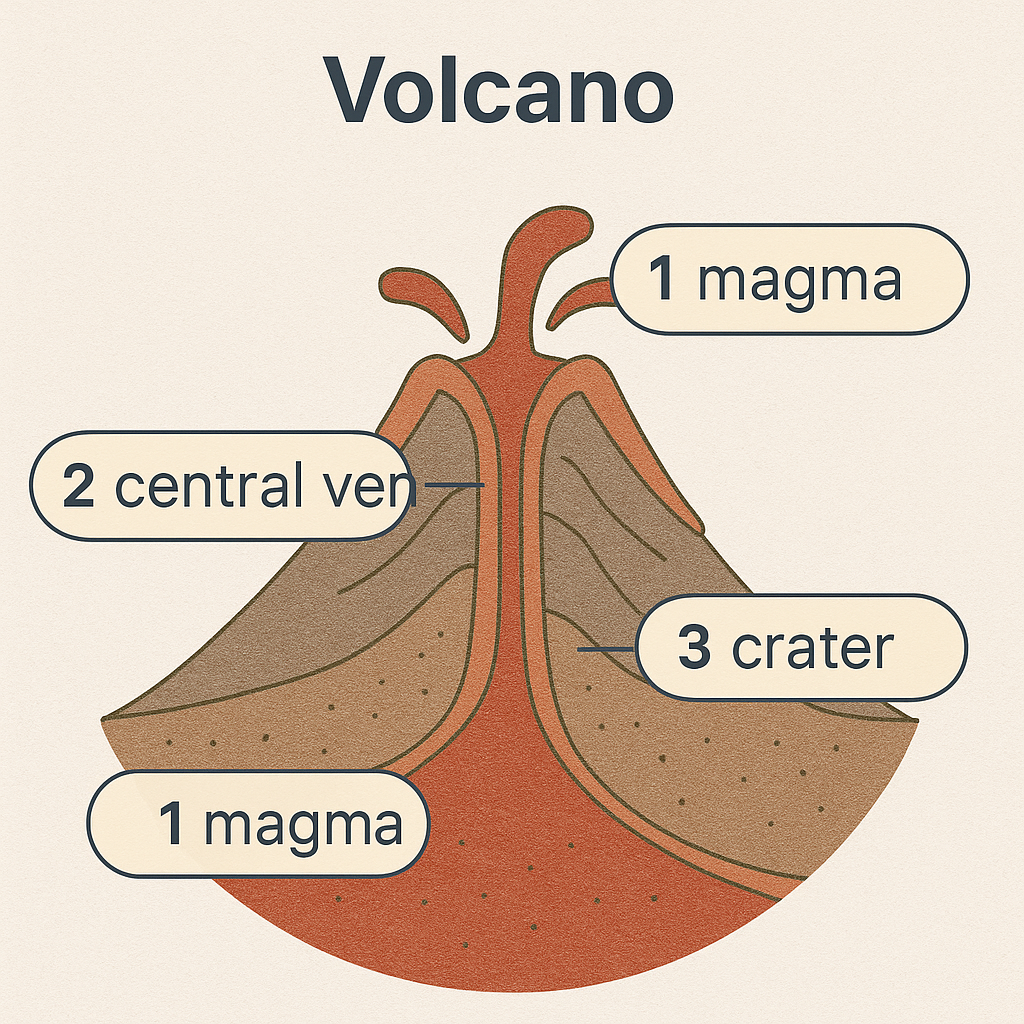
Diagram: Cross-section of a volcano
(Labels 1–3 missing)
Passage Excerpt:
“Molten rock stored beneath the Earth’s crust is known as magma. When pressure builds, it escapes through a central vent, becoming lava upon eruption. The cone is formed from layers of ash and cooled lava. The summit often contains a crater.”
Instructions: Label the diagram using NO MORE THAN TWO WORDS from the passage.
Answers:
- magma
- central vent
- crater
All answers are directly lifted from the passage and fit within the word limit.
Key Strategies
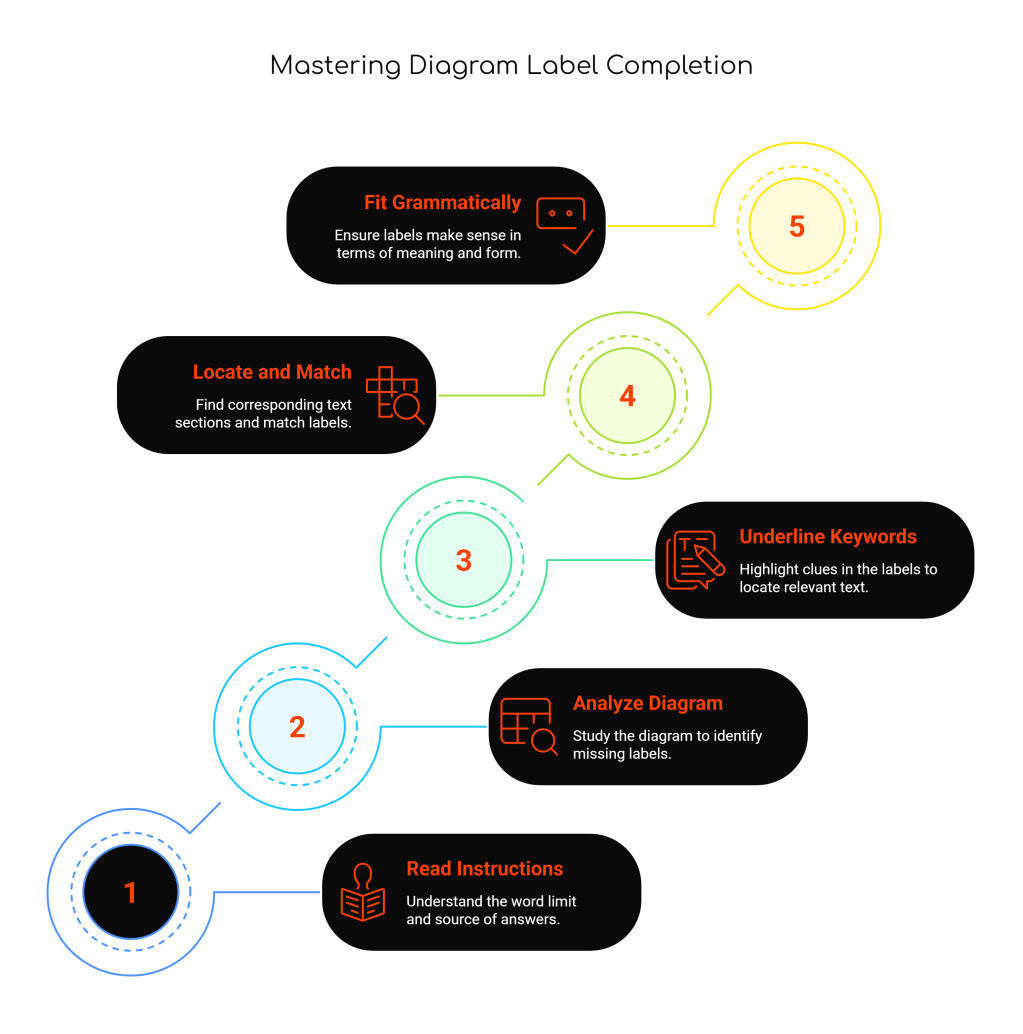
1. Read the Instructions Carefully
They’ll tell you the word limit and whether you can only use words from the passage.
2. Analyze the Diagram First
Before reading the passage, study the diagram:
- What does it show?
- What type of words are likely missing? (nouns, parts, substances, etc.)
3. Underline Keywords in Labels
These clues help you locate the right section in the passage.
4. Locate and Match
Find the corresponding section in the passage and match labels by meaning — not always by identical wording.
5. Fit Grammatically and Logically
The missing words should make sense in terms of meaning and form (e.g. singular/plural, technical term, etc.).
Dos and Don’ts
DO:
- Check the word limit carefully.
- Use only the source allowed (passage or word box).
- Match the location of each label to the relevant part of the text.
- Understand synonyms and paraphrases.
- Look at arrows, numbers, and position in the diagram.
DON’T:
- Use your own words.
- Add extra words (e.g., “the”, “a”) if it breaks the limit.
- Confuse similar parts (e.g., vent vs crater).
- Skip reading the passage thoroughly.
- Assume the answer is always a visible label in the diagram.
Common Mistakes
- Using More Than the Allowed Words
→ Even one extra word = incorrect. - Choosing the Wrong Part of the Passage
→ Focus on the section that clearly describes the diagram. - Guessing Without Understanding
→ The right answer must be supported by the text. - Misinterpreting the Diagram
→ Carefully examine arrows, labels, shapes, and their positions.
Frequently Asked Questions
Q: Are answers always in the same order as the passage?
A: Yes, usually the diagram labels follow the order in which the relevant details appear in the passage.
Q: Can I use abbreviations?
A: No, unless the abbreviation is used exactly that way in the passage.
Q: Should I use capital letters?
A: Not necessary unless the word is a proper noun. IELTS is not case-sensitive.
Q: Can spelling errors lose marks?
A: Yes — incorrect spelling = incorrect answer.
Practice Mini-Task
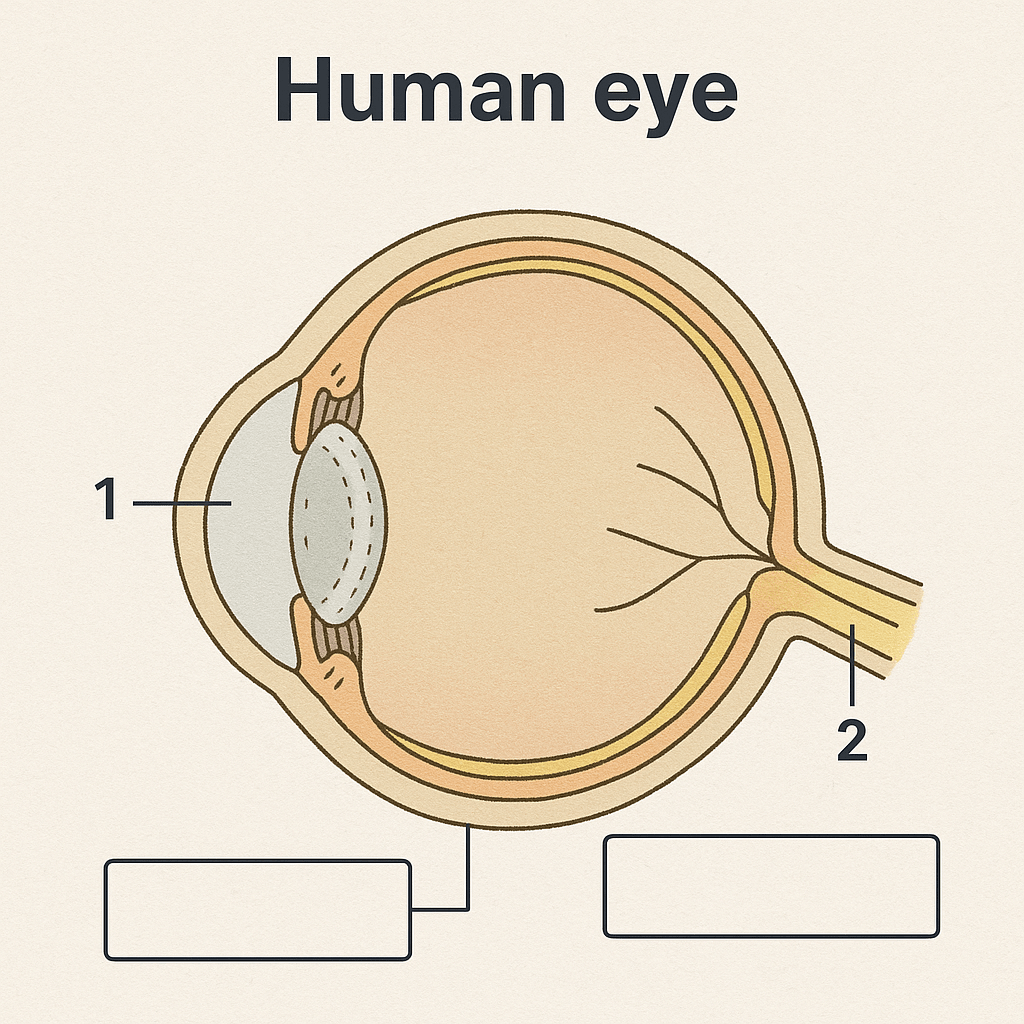
Diagram Topic: The structure of the human eye
Missing labels: 1, 2
Passage Excerpt:
“Light enters the eye through the cornea, which helps focus the image. It then passes through the pupil and reaches the lens. The retina, located at the back of the eye, processes the image and sends signals to the brain.”
Instructions: Label the diagram using NO MORE THAN TWO WORDS from the passage.
Answers:
- cornea
- retina
Final Tips
- Don’t panic if the diagram looks unfamiliar — rely on the passage.
- Use your understanding of structure and layout to guide you.
- Develop your ability to recognize paraphrasing and technical terms.
- Review scientific diagrams in general knowledge sources (biology, geography, etc.) for extra practice.
#IELTSGuidePhil #IELTS #IELTSReading #IELTSDiagramLabel #IELTSReadingPractice #IELTSReadingTips #IELTSDiagramCompletion #StudyIELTS #IELTSPreparation #IELTSBand7 #IELTSBand8 #IELTSAcademic #EnglishForIELTS #ReadingDiagramIELTS #IELTSVisualTasks
 IELTS Guide Phil
Leave a comment