
Travel and tourism are frequently discussed topics in the IELTS exam, especially in Speaking Part 2 and Writing Task 2. Whether you’re describing your dream vacation, analyzing the impact of tourism on the environment, or discussing global mobility, having precise and varied vocabulary is key to achieving a high band score.
Below is a curated list of 100 travel and tourism-related vocabulary words, complete with definitions and example sentences to help you incorporate them naturally into your responses.
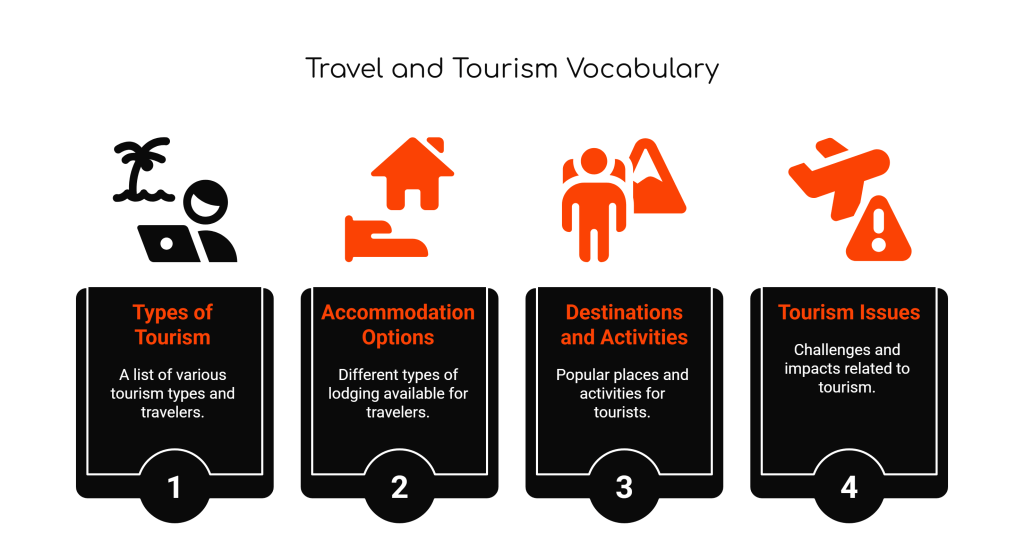
1–20: Types of Tourism and Travelers
- Ecotourism – environmentally responsible travel to natural areas
Ecotourism promotes conservation and sustainable travel practices. - Cultural tourism – traveling to experience the culture, arts, and history of a place
Cultural tourism is booming in cities with rich heritage sites. - Backpacking – traveling with minimal luggage and on a budget
Backpacking across Europe is a popular choice for university students. - Luxury tourism – high-end travel with premium services
Luxury tourism often includes private jets, five-star hotels, and gourmet dining. - Adventure tourism – travel focused on physical activity and adrenaline
Adventure tourism appeals to thrill-seekers who enjoy hiking, rafting, and mountain biking. - Sustainable tourism – travel that minimizes environmental and cultural impacts
Sustainable tourism aims to support local communities and reduce carbon footprints. - Medical tourism – traveling abroad for medical treatments
Medical tourism is growing as people seek affordable healthcare in other countries. - Domestic tourism – travel within one’s own country
The government encouraged domestic tourism during the pandemic. - Inbound tourism – visitors coming into a country
Inbound tourism contributes significantly to the national economy. - Outbound tourism – residents traveling to other countries
Outbound tourism from China has increased rapidly over the last decade. - Mass tourism – large-scale tourism often leading to overcrowding
Mass tourism can lead to environmental degradation and cultural erosion. - Heritage tourism – focused on historical places and cultural traditions
Heritage tourism helps preserve ancient landmarks and traditions. - Solo traveler – someone who travels alone
Being a solo traveler can be both liberating and challenging. - Budget traveler – someone who seeks affordable travel options
Budget travelers often use hostels and low-cost airlines. - Digital nomad – someone who works remotely while traveling
Digital nomads choose destinations with good internet and coworking spaces. - Business traveler – someone who travels for work
Airports often cater to business travelers with lounges and Wi-Fi. - Repeat visitor – someone who visits the same place multiple times
Repeat visitors are a sign of a destination’s long-term appeal. - Pilgrimage – a journey to a sacred place for religious reasons
The pilgrimage to Mecca is one of the most significant journeys for Muslims. - Staycation – a vacation spent at home or nearby
Staycations became popular during travel restrictions. - Glamping – glamorous camping with luxury amenities
Glamping combines nature with comfort and convenience.
21–40: Accommodation and Transportation
- Hostel – a budget-friendly accommodation with shared rooms
Hostels are ideal for social backpackers. - Boutique hotel – a small, stylish, and often luxurious hotel
The boutique hotel had personalized services and local decor. - Resort – a full-service lodging facility offering leisure and recreation
The resort had a private beach, spa, and golf course. - Homestay – staying in someone’s home, often to learn local culture
A homestay offers an immersive cultural experience. - Bed and breakfast – a small lodging providing overnight stay and breakfast
We stayed at a charming bed and breakfast in the countryside. - Airbnb – a peer-to-peer rental service for accommodation
Airbnb has revolutionized how people book short-term lodging. - Timeshare – shared ownership of vacation property
Timeshares can be economical for frequent travelers. - Overbooked – when more reservations are made than available spots
The airline apologized for the overbooked flight. - Jet lag – fatigue caused by crossing time zones
Jet lag can affect productivity after long-haul flights. - Transit – the act of passing through a place en route
We had a two-hour layover in Dubai during transit. - All-inclusive – accommodations with meals, drinks, and entertainment included
All-inclusive resorts are ideal for hassle-free vacations. - Cruise – a sea journey on a large ship for leisure
The Mediterranean cruise included stops in five countries. - Long-haul flight – a flight lasting over 6–12 hours
Long-haul flights require proper hydration and movement. - Rail pass – a ticket allowing unlimited travel by train
The Eurail pass is popular among tourists in Europe. - Airport shuttle – transport service between airport and hotel
The hotel provided a free airport shuttle service. - Taxi rank – a designated area where taxis wait for passengers
We found a taxi rank outside the arrivals terminal. - Boarding pass – a document allowing entry to an aircraft
Show your boarding pass at the gate. - Customs – the process of inspecting goods and passengers entering a country
He was stopped at customs for carrying undeclared items. - Itinerary – a detailed plan or schedule for a trip
Our itinerary includes sightseeing, shopping, and relaxation. - Layover – a break between connecting flights
We had a 5-hour layover in Istanbul.
41–60: Destinations and Activities
- Landmark – an important or historical site
The Eiffel Tower is Paris’s most iconic landmark. - Attraction – a site that draws tourists
The Grand Canyon is a major natural attraction in the U.S. - Scenic – offering beautiful natural views
We took the scenic route along the coast. - Sightseeing – visiting interesting places on a trip
Our itinerary is packed with sightseeing opportunities. - Excursion – a short journey for leisure
We booked a day excursion to the local vineyards. - Guided tour – a tour led by an expert
The guided tour provided rich historical context. - Itinerant – traveling from place to place
He lived an itinerant lifestyle, never settling down. - Trek – a long and difficult walk, especially in the mountains
The trek through the Himalayas was both grueling and rewarding. - Hiking trail – a path for walking in nature
The hiking trail led to a breathtaking waterfall. - Island-hopping – traveling between islands
Island-hopping in Greece is popular in summer. - Safari – a wildlife expedition in Africa
We went on a safari in Kenya and saw lions and elephants. - Road trip – a journey by car, typically over a long distance
Our road trip across the U.S. took two weeks. - Camping – staying in a tent outdoors
Camping in the national park was a memorable experience. - Beach holiday – a vacation by the sea
A beach holiday is perfect for relaxation. - City break – a short holiday in a city
We took a city break in Barcelona over the weekend. - Culinary tourism – travel focused on local food
Culinary tourism is growing thanks to food blogs and shows. - Honeymoon – a trip taken by newlyweds
Their honeymoon in Bali was picture-perfect. - Sightseer – a tourist who visits places of interest
The city was full of eager sightseers. - Unspoiled – a place not damaged by tourism or development
The island is still unspoiled by mass tourism. - Off the beaten path – away from popular tourist areas
We explored villages off the beaten path.
61–100: Issues, Benefits, and Impacts of Tourism
- Overtourism – too many tourists causing damage to a destination
Venice is facing serious problems due to overtourism. - Carbon footprint – the amount of CO2 emitted
Air travel significantly increases your carbon footprint. - Environmental degradation – damage to the natural environment
Mass tourism can lead to environmental degradation. - Economic boost – improvement in the economy
Tourism gives an economic boost to developing countries. - Cultural exchange – sharing ideas and traditions
Tourism fosters cultural exchange and understanding. - Seasonal employment – jobs that exist only during certain months
Tourism creates seasonal employment in coastal areas. - Tourist trap – a place that is overpriced or overly commercial
The museum gift shop felt like a tourist trap. - Local economy – the financial health of a local area
Tourism plays a vital role in the local economy. - Infrastructure development – improvements in transport and facilities
Tourism often drives infrastructure development. - Preservation – protecting historical and natural sites
Revenue from tourism supports heritage preservation. - Displacement – forcing locals to move for tourism development
Luxury resorts sometimes lead to displacement of local communities. - Cultural erosion – loss of traditional customs and practices
Rapid tourism can cause cultural erosion. - Authentic experience – genuine and local travel interactions
Travelers increasingly seek authentic experiences. - Green travel – environmentally friendly travel
Green travel includes cycling, walking, and public transport. - Travel restrictions – rules limiting movement
The pandemic imposed strict travel restrictions. - Tourist visa – permission to enter a country for tourism
You need a tourist visa to enter the U.S. - Foreign exchange – money exchange between countries
Tourists bring in foreign exchange that boosts the economy. - Responsible travel – ethical and thoughtful travel
Responsible travel includes respecting local culture. - Tourism revenue – income generated from tourists
Tourism revenue supports infrastructure and public services. - Global mobility – the ease of international travel
Modern technology and aviation have increased global mobility. - Overpriced – excessively costly
The hotel was nice but overpriced for its services. - Jetsetter – someone who travels frequently and luxuriously
She’s a fashion influencer and a known jetsetter. - Immigration – moving permanently to another country
Some confuse tourism with immigration, but they are different. - Customs officer – official who checks travelers’ goods
The customs officer asked about food items in our luggage. - Duty-free – goods exempt from taxes at airports
We bought chocolates and perfume at the duty-free shop. - Red-eye flight – an overnight flight
I took the red-eye flight to save time. - Travel insurance – protection against travel-related risks
Travel insurance covers cancellations and medical emergencies. - Jet bridge – a walkway connecting the plane to the terminal
We boarded the plane via a jet bridge. - Tourism-dependent – relying heavily on tourism for income
Island nations are often tourism-dependent. - Migration – moving from one region to another
Tourism and migration are distinct yet occasionally related. - Hospitality industry – businesses that cater to tourists
The hospitality industry includes hotels, restaurants, and entertainment. - Peak season – the busiest travel period
Hotel prices double during the peak season. - Off-season – the quietest travel time
Traveling during the off-season means fewer crowds. - Souvenir – an item kept as a reminder of a trip
She bought a handmade souvenir from the market. - Tour guide – a person who shows tourists around
The tour guide explained the monument’s history in detail. - Travelogue – a written or filmed account of travel
She wrote a travelogue documenting her African journey. - Expatriate (Expat) – a person living outside their native country
Many expats enjoy traveling within their host country. - Visa waiver – permission to enter a country without a visa
Some countries have visa waiver agreements. - Hitchhiking – traveling by getting rides from passing vehicles
Hitchhiking is rare today but was popular in the past. - Tourism sector – the part of the economy related to tourism
The tourism sector faced significant losses during the pandemic.
Mastering vocabulary related to travel and tourism can significantly enhance your IELTS performance, especially in Speaking Part 2 and Writing Task 2. These 100 words and expressions will not only boost your lexical resource score but also help you speak and write with greater fluency and precision. Regular practice, using these words in context, and reviewing example sentences will prepare you for a wide range of IELTS questions on travel and tourism.
#IELTS #IELTSGuidePhil #IELTSVocabulary #TravelAndTourism #IELTSTips #IELTSSpeaking #IELTSWriting #AcademicVocabulary #Band9Lexis #LearnEnglish #EnglishForIELTS #TourismVocabulary
 IELTS Guide Phil
Leave a comment