
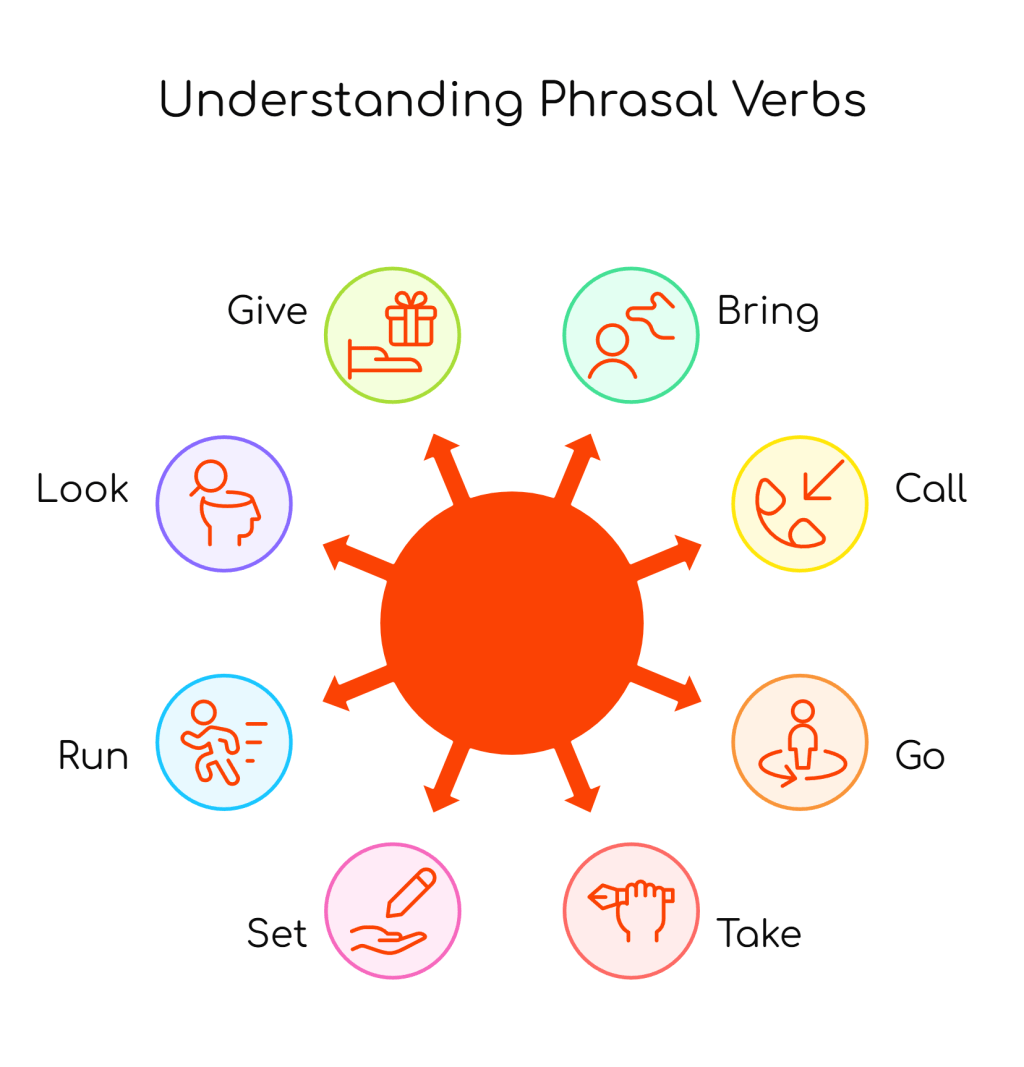
Phrasal verbs are everywhere in English conversations, TV shows, books, and exams like IELTS and TOEFL. These powerful little combos—made up of a verb and one or more prepositions or adverbs—can completely change the meaning of the root verb. Understanding them is key to sounding natural and fluent in English.
In this guide, we’ve grouped 100 commonly used phrasal verbs by their root verbs to help you learn and remember them more easily. Each entry includes a clear definition and a real-world example to show you how it works in context. Whether you’re a language learner, a teacher, or someone preparing for an English exam, this list is your go-to reference!
1. Bring
- Bring up – To mention or raise a topic.
- She brought up an interesting point during the meeting.
- Bring about – To cause something to happen.
- The new law will bring about many changes.
- Bring in – To introduce or make use of something.
- The company plans to bring in a new marketing strategy.
- Bring back – To return something to its original place or state.
- That song always brings back great memories.
- Bring down – To reduce or lower something.
- The new measures are expected to bring down costs.
- Bring out – To highlight or make something more noticeable.
- This color really brings out the beauty of your eyes.
2. Call
- Call off – To cancel something.
- They decided to call off the concert due to the rain.
- Call on – To visit or formally ask someone to speak.
- The teacher will call on you when it’s your turn.
- Call in – To request or summon someone.
- She had to call in a technician to fix the printer.
- Call out – To shout or speak loudly to get attention.
- He called out to his friends from across the street.
- Call for – To demand or require something.
- The situation calls for immediate action.
3. Go
- Go up – To rise or increase.
- Prices are expected to go up next month.
- Go down – To decrease or fall.
- The temperature is going to go down overnight.
- Go on – To continue or happen.
- The show will go on despite the rain.
- Go over – To review or examine something.
- Let’s go over the details of the contract one more time.
- Go through – To experience something or examine in detail.
- She had to go through a lot to get to where she is today.
4. Take
- Take up – To begin or engage in an activity.
- She’s decided to take up painting as a hobby.
- Take off – To ascend (in the case of planes) or to become successful.
- The plane will take off in five minutes.
- His business took off after launching the new product.
- Take over – To assume control of something.
- He will take over the project starting next week.
- Take back – To retract or return something.
- I had to take back the comment I made earlier.
- I need to take back this shirt; it doesn’t fit.
- Take in – To understand or absorb information.
- It’s a lot to take in, but I’ll explain it again tomorrow.
5. Set
- Set up – To arrange or organize something.
- They set up the event in the conference hall.
- Set off – To start a journey or trigger something.
- We set off early to avoid traffic.
- The alarm was accidentally set off by the worker.
- Set down – To write or record something.
- He set down his thoughts in a journal.
- Set aside – To reserve something for a particular purpose.
- They set aside some money for future emergencies.
- Set out – To begin an endeavor or journey.
- She set out to improve her English skills.
6. Run
- Run into – To encounter someone or something unexpectedly.
- I ran into my old friend at the grocery store yesterday.
- Run out of – To use up all of something.
- We ran out of milk, so I need to go buy some.
- Run over – To exceed (usually a time limit) or to hit someone/something with a vehicle.
- The meeting ran over by 15 minutes.
- He accidentally ran over a tree branch.
- Run down – To lose power (for a device) or to criticize someone.
- The battery ran down, and my phone died.
- She kept running down my ideas during the presentation.
- Run away – To leave suddenly, especially to escape.
- The dog ran away when the gate was left open.
7. Look
- Look after – To take care of someone or something.
- Can you look after the kids while I run errands?
- Look into – To investigate or research something.
- We need to look into the cause of the problem.
- Look out – To be vigilant or watch for danger.
- Look out! There’s a car coming!
- Look up – To search for information or improve.
- I’ll look up the address online.
- Things are starting to look up after a rough year.
- Look forward to – To anticipate with excitement.
- I’m really looking forward to the weekend.
8. Give
- Give up – To quit or stop doing something.
- I’ll never give up on my dreams.
- Give in – To yield or submit to something.
- After hours of arguing, he finally gave in.
- Give out – To distribute something or stop functioning.
- They gave out free samples at the store.
- My phone’s battery gave out after hours of use.
- Give away – To donate or reveal something.
- She gave away all her old clothes to charity.
- He accidentally gave away the surprise.
- Give back – To return something to its original place or owner.
- I need to give back the book I borrowed from the library.
9. Hold
- Hold up – To delay or rob someone.
- The traffic held up my arrival.
- The bank was held up by armed robbers.
- Hold on – To grip something or wait.
- Hold on to the railing while you walk down the stairs.
- Can you hold on for a minute while I check?
- Hold out – To stretch or extend something toward someone.
- He held out his hand to help me up.
- Hold back – To restrain or prevent something.
- She tried to hold back her tears during the speech.
- Hold off – To delay or postpone something.
- We should hold off making a decision until next week.
10. Turn
- Turn up – To appear or arrive.
- He didn’t turn up for the meeting.
- She always turns up at the most unexpected times.
- Turn down – To reject or refuse something.
- He turned down the job offer because the salary wasn’t high enough.
- Turn on – To activate something.
- Please turn on the lights, it’s too dark in here.
- Turn off – To deactivate something.
- Please turn off your phone during the movie.
- Turn in – To submit something or go to bed.
- I’ll turn in my assignment tomorrow.
- I’m tired. I think I’ll turn in early tonight.
11. Come
- Come across – To find something by chance.
- I came across an old letter while cleaning.
- Come up with – To think of or produce an idea.
- She came up with a brilliant solution to the problem.
- Come down with – To become ill with something.
- I think I’m coming down with a cold.
- Come over – To visit someone.
- Why don’t you come over for coffee tomorrow?
- Come along – To accompany or make progress.
- His studies are coming along nicely.
12. Put
- Put up with – To tolerate or endure something.
- I can’t put up with the noise any longer.
- Put off – To delay something.
- They put off the meeting until next week.
- Put out – To extinguish something (like a fire).
- Please put out the candles before you leave.
- Put across – To communicate effectively.
- He knows how to put across his ideas clearly.
- Put down – To insult or make someone feel inferior.
- He always tries to put down my achievements.
13. Break
- Break up – To end a relationship or to break into pieces.
- They decided to break up after five years.
- The glass broke up into tiny pieces.
- Break down – To fail or decompose.
- The car broke down in the middle of the highway.
- The machine broke down after years of use.
- Break into – To enter something forcibly, often for theft.
- Someone tried to break into our house last night.
- Break out – To escape or suddenly begin.
- The prisoners managed to break out of jail.
- A rash started to break out on my skin.
- Break through – To make an important discovery or progress.
- The scientist broke through with a major medical discovery.
14. Ask
- Ask out – To invite someone on a date.
- He finally asked her out after weeks of hesitation.
- Ask for – To request something.
- She asked for a cup of coffee.
- Ask around – To inquire of multiple people.
- I’ll ask around to see if anyone has seen my keys.
- Ask after – To inquire about someone’s health or well-being.
- She asked after your mother during our conversation.
- Ask in – To invite someone inside.
- She asked us in when we knocked on the door.
15. Fall
- Fall out – To argue or have a disagreement.
- They fell out after their argument about the project.
- Fall behind – To fail to keep up with others.
- I’ve fallen behind on my work after being sick.
- Fall for – To fall in love with or be deceived by.
- She fell for him after only a few weeks.
- He fell for the scam.
- Fall through – To fail or not be completed.
- The deal fell through at the last minute.
- Fall apart – To break into pieces or lose control emotionally.
- The chair fell apart after years of use.
- She almost fell apart during the stressful meeting.
16. Get
- Get over – To recover from something.
- It took me weeks to get over the flu.
- Get across – To successfully communicate something.
- He struggled to get his point across during the meeting.
- Get by – To manage or survive.
- It’s tough, but we’re managing to get by on a small budget.
- Get through – To complete something or reach someone.
- I managed to get through all my work this week.
- I couldn’t get through to him on the phone.
- Get in – To enter or be accepted.
- He was finally able to get in the university he wanted.
17. Stand
- Stand up – To rise to a standing position.
- Please stand up when the teacher enters the room.
- Stand for – To represent or symbolize something.
- The letters “USA” stand for the United States of America.
- Stand out – To be noticeable or distinctive.
- Her talent stands out among the rest of the candidates.
- Stand by – To support or be ready to help.
- I’ll stand by you no matter what happens.
- Stand down – To step back or resign from a position.
- The CEO decided to stand down after the scandal.
18. Run
- Run into – To encounter someone unexpectedly.
- I ran into my old friend at the grocery store yesterday.
- Run out of – To deplete or use up a supply.
- We ran out of sugar and need to buy more.
- Run over – To exceed or run into something with a vehicle.
- We ran over our time limit.
- The car accidentally ran over the curb.
- Run through – To review or practice something quickly.
- Let’s run through the presentation one more time.
- Run away – To leave unexpectedly or escape.
- The child tried to run away from home.
19. Turn
- Turn up – To arrive or appear.
- She didn’t turn up for the meeting.
- Turn down – To refuse or decline something.
- He turned down the job offer.
- Turn on – To activate something.
- Can you turn on the heater?
- Turn off – To deactivate something.
- Please turn off the lights when you leave.
- Turn in – To submit or go to bed.
- I need to turn in my homework by tomorrow.
- It’s late, I think I’ll turn in now.
20. Look
- Look after – To take care of someone or something.
- Can you look after my cat while I’m away?
- Look into – To investigate something.
- We should look into the issue more closely.
- Look out – To watch for danger.
- Look out! A car is coming.
- Look forward to – To anticipate something with excitement.
– I’m really looking forward to the concert next week.
Mastering phrasal verbs doesn’t have to be overwhelming—especially when you study them in related groups. Now that you’ve seen how different prepositions can change the meaning of a single verb, you’re already on the path to more confident, fluent English communication.
Keep practicing by using these phrasal verbs in your speaking and writing. Bookmark this guide, share it with fellow learners, and refer back to it whenever you need a refresher. You’ve just unlocked 100 tools to supercharge your vocabulary—now go put them to work!
#IELTSGuidePhil #IELTS #PhrasalVerbs #EnglishVocabulary #LearnEnglish #IELTSTips #EnglishGrammar #StudyEnglish #FluentEnglish #EnglishExpressions #EnglishLearners #ESLResources
 IELTS Guide Phil
Leave a comment