
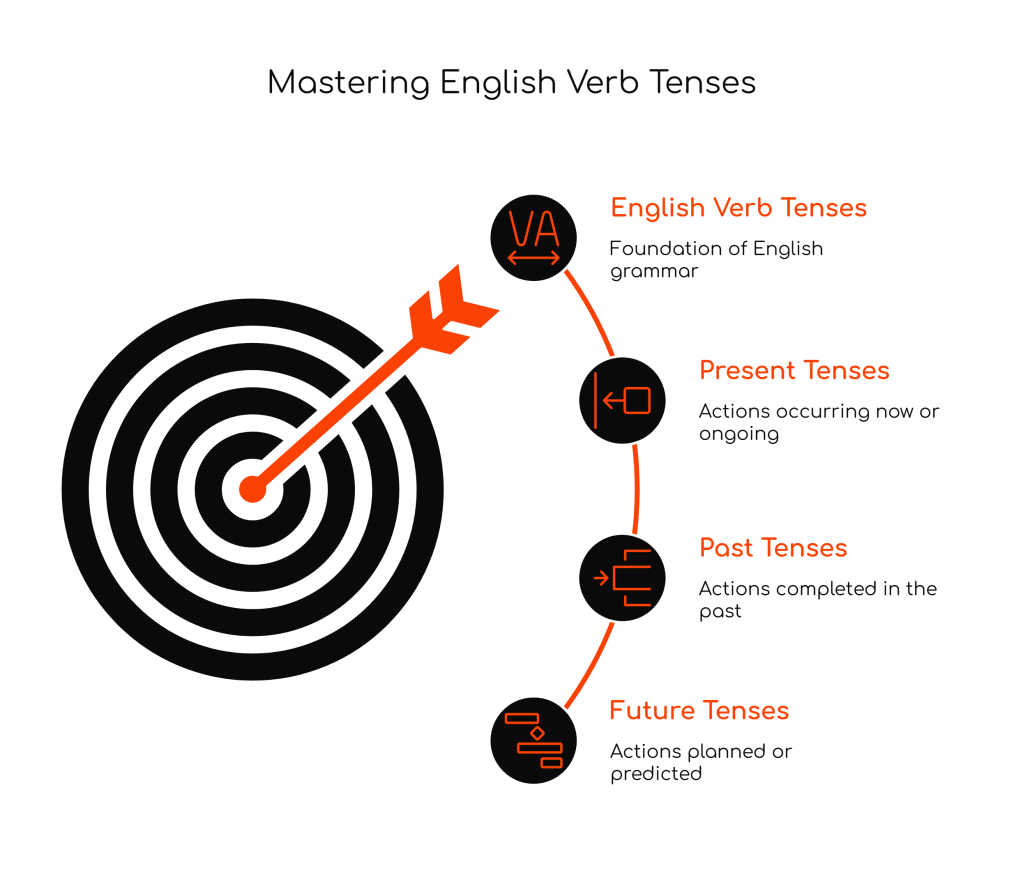
Understanding English verb tenses is essential for effective communication. The correct use of tenses allows speakers and writers to convey time relationships accurately. This article provides a structured overview of English verb tenses, common mistakes, frequently asked questions, and strategies for mastering their use.
Overview of English Verb Tenses
English has twelve verb tenses, which are categorized into three main time frames: past, present, and future. Each time frame consists of four aspects: simple, continuous (also known as progressive), perfect, and perfect continuous.
- Simple: Expresses general truths, habits, or completed actions.
- Continuous: Describes ongoing or progressive actions.
- Perfect: Highlights actions completed before another point in time.
- Perfect Continuous: Emphasizes the duration of ongoing actions.
Present Tenses
- Simple Present: Used for general truths, habitual actions, and routines.
- Example: “She teaches English every day.”
- Common mistake: “She teach English every day.”
- Corrected: “She teaches English every day.”
- Present Continuous: Describes actions happening at the moment or temporary activities.
- Example: “She is teaching English now.”
- Common mistake: “She teaches English now.”
- Corrected: “She is teaching English now.”
- Present Perfect: Indicates actions that started in the past and continue to the present or have an impact on the present.
- Example: “She has taught English for five years.”
- Common mistake: “She taught English for five years.”
- Present Perfect Continuous: Focuses on the duration of an ongoing action.
- Example: “She has been teaching English since 2018.”
Past Tenses
- Simple Past: Describes completed actions at a specific time in the past.
- Example: “She taught English last year.”
- Past Continuous: Used for ongoing actions at a specific time in the past or interrupted past actions.
- Example: “She was teaching English when the phone rang.”
- Common mistake: “She taught English when the phone rang.”
- Past Perfect: Indicates an action completed before another past event.
- Example: “She had taught English before she moved abroad.”
- Past Perfect Continuous: Highlights an ongoing action before another past event.
- Example: “She had been teaching for five years before changing careers.”
Future Tenses
- Simple Future: Used for predictions, promises, and spontaneous decisions.
- Example: “She will teach English next year.”
- Future Continuous: Describes actions that will be in progress at a particular time in the future.
- Example: “She will be teaching English at this time tomorrow.”
- Future Perfect: Refers to actions that will be completed before a specific future point.
- Example: “She will have taught for ten years by next year.”
- Future Perfect Continuous: Emphasizes the duration of an action before a specific future point.
- Example: “She will have been teaching for ten years by 2030.”
Common Errors and Corrections
- Mixing past simple and present perfect incorrectly
- Incorrect: “I have visited France last year.”
- Correct: “I visited France last year.”
- Incorrect use of ‘will’ in conditional sentences
- Incorrect: “If you will study, you will pass.”
- Correct: “If you study, you will pass.”
- Misuse of ‘will’ instead of ‘going to’ for planned actions
- Incorrect: “I will visit my parents next weekend.”
- Correct: “I am going to visit my parents next weekend.”
Frequently Asked Questions
How do I determine the correct tense to use? Identifying whether an action is past, present, or future and whether it is completed, ongoing, or habitual helps determine the appropriate tense.
Why do native speakers sometimes deviate from tense rules? In informal conversations, native speakers may simplify tense usage, but proper tense application is crucial in formal writing.
Are all twelve tenses necessary for fluency? While some tenses are used more frequently than others, having a strong grasp of all twelve enhances clarity and accuracy in communication.
Effective Strategies for Learning Verb Tenses
- Practice Daily: Construct sentences using different tenses to reinforce understanding.
- Engage with English Media: Observe tense usage in books, articles, and films.
- Use Visual Aids: Timelines and charts help illustrate tense relationships.
- Participate in Conversations: Actively using tenses in speech strengthens retention.
- Complete Grammar Exercises: Regular practice through quizzes and worksheets aids mastery.
Conclusion
Mastering English verb tenses is essential for effective communication in both written and spoken language. By understanding the structure and application of each tense, avoiding common mistakes, and practicing regularly, learners can enhance their proficiency and express themselves with greater precision.
#IELTS #IELTSGuidePhil #IELTSWriting #GrammaticalRange #GrammarTips #IELTSSpeaking #WritingSkills #IELTSPreparation #StudyEnglish
 IELTS Guide Phil
Leave a comment