
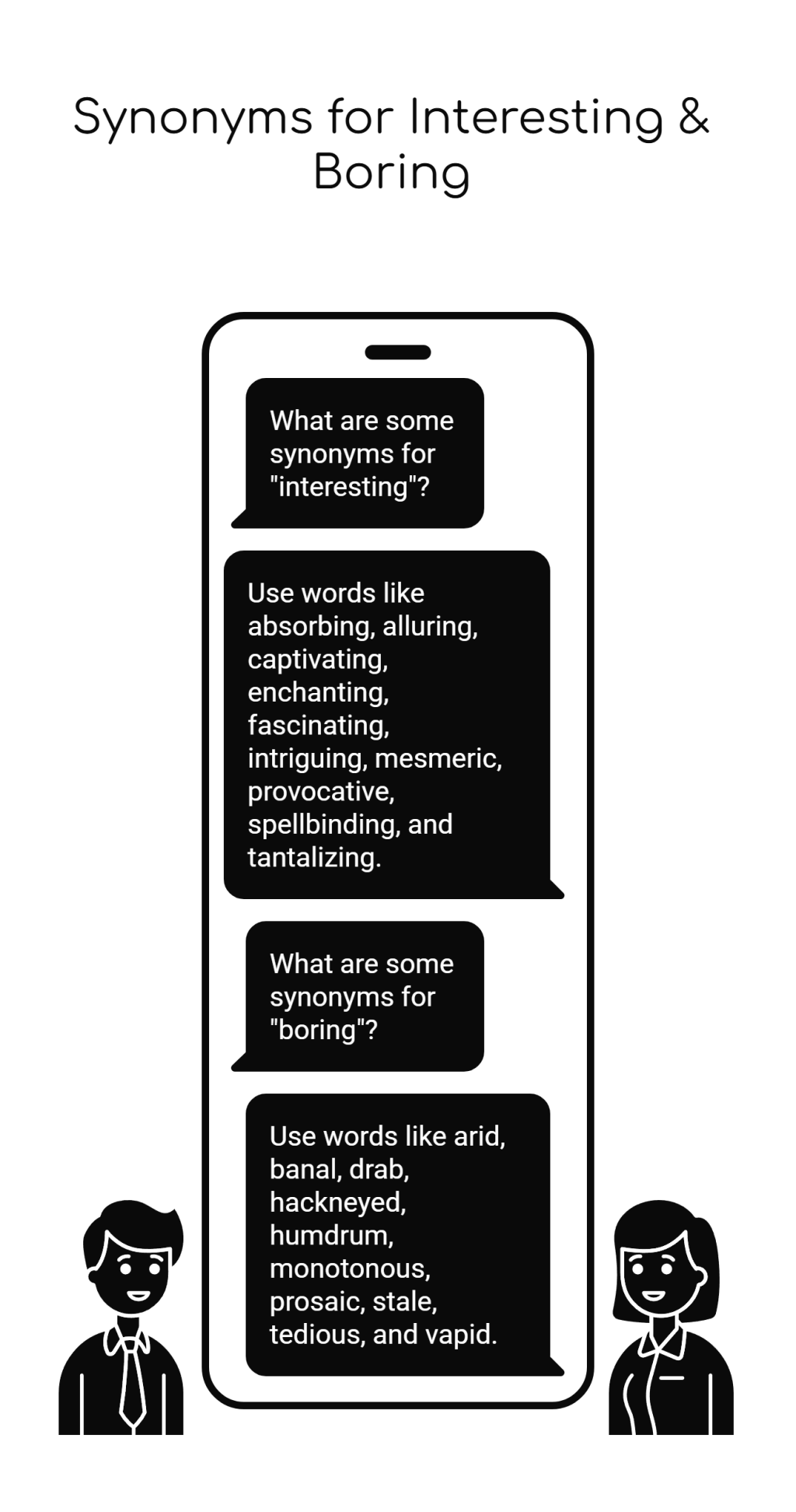
A rich vocabulary is the key to compelling and engaging writing. Instead of overusing common words like “interesting” or “boring,” consider these more precise and expressive alternatives. Whether you are describing a book, a movie, or a conversation, choosing the right words can add depth and clarity to your writing.
Synonyms for “Interesting”
If something has captured your attention, try using one of these more vivid words:
- Absorbing – So engaging that it holds your full attention.
Example: The novel was so absorbing that I lost track of time. - Alluring – Mysteriously attractive or tempting.
Example: The ancient city had an alluring charm that fascinated travelers. - Captivating – Holding interest like a spell.
Example: Her storytelling was captivating; no one wanted to leave! - Enchanting – So delightful that it feels magical.
Example: The fairy-tale castle looked absolutely enchanting in the moonlight. - Fascinating – Extremely interesting or curious.
Example: His knowledge of history was truly fascinating. - Intriguing – Sparkling curiosity and mystery.
Example: The detective story had an intriguing plot twist. - Mesmeric – So engaging that it’s almost hypnotic.
Example: The dancer’s performance was absolutely mesmeric. - Provocative – Thought-provoking or stimulating.
Example: Her speech on climate change was deeply provocative. - Spellbinding – So interesting it feels magical.
Example: The movie’s visual effects were completely spellbinding. - Tantalizing – Making you want more.
Example: The chef’s tantalizing aroma filled the kitchen.
Usage Tips:
- Use captivating when something holds complete attention.
- Use intriguing when something sparks curiosity.
- Use tantalizing for things that tempt or tease the senses.
Synonyms for “Boring”
If something is dull or unengaging, these words can help convey the idea more precisely:
- Arid – Completely lacking excitement or interest.
Example: His lecture was so arid that half the class fell asleep. - Banal – Lacking originality; overused.
Example: The movie’s predictable plot made it utterly banal. - Drab – Lacking color, energy, or excitement.
Example: The office walls were a drab shade of gray. - Hackneyed – So overused that it’s unoriginal.
Example: The same hackneyed phrases appear in every romantic comedy. - Humdrum – Lacking variety; routine.
Example: Her job was a humdrum cycle of emails and meetings. - Monotonous – Dull and repetitive.
Example: His voice was so monotonous that it put me to sleep. - Prosaic – Lacking poetic beauty; unimaginative.
Example: The speech was prosaic, with no passion or creativity. - Stale – Lacking freshness or originality.
Example: The jokes in the sitcom were stale and predictable. - Tedious – So long and boring that it feels endless.
Example: The meeting was tedious, dragging on for hours. - Vapid – Lacking life or excitement.
Example: The conversation was vapid, with no interesting topics.
Usage Tips:
- Use monotonous for dull, repetitive sounds or actions.
- Use stale for ideas that feel old and unoriginal.
- Use tedious for something that drags on excessively.
Final Thoughts: Choose Your Words Wisely
Your choice of words can transform your writing. Instead of relying on basic words like “interesting” or “boring,” opt for more precise and vivid alternatives. This will not only enhance clarity but also make your writing more engaging and memorable.
Which word was your favorite? Try using it in a sentence and see how it changes the impact of your writing!
Stay tuned for more powerful vocabulary tips to elevate your writing skills!
#IELTSGuidePhil #IELTS #IELTSWriting #AcademicWriting #IELTSPreparation #Synonyms #LearnVocabulary #EnglishTips
 IELTS Guide Phil
Leave a comment