
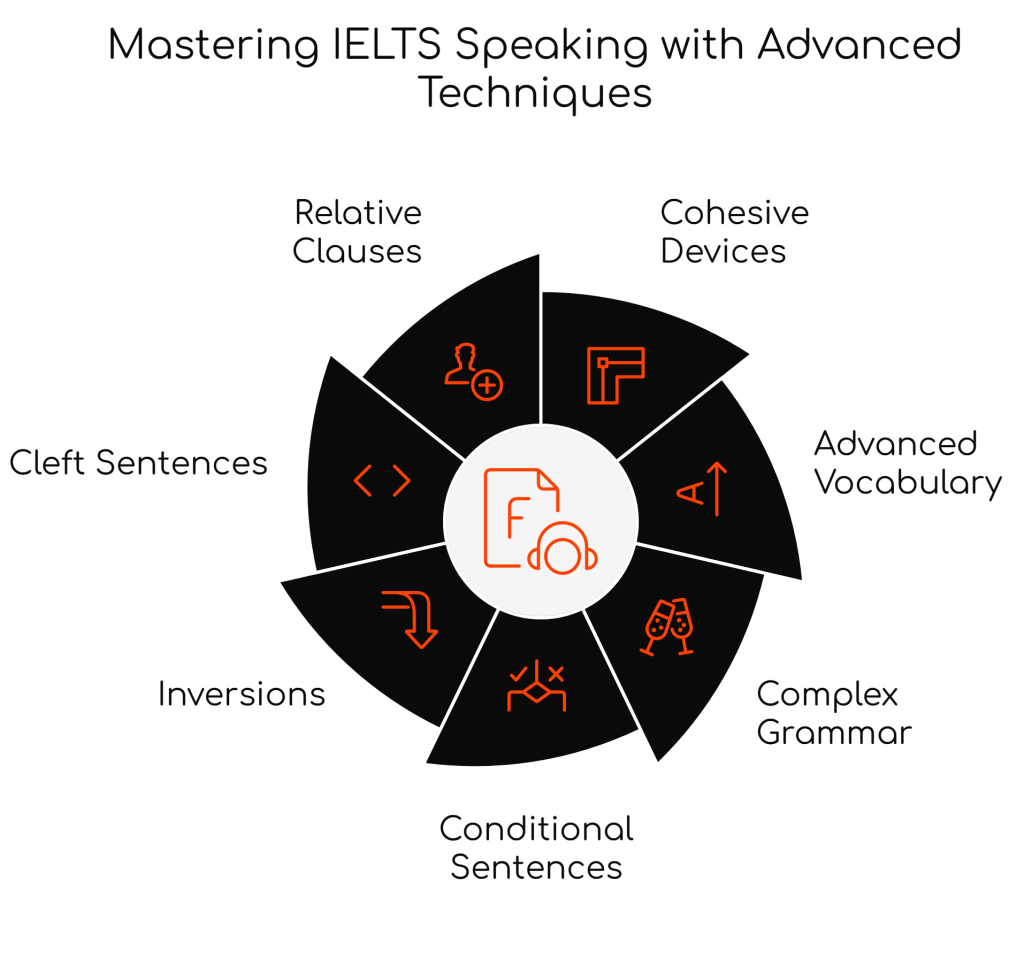
Many IELTS candidates struggle to provide clear and natural examples in English, especially in the Speaking test. Repeating “For example…” can make responses sound repetitive and less fluent. The key to sounding more natural is using advanced cohesive devices, high-level vocabulary, and complex grammar structures.
This guide will help you improve your ability to give examples effectively, making your responses more fluent and confident. You can watch this YouTube video explainer by IELTS Guide Phil.
Alternative Phrases to “For Example”
Instead of repeatedly using “For example,” try these advanced alternatives to make your responses more varied and engaging.
Take X for example…
Take IELTS Speaking Part 2, for example. Many candidates hesitate because they lack exposure to spontaneous speaking.
Let’s say…
Let’s say you’re preparing for IELTS. You need to practice structuring your answers to sound fluent and confident.
One common scenario is…
One common scenario is when test-takers run out of ideas in Speaking Part 3 and struggle to extend their answers.
A case in point is…
A case in point is the IELTS Listening test. Many candidates lose marks because they don’t recognize synonyms in the recording.
Imagine that…
Imagine that you’re in your IELTS Speaking test, and the examiner asks about environmental issues. You need to give specific examples to show fluency and coherence.
Using Advanced Grammar to Sound More Natural
In addition to using varied phrases, advanced grammar structures can significantly enhance fluency and coherence in IELTS Speaking responses.
1. Conditionals (If…, Unless…, As long as…)
- If you practice IELTS Speaking daily, you’ll naturally develop fluency and confidence.
- Unless you learn how to paraphrase, you might struggle with Reading tasks that require synonym recognition.
2. Inversions (Not only…, Hardly…, Never…, Seldom…)
- Not only does IELTS require strong grammar skills, but it also demands a broad range of vocabulary.
- Seldom do students realize that coherence and cohesion contribute significantly to their Writing band score.
3. Cleft Sentences (What… is, The thing that… is)
- What most candidates struggle with is time management in the Reading section.
- The thing that makes IELTS challenging is its unpredictable question types.
4. Relative Clauses (who, which, where, that)
- IELTS, which is widely accepted by universities, evaluates a candidate’s English proficiency in four key areas.
- Many students fail to understand the examiner’s question, which results in lower fluency scores in Speaking.
Example: Basic vs. Advanced Response
To demonstrate the impact of these techniques, compare the following responses:
Basic Answer (Band 5-6):
“Some people find IELTS Speaking difficult because they don’t practice much, and they get nervous.”
Advanced Answer (Band 7-9):
“Take IELTS Speaking Part 2, for example. Many candidates struggle not because they lack vocabulary but because they don’t get enough practice in spontaneous speaking. What makes it even more challenging is the one-minute preparation time, which hardly allows them to structure their response properly. If they fail to organize their ideas, they might struggle to speak for the full two minutes. Not only does this affect their fluency score, but it also impacts lexical resource and coherence. This case demonstrates the need for candidates to develop strategies for structuring their ideas effectively under time pressure.”
Practice Challenge
To improve your IELTS Speaking skills, try applying these techniques to different topics. Here’s a challenge for you:
Pick a topic (e.g., technology, travel, health, education) and try crafting an advanced response using these techniques.
The more you practice, the more natural and fluent your responses will become.
Final Thoughts
Using varied expressions, advanced grammar structures, and well-developed examples can make a significant difference in your IELTS Speaking score. These strategies will not only enhance fluency but also improve coherence, lexical resource, and grammatical range.
Stay tuned for more IELTS Speaking tips to help you achieve your desired band score.
#IELTSGuidePhil #IELTS #Speaking #IELTSTips #SpeakingSkills #StudyAbroad #IELTSPreparation
 IELTS Guide Phil
Leave a comment